As of: 19 June 2026 · Reading time: 4 min
Key takeaways
- In today's rapidly changing digital landscape, many companies face the challenge of modernizing outdated IT systems.
- The Altsystem migration is a decision...
In today's rapidly changing digital landscape, many companies face the challenge of modernizing outdated IT systems. The Altsystem migration is a decision...
“Good software is not an accident—it comes from a structured development process with clear quality standards.”
– Björn Groenewold, Managing Director, Groenewold IT Solutions
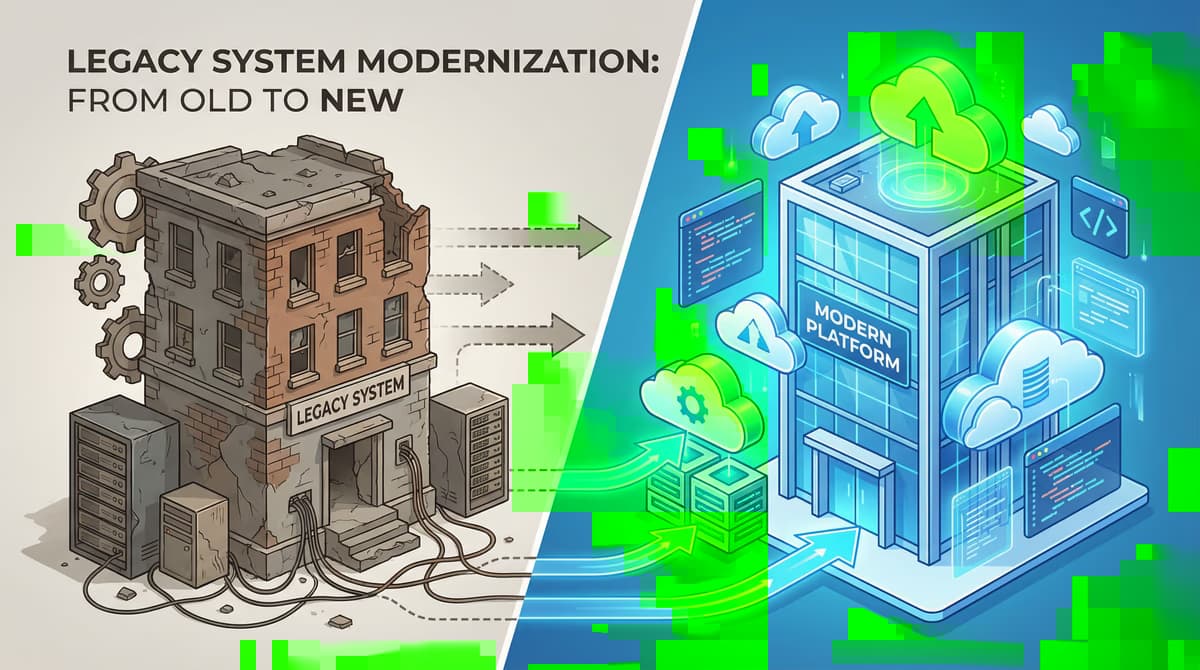
In today's rapidly changing digital landscape, many companies face the challenge of modernizing outdated IT systems. Altsystem migration is a crucial step to remain competitive, increase efficiency and minimize safety risks.
But what exactly hides behind this concept and why is a careful planning essential for success?
Why an old system migration becomes indispensable
In today's rapidly changing digital landscape, many companies face the challenge of modernizing outdated IT systems.
Leaders exploring Altsystem migration: success factors and best practices for a smooth… can use Legacy Modernisation, Cost Calculator: Legacy Modernisation, Solution: Legacy Reduction sowie Monolith vs. Microservices as structured entry points.
Old systems, often referred to as legacy systems, are software and hardware solutions that have come into the years. This once formed the backbone of a company.
Over time, however, they become a brake pad for innovation and growth. The reasons for this are manifold:
Increased maintenance costs and shrinking know-how
Maintenance of old systems becomes more and more expensive with increasing age.
Spare parts are difficult to obtain and the number of experts who are familiar with outdated programming languages such as COBOL is steadily decreasing.
This leads to increased cost and time required for maintenance and troubleshooting.
vulnerabilities and compliance risks
Short: Outdated systems are an easy target for cyber attacks.
Outdated systems are an easy target for cyber attacks. Security standards continue to develop. However, old systems often cannot be supplied with the latest security updates.
This not only entails the risk of data loss and operational interruptions.
However, can also lead to sensitive penalties in the event of non-compliance with compliance needs such as the GDPR.
Lack of compatibility and integration
Short: Modern companies rely on a variety of tools and services that need to communicate seamlessly.
Modern companies rely on a variety of tools and services that need to communicate seamlessly. Older systems are often unable to interact with new technologies and applications.
This lack of compatibility impedes the introduction of new, more efficient work processes and restricts the company's ability to innovate.
Success factors for successful migration
Short: A successful Altsystem migration requires a strategic approach and careful planning.
A successful Altsystem migration requires a strategic approach and careful planning. The following success factors are crucial for a smooth transition:
Detailed analysis of the old system
Short: Before migration begins, a thorough review of the existing system is essential.
Before migration begins, a thorough review of the existing system is essential. It is important to understand which functions and processes are critical for business operations.
Often valuable business logic has been introduced in old systems for years. This cannot be lost during migration.
Clear definition of business objectives
What about migration? A clear definition of business goals helps to optimally shape the new system landscape. Should costs be reduced, efficiency increased or new business models enabled
References and further reading
The following separate references complement the topics in this article:
- Bitkom – German digital industry association.
- German Federal Office for Information Security (BSI).
- European Commission – Digital strategy.
- MDN Web Docs (Mozilla)
- W3C – World Wide Web Consortium.
"DevOps is less about tools and more about shared ownership of quality and release discipline."
— Björn Groenewold, Managing Director, Groenewold IT Solutions
Frequently Asked Questions (FAQ)
What is this article about: “Altsystem migration: success factors and best practices for a smooth transition”?
This post explores Altsystem migration. Success factors and best practices for a smooth transition from the perspective of needs, typical pitfalls. And sensible next steps. In short.
In today's rapidly changing digital landscape, many companies face the challenge of modernizing outdated IT systems. The Altsystem migration is a decision...
Who benefits most from the content described here?
Useful for project leads and product owners in Software development who must choose between standard software, custom development, and integration.
How does this topic fit into an IT or digital strategy?
Technically and organizationally, alignment with experienced partners pays off — from requirements to operations; start with the [services overview](/en/services/software-development). For multi-system landscapes, [IT consulting and architecture](/en/services/it-consulting) helps align vendors and internal teams.
What are sensible next steps if we need support?
A practical next step: book a consultation and clarify which MVP or pilot fits your team and landscape.
About the author

Managing Director of Groenewold IT Solutions GmbH and Hyperspace GmbH
Since 2009 Björn Groenewold has been developing software solutions for the mid-market. He is Managing Director of Groenewold IT Solutions GmbH (founded 2010) and Hyperspace GmbH. As founder of Groenewold IT Solutions he has successfully supported more than 250 projects – from legacy modernisation to AI integration.
Blog recommendations
Related articles
These posts might also interest you.

Digitization in the middle class: How to measure your success
Digitization is no longer a trend for medium-sized enterprises, but a need to remain competitive. But how to measure the success of Digitalisie...
Digital Transformation: Leadership and Change Management as key to success
Digital transformation is more than just the introduction of new technologies. It is a profound change process that affects companies of all sizes. Especially for small and...
Digital Transformation: The Power of Partnerships and Ecosystems
Digital transformation is no longer an option for small and medium-sized enterprises (SMEs), but a need to remain competitive. But the way to the digital future...
Free download
Checklist: 10 questions before software development
Key points before you start: budget, timeline, and requirements.
Get the checklist in a consultationRelevant next steps
Related services & solutions
Based on this article's topic, these pages are often the most useful next steps.
Related services
Related solutions
Related comparison
Cost calculators
Practical next steps after Altsystem migration: success factors and best practices for a smooth transition
Altsystem migration: success factors and best practices for a smooth transition addresses a practical choice for product and IT teams. Start with one clear goal: reduce legacy risk in controlled steps while daily work and key data remain available.
Check the current process, the data involved, and the result users need. Then record the main risks and define a small first step. This keeps the decision easy to review and gives your team a shared basis.
For implementation support, our legacy software modernization connects the article's guidance with architecture, delivery, and stable operations. Engineering and project ownership stay with our team in Leer, Germany.
This post belongs to Software development. Browse the related Software development articles or use the English software blog for other topics.
When budget is the next question, the software cost calculators provide planning ranges. The IT glossary explains key terms, while in-depth technology guides cover wider decisions.
If the topic affects a live project, book a technical consultation or send the context through our project contact form. We usually reply within one working day.