As of: 19 June 2026 · Reading time: 4 min
Key takeaways
- In the fast-paced world of software development, companies are constantly faced with a crucial question: Should we aim to develop our resources into the new, sales-enhancing feature...
In the fast-paced world of software development, companies are constantly faced with a crucial question: Should we aim to develop our resources into the new, sales-enhancing feature...
“Good software is not an accident—it comes from a structured development process with clear quality standards.”
– Björn Groenewold, Managing Director, Groenewold IT Solutions
In the fast-paced world of software development, companies are constantly facing a crucial question: Should we invest our resources in the development of new, revenue-enhancing features or dedicate ourselves to the elimination of “technical debt”? This decision has far-reaching consequences for the sustainability and success of any IT project. But what exactly hides behind this concept and how do you find the right balance?
The constant Zwickmühle: New features or debt reduction?
Short: Executive answer: In the fast-paced world of software development, companies are constantly faced with a crucial question: Should we aim to develop our resources into the new, sales-enhancing feature.
Executive answer: In the fast-paced world of software development, companies are constantly faced with a crucial question: Should we aim to develop our resources into the new, sales-enhancing feature.
For Technical Debt vs. Feature Development: Find the Right Balance, Legacy Modernisation, Solution: Legacy Reduction sowie Software Maintenance help you align implementation, scope and budget before you commit.
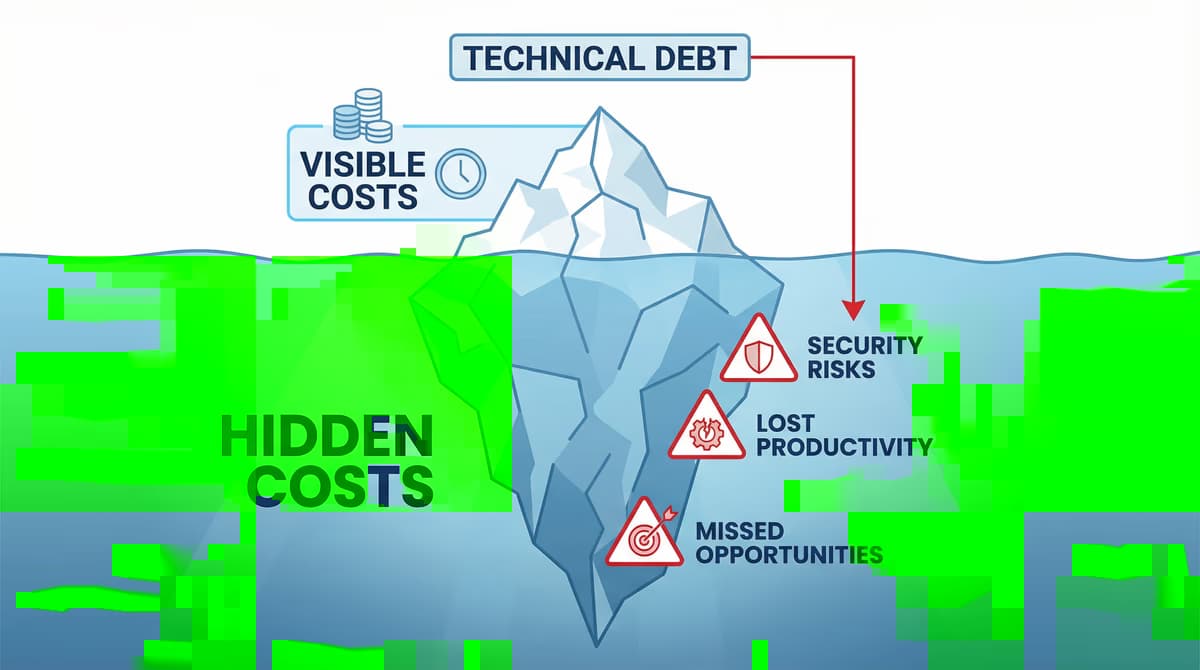
Technical debts are a concept in software development that describes the implicit costs arising from reworking when choosing a simple, fast solution instead of using a better but more time-consuming method.
Similar to financial debt, technical debt can also cause interest in the form of slowed development, increased susceptibility to errors and falling developer satisfaction.
The loosening of quick successes
Short: The prioritization of new features is understandable.
The prioritization of new features is understandable. They are visible, often bring direct customer benefits and can increase sales in the short term.
Stakeholders and product managers are pushing for fast results to have their noses in the competition.
This pressure often leads to shortcuts being taken, code quality neglected and documentation being postponed to later.
In the short term, this may work, but in the long term an invisible debt mountain builds up.
The invisible costs of technical debt
Short: If technical debt is overhanded, productivity suffers.
If technical debt is overhanded, productivity suffers. Developers spend more time fighting through complex and error-prone code than implementing new functionalities.
The introduction of new team members will reduce the challenge and motivation of the entire team.
In the worst case, a project can collapse under the burden of its technical debt, which requires expensive and time-consuming new development.
The targeted technical debt reduction will thus become a necessity for sustainable success.
Find the right balance: Strategies for success
Short: Art is to find a healthy balance between innovation and maintenance.
Art is to find a healthy balance between innovation and maintenance.
It is not about completely avoiding technical debt – this is hardly possible in agile development – but rather to manage it consciously.
quantify and prioritize technical debt
Short: Not all technical debts are equal.
Not all technical debts are equal. Some have little impact while other critical business processes endanger. A systematic collection and assessment of debt is the first step.
Teams can use metrics such as code complexity, test coverage and the number of errors to measure the “debt level” and priorities for the
References and further reading
Short: The following independent references complement the topics in this article:
The following independent references complement the topics in this article:
- Bitkom – German digital industry association
- German Federal Office for Information Security (BSI)
- European Commission – Digital strategy
- MDN Web Docs (Mozilla)
- W3C – World Wide Web Consortium
"Legacy migration often fails not because of the stack, but because tacit domain knowledge was never captured—budget explicitly for knowledge transfer."
— Björn Groenewold, Managing Director, Groenewold IT Solutions
Frequently Asked Questions (FAQ)
What is this article about: “Technical Debt vs. Feature Development: Find the Right Balance”?
This post explores Technical Debt vs. Feature Development: Find the Right Balance from the perspective of requirements, typical pitfalls, and sensible next steps.
In short: In the fast-paced world of software development, companies are constantly faced with a crucial question: Should we aim to develop our resources into the new, sales-enhancing feature...
Who benefits most from the content described here?
Useful for project leads and product owners in Software development who must choose between standard software, custom development, and integration.
How does this topic fit into an IT or digital strategy?
Technically and organizationally, alignment with experienced partners pays off — from requirements to operations; start with the [services overview](/en/services/software-development). For multi-system landscapes, [IT consulting and architecture](/en/services/it-consulting) helps align vendors and internal teams.
What are sensible next steps if we need support?
A practical next step: book a consultation and clarify which MVP or pilot fits your team and landscape.
About the author

Managing Director of Groenewold IT Solutions GmbH and Hyperspace GmbH
Since 2009 Björn Groenewold has been developing software solutions for the mid-market. He is Managing Director of Groenewold IT Solutions GmbH (founded 2010) and Hyperspace GmbH. As founder of Groenewold IT Solutions he has successfully supported more than 250 projects – from legacy modernisation to AI integration.
Blog recommendations
Related articles
These posts might also interest you.
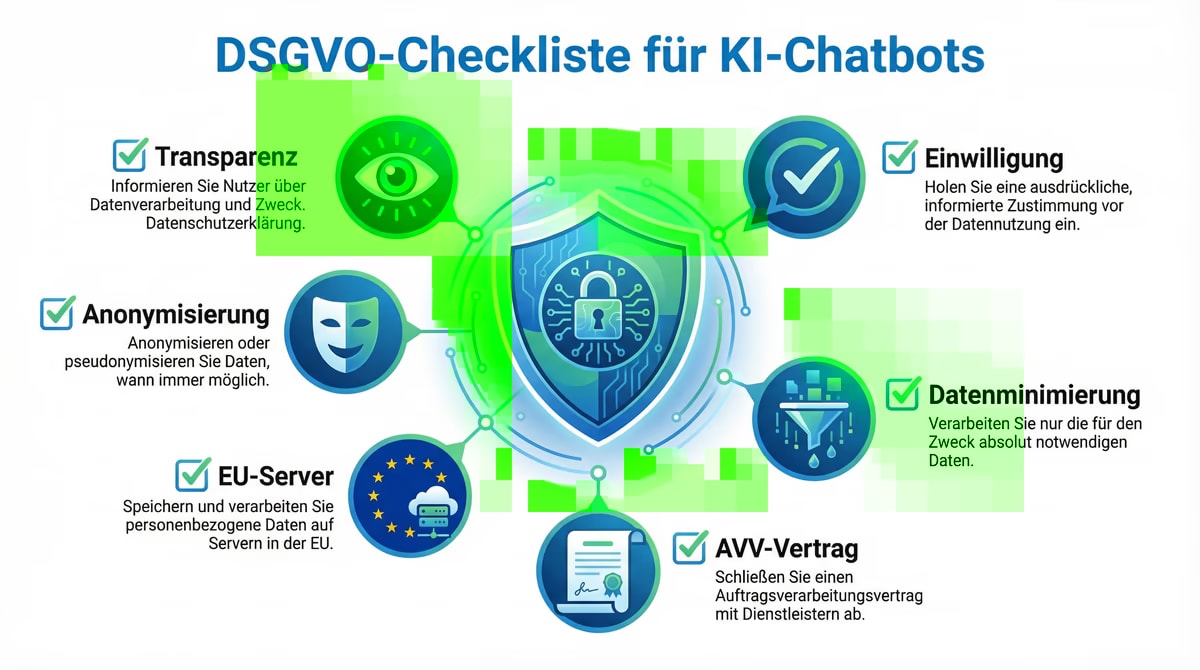
Data silos and data protection: A growing challenge for modern companies
In today's data-driven business world, information is the life elixir of each company. But too often these valuable data are trapped in isolated systems, so-called...

Why data silos pose a serious problem
> # Resolve data silos: Change management don't forget > > In today's data-driven business world, information is the life elixir of each company. But too often are the...
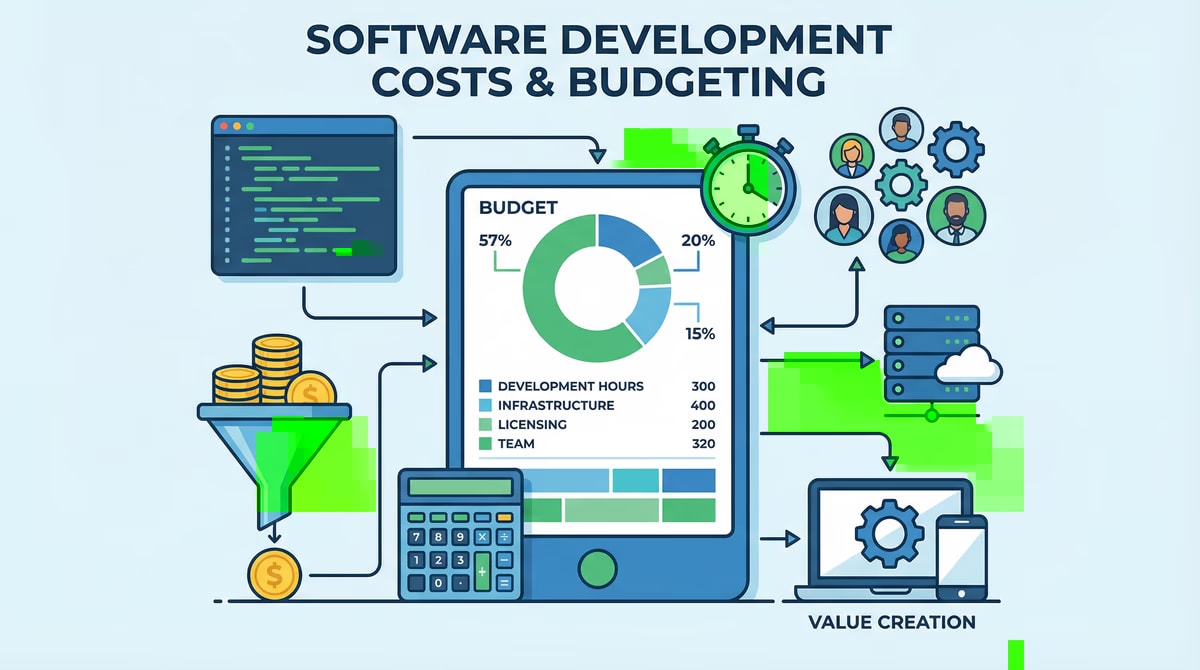
Altsystem Migration: A Guide to Costs and Budgeting
In today's fast-paced digital landscape, outdated IT systems, often referred to as old systems, are a considerable burden for companies. They're not just expensive in maintenance, sonde...
Free download
Checklist: 10 questions before software development
Key points before you start: budget, timeline, and requirements.
Get the checklist in a consultationRelevant next steps
Related services & solutions
Based on this article's topic, these pages are often the most useful next steps.
Related services
Related solutions
More on Software development and next steps
This article is in the Software development topic. In our blog overview you will find all articles; under category Software development more posts on this subject.
For topics like Software development we offer matching services – from app development and AI integration to legacy modernisation and maintenance. We describe typical use cases under solutions. Our cost calculators give initial estimates. Key terms are in the IT glossary. Books and long-form guides appear on the publications page; deeper articles live under topics.
If you have questions about this article or want a non-binding discussion about your project, you can book a consultation or reach us via contact. We usually respond within one working day.