GDPR-aware software engineering with privacy-by-design and evidence packs
For mid-sized companies: DPA, data flows and roles documented for audits—the legal assessment stays with your data-protection advisers – delivery and project ownership from Germany (Leer/East Frisia), named contacts, no offshore guesswork.
Data protection by design means building privacy into architecture, data flows and UI from day one. We implement purpose-based roles, minimise required fields, design erasure across dependent records and redact personal content from operational logs. Data-flow maps cover APIs, queues, exports, backups, analytics and subprocessors so retention and access decisions can be tested instead of assumed.
Privacy by design in architecture
Consent management and documentation
Right to erasure and data portability
EU data residency and encryption
Processing records and audit support
GDPR-compliant development in practice
GDPR-compliant software development means building data protection into every layer: architecture, data flows, user interfaces and third-party integrations. We minimise data collection by design, implement consent management with clear documentation and support the rights to erasure and data portability from the start. Processing records and audit support are part of our delivery so you can demonstrate compliance to regulators and customers. We use EU hosting when required and encrypt data at rest and in transit; we never ship personal data to jurisdictions outside the EEA without your explicit agreement and the necessary safeguards.
Many projects create avoidable GDPR risk because privacy was added late or delegated to a single module. We integrate data protection from the first sprint: data-flow diagrams, retention rules and deletion workflows are defined early and tested throughout. Whether you are building a B2B platform, consumer app or internal tool, we engineer against the privacy requirements approved for the project and document remaining assumptions instead of claiming legal compliance from technology alone.
Our role is technical. Your controller, DPO or legal counsel determines purposes, legal bases, DPIA duties and contractual safeguards; we turn those decisions into backlog items, controls and evidence. Development from Leer and an EU hosting region may support the design, but location alone is not proof of compliance. Actual telemetry, support access, subprocessors and cross-border data paths remain part of the review.
A practical implementation ties each role to permitted actions and data categories. Deletion jobs record completion without retaining the deleted payload, while exceptions for statutory retention remain isolated. Logs use field-level redaction, access controls and automated expiry. These controls connect to our custom software development process and can be reviewed alongside technical security assessments.
Privacy by design in software: answers to common questions
Requirements, toolchain, and international terminology
What does privacy-by-design software development mean for architecture and operations?
It turns regulatory duties into product decisions: which personal data fields the process truly needs, what legal basis applies to ingestion, and how long logs may retain identifying content.
Technical and organisational measures matter—encryption, role-based access, erasure and subject-rights features, and auditable logs. The data model, API boundaries, and data-subject rights are agreed with the business and DPO, not painted on at the end.
That avoids expensive refactors when sales, support, and engineering hold different assumptions about retention.
How do you implement privacy by design in a sprint without making privacy a separate project risk?
Privacy by design implementation starts with clear user stories: which processing serves which purpose, what minimisation is practical, and which tests prove that consent, export, and erasure work.
In sprints we add privacy reviews, light threat modelling of data flows, and acceptance criteria so no release treats privacy as a side workstream. Building GDPR-compliant software means backlog items for retention, pseudonymisation.
And subprocessors are prioritised, not “after go-live.” When business and IT share the same truth in the record of processing activities, you reduce the risk that live features become legally unusable because documentation lags the product.
Data protection in software development: how do you keep CI/CD, tickets, and the help desk free of excess personal data?
In day-to-day engineering that means separate environments, synthetic test data, encrypted artefacts, and defined retention in CI/CD, helpdesks, and code tools.
Many personal-data traces come not from the app but from tickets, logs, and screenshots. We inventory the toolchain: who processes what, which data processing agreements exist, and how you review a tool change.
Procurement and security teams expect demonstrable data residency and technical assurances, not policy PDFs alone. Location or hosting region does not replace that review.
What role does the data processing agreement play when privacy engineering is part of delivery?
A DPA under Art.
28 GDPR does not replace sound architecture or missing erasure logic, but it binds instructions, subprocessors, TOMs, and cooperation on data-subject requests with your processor.
We define which test systems may see personal data, how staging data is anonymised, and when data is deleted after the project. Repositories, CI secrets, and help-desk access are potential places of processing.
The TOMs in the DPA must match real deployments, or audits find gaps.
How do privacy-by-design engineering and dedicated privacy software differ in RFPs?
Dedicated privacy software often covers consent, roles, journaling, and exports.
RFPs additionally ask for binding technical claims in contracts and tests. In practice you need clear ownership of which API moves which categories of personal data, and which TOMs apply.
Products and third parties must not be configured in conflict—for example tracking modules that send metadata outside the EEA despite EU hosting. The review includes backups, support mailboxes, and analytics with personal content.
Does technical privacy engineering replace legal advice?
No.
We translate purposes, legal bases and retention periods approved by your controller, DPO or legal counsel into architecture, backlog items and tests.
We can expose technical risks and data flows, but we do not make binding decisions on legal bases, DPIA duties or contract clauses. Final approval remains with your responsible privacy and legal functions.
Does development or hosting in Germany prove GDPR compliance?
No.
Delivery from Germany and an EU hosting region can support a chosen operating model, but neither proves compliance. The assessment must cover actual data flows, subprocessors, telemetry, support access, retention, legal bases and safeguards.
We document and technically enforce those decisions once your responsible privacy function has approved them.
Plan GDPR with a concrete backlog
We translate privacy by design and DPA expectations into actionable stories and tests—together with IT and the business.
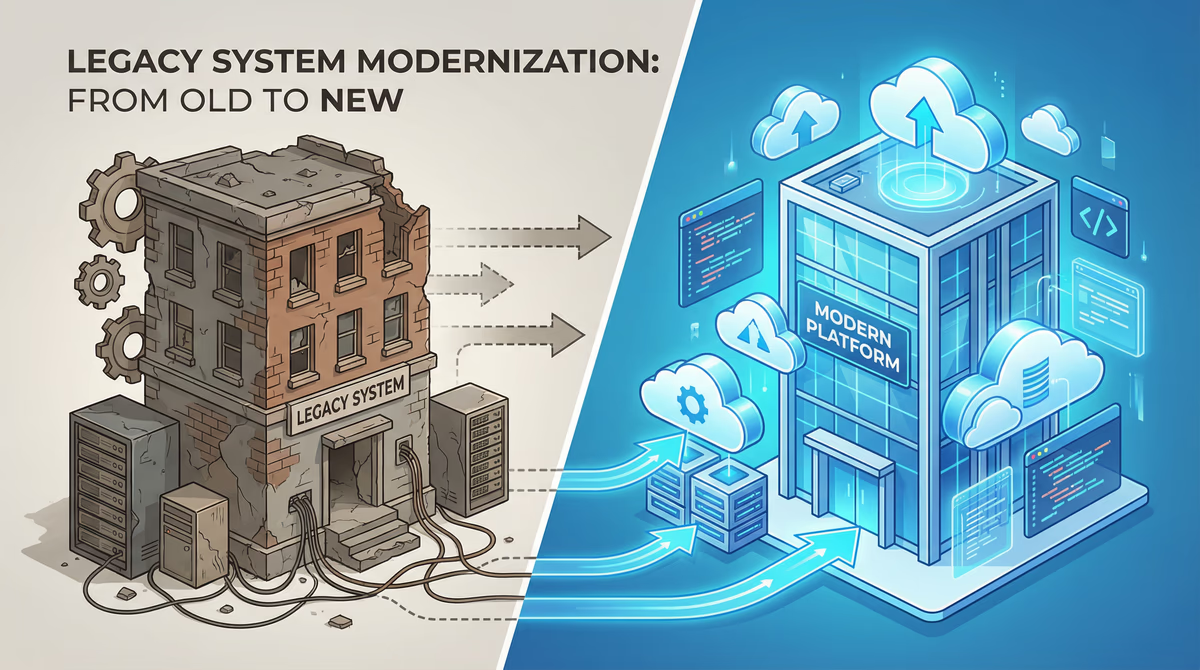
In today's rapidly changing digital landscape, outdated IT systems – often referred to as old systems – are one of the biggest obstacles for companies that are competitive and innovative...
Modernisation of outdated IT infrastructures is an inevitable necessity for many companies to remain competitive. But the **Altsystem migration** holds numerous Hera...
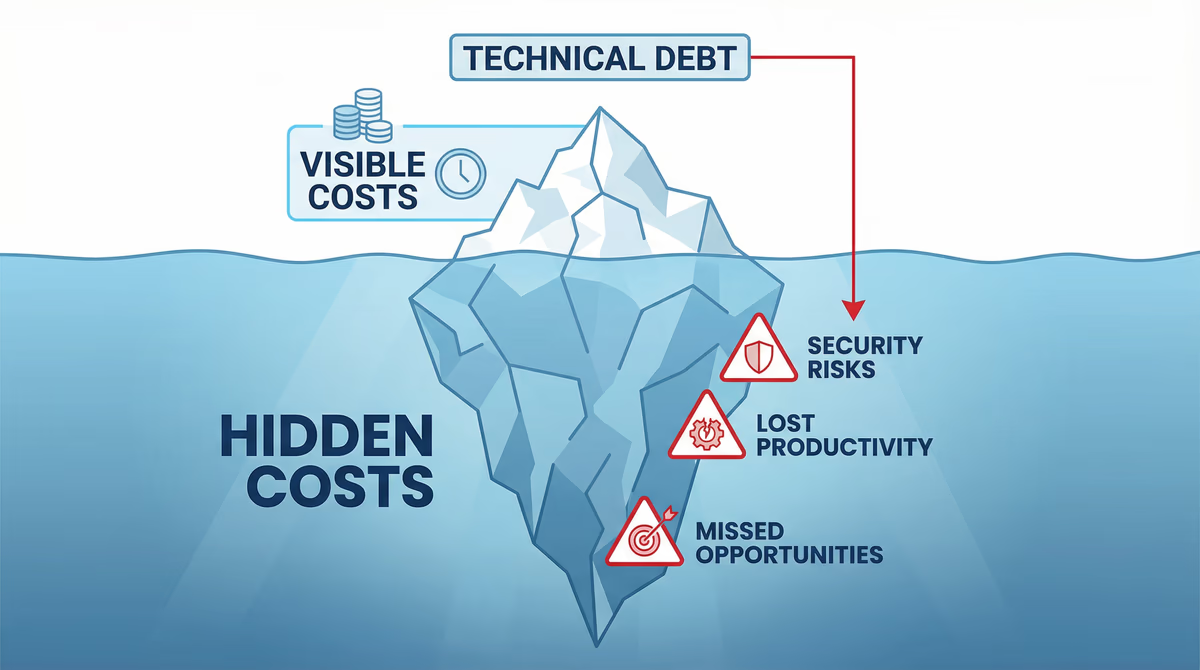
Time and resources are often scarce in the fast-paced world of software development. To comply with deadlines and bring new features to the market quickly, compromise...