
As of: 4 September 2026 · Reading time: 4 min
Key takeaways
- Maintenance of old systems is becoming increasingly tolerated.
- Recognize the signs when a fundamental modernization is really worthwhile.
Maintenance of old systems is becoming increasingly tolerated. Recognize the signs when a fundamental modernization is really worthwhile.
“Digitalization is not an IT project—it is a business strategy.”
– Björn Groenewold, Managing Director, Groenewold IT Solutions
"
Maintenance of old systems is becoming more often tolerated.
Leaders exploring Modernizing Legacy Systems: When Reengineering is really worthwhile can use Legacy Modernisation, Cost Calculator: Legacy Modernisation, Solution: Legacy Reduction sowie Monolith vs. Microservices as structured entry points.
They are often the invisible backbone of a company: Legacy systems. Over the years or even decades, they reliably perform their service.
However, their [maintenance](/services/software maintenance and care) is becoming more often tolerated. The documentation is complete, the technology is outdated and experts are hardly to be found.
At some point, the question inevitably arises: further flick or radically modernize? A reengineering, i.e. a core revision of the old system, is a huge step.
In this post, you will find out what signs you recognize the point of no return and when a reengineering is really worthwhile.
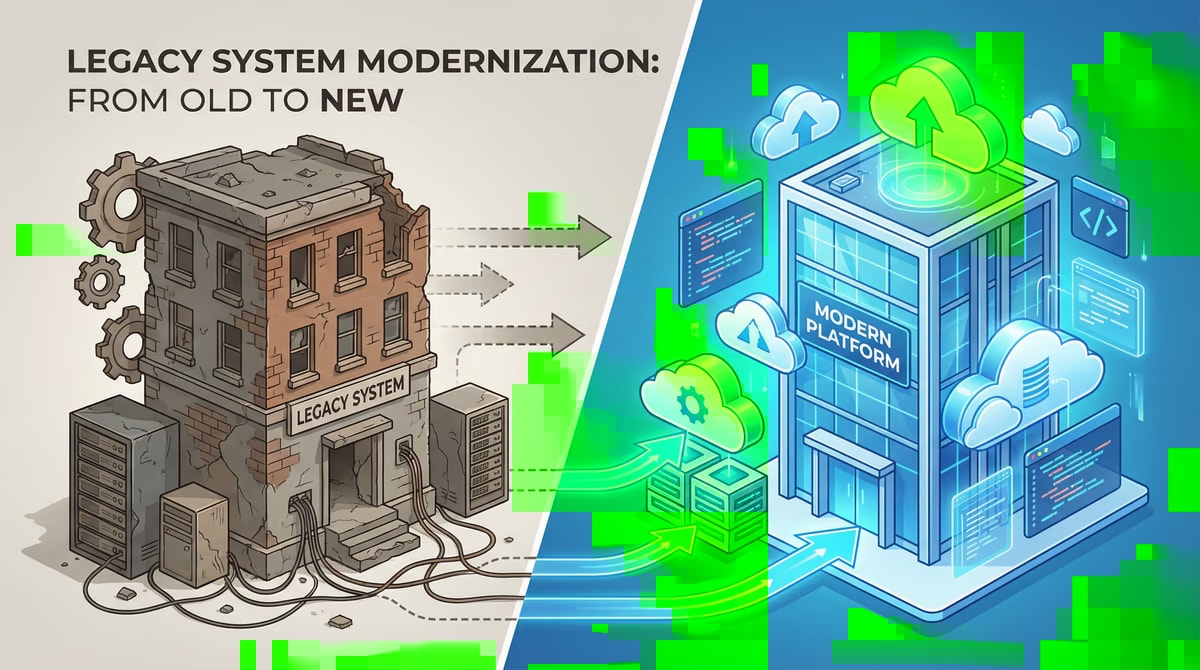
What is a legacy system?
A legacy system (old system) is a software that is still in operation.
However, is based on outdated technology and can only be maintained and built with great effort. Typical features are:
Old technology: The programming language, the framework or the database are no longer supported by the manufacturer.
High technical debt: Over years, suboptimal solutions and workarounds have accumulated.
Fealing know-how: The original developers are no longer in the company and it is difficult to find new employees with the needed knowledge.
Reducing room to adapt: The rigid architecture can hardly be adapted to new business needs.
The pain limit: When will action be inevitable?
Short: An old system does not become a problem overnight.
An old system does not become a problem overnight. It's a creeping process. Pay attention to the following warning signals indicating that the pain limit is reached:
Warning Description
**Exploding maintenance costs * * The cost of troubleshooting and small adjustments exceed the benefits of the software by far.
**Extrem slow development * * Even the smallest changes last weeks or months and are extremely susceptible to errors. Innovation is practically impossible.
**High safety risks * * There are no more security updates for the technology used, which makes the system an easy target for attacks.
**Long integration capability * * The system cannot be connected to modern applications and cloud services or only with immense effort.
**High personnel dependency * * The entire knowledge of the system concentrates on one or a few persons whose path is an underexisting risk.
Reengineering: More than just a new paint
Short: Reengineering does not mean simply reconstructing the software in a new technology 1:1.
Reengineering does not mean simply reconstructing the software in a new technology 1:1. It is the chance to think and shape the system from scratch.
A successful reengineering project typically includes these steps:
- ** Review (actual state):** Complete review of old An.
References and further reading
The following separate references complement the topics in this article:
- Bitkom – German digital industry association.
- German Federal Office for Information Security (BSI).
- European Commission – Digital strategy.
- MDN Web Docs (Mozilla)
- W3C – World Wide Web Consortium.
"DevOps is less about tools and more about shared ownership of quality and release discipline."
— Björn Groenewold, Managing Director, Groenewold IT Solutions
Frequently Asked Questions (FAQ)
What is this article about: “Modernizing Legacy Systems: When Reengineering is really worthwhile”?
This article sums up practical aspects of Modernizing Legacy Systems. When Reengineering is really worthwhile for leaders and delivery teams.
In short: Maintenance of old systems is becoming more often tolerated. Recognize the signs when a core modernization is really worthwhile.
Who benefits most from the content described here?
It is especially relevant for firms in Legacymodernization that need reliable systems, clear interfaces, and predictable delivery — from mid-market teams to expert departments.
How does this topic fit into an IT or digital strategy?
You can map the topic to service building blocks such as custom software and delivery support. Architecture reviews and stepwise rollout reduce risk and rework.
For multi-system landscapes, IT consulting and architecture helps align vendors and internal teams.
What are sensible next steps if we need support?
For architecture, rollout, or a second expert opinion, book a free initial consultation — including timeline and interface alignment.
About the author

Managing Director of Groenewold IT Solutions GmbH and Hyperspace GmbH
Since 2009 Björn Groenewold has been developing software solutions for the mid-market. He is Managing Director of Groenewold IT Solutions GmbH (founded 2010) and Hyperspace GmbH. As founder of Groenewold IT Solutions he has successfully supported more than 250 projects – from legacy modernisation to AI integration.
Blog recommendations
Related articles
These posts might also interest you.
Technical debt in legacy systems: A ticking time bomb?
In the fast-paced world of software development, time and budget are often the driving forces. In order to adhere to deadlines and keep projects within the framework, compromises are often made at...
Replace legacy software: strategies and common pitfalls
In today's fast-paced digital world, outdated software systems, often referred to as legacy software, are one of the biggest challenges for companies. You can find innovations frombrem...
Legacy Migration: Strategies for a smooth transition
In today's rapidly changing digital landscape, outdated IT systems, often referred to as legacy systems, represent a considerable challenge for many companies. Although she...
Free download
Checklist: 10 questions before software development
Key points before you start: budget, timeline, and requirements.
Get the checklist in a consultationRelevant next steps
Related services & solutions
Based on this article's topic, these pages are often the most useful next steps.
Related services
Related solutions
Related comparison
Cost calculators
Practical next steps after Modernizing Legacy Systems: When Reengineering is really worthwhile
Modernizing Legacy Systems: When Reengineering is really worthwhile addresses a practical choice for product and IT teams. Start with one clear goal: reduce legacy risk in controlled steps while daily work and key data remain available.
Check the current process, the data involved, and the result users need. Then record the main risks and define a small first step. This keeps the decision easy to review and gives your team a shared basis.
For implementation support, our legacy software modernization connects the article's guidance with architecture, delivery, and stable operations. Engineering and project ownership stay with our team in Leer, Germany.
This post belongs to Legacymodernization. Browse the related Legacymodernization articles or use the English software blog for other topics.
When budget is the next question, the software cost calculators provide planning ranges. The IT glossary explains key terms, while in-depth technology guides cover wider decisions.
If the topic affects a live project, book a technical consultation or send the context through our project contact form. We usually reply within one working day.