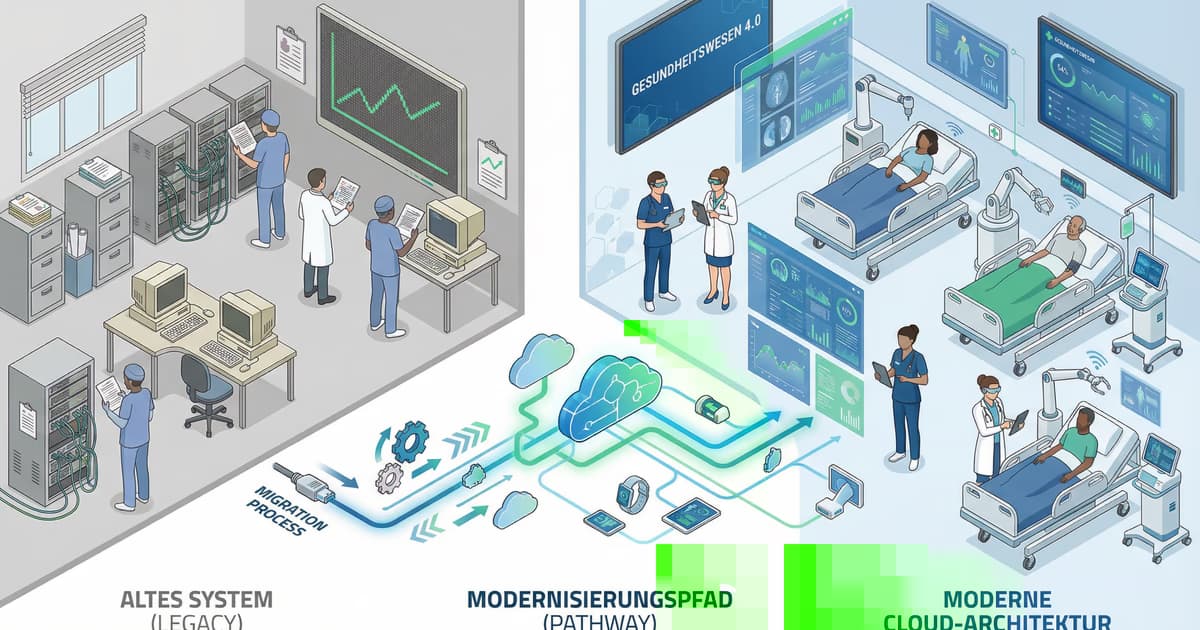
As of: 7 September 2026 · Reading time: 8 min
Key takeaways
- The public administration in Germany is facing a mammoth task: the complete digital transformation.
- While citizens and businesses in the private sector benefit from state-of-the-art, intuitive digital services, many...
The public administration in Germany is facing a mammoth task: the complete digital transformation. While citizens and businesses in the private sector benefit from state-of-the-art, intuitive digital services, many...
“The real challenge in legacy modernization is not the code—it is keeping operations running without disruption.”
– Björn Groenewold, Managing Director, Groenewold IT Solutions
Why Legacy Systems Block E-Government Progress
The public administration in Germany is facing a mammoth task: the complete digital transformation.
A practical first phase for an authority
Choose one public service with a clear process and high use. Map each step from the first request to the final record.
Note where staff copy data, wait for another team, or use a manual check. This creates a sound base for the first phase.
Keep legal and security teams involved from the start. Define the data that each system may share.
Use an API or a small module when full replacement is too risky. Test the new path with a limited user group.
Measure time, errors, and service access before and after the pilot. Keep a rollback plan until the new path is stable.
The authority can then use real results to plan the next service.
When planning Legacy Modernization in Public Administration. The Way to Citizenship… from idea to delivery, Legacy Modernisation, Cost Calculator. Legacy Modernisation, [Solution.
Legacy Reduction](/en/solutions/legacy-reduction) as well as Monolith vs. Microservices offer practical next steps on our site.
Public administration in Germany runs on IT systems built for a different era.
Many core applications — citizen registration, permit processing, tax assessment, social benefit management — run on platforms that are decades old.
These systems are reliable in a narrow sense. They handle the transactions they were built for.
But they block the digital services that citizens now expect and that legislation now requires.
The Specific Problems Legacy Systems Create in Administration
Outdated Technologies and Rising Maintenance Costs
Short: Many core administrative applications rely on old programming languages.
Many core administrative applications rely on old programming languages. Specialist staff for these systems are scarce. Finding developers who understand them is getting harder. Maintenance is expensive.
Every change takes longer and costs more.
Most IT budgets in public administration are consumed by system upkeep. Less than a quarter typically goes toward new services or improvements.
The problem gets worse over time:
- Long-term employees who understand these systems are retiring.
- Institutional knowledge is lost when they leave.
- Dependency on a small group of external specialists increases.
Security Vulnerabilities and Compliance Failures
Outdated software and operating systems no longer receive security updates. This makes them targets for cyberattacks.
Government systems hold sensitive citizen data — personal records, financial information, health data.
A breach has serious effects for affected citizens and the responsible authority.
GDPR requires specific features:
- Audit trails documenting data access.
- Data access and deletion on citizen request.
- Breach notification mechanisms
Legacy systems often cannot meet these needs without costly workarounds.
Blocked E-Government Objectives
Short: The Online Access Act (OZG) requires German authorities to offer administrative services digitally.
The Online Access Act (OZG) requires German authorities to offer administrative services digitally. Legacy systems' rigid structures prevent fast rollout of new digital services.
They were not built for networked data exchange.
The "Once-Only" principle requires citizens to submit personal data only once. Authorities then share it as needed. This is nearly impossible with legacy systems.
Each system holds its own data silo.
There is no automatic way to share records across departments.
1. What Legacy Modernization Means in Public Administration
Short: Modernization in public administration is not simply a software update.
Modernization in public administration is not simply a software update. It is a structured process. Outdated systems are replaced or extended while critical public services keep running.
Key goals:
- Replace or extend core applications to support modern digital services.
- Build APIs so departments can exchange data automatically — enabling the Once-Only principle.
- Meet current security standards: GDPR and BSI IT baseline protection (Grundschutz).
- Enable digital citizen portals with self-service access to administrative services.
- Support mobile access for citizens and mobile working for staff.
2. Core Applications That Require Modernization
Public administration modernization typically covers several system types:
- Citizen registration and address management: often a core legacy system that many others depend on.
- Permit and application processing: high-volume, rule-based processes suited to automation.
- Social benefit management: complex eligibility calculations with strict audit needs.
- Document management: large volumes of unstructured documents that need grouping and retrieval.
- Payment processing: fee collection and disbursement across multiple administrative functions.
Each area has specific compliance and continuity needs. These must be addressed in the migration plan.
3. Modernization Approaches for Public Administration
API-First Integration
Short: APIs are built around existing legacy systems.
APIs are built around existing legacy systems. Modern citizen portal applications — online forms, status tracking, document upload — connect through these APIs.
The legacy core continues to process transactions.
New digital services are delivered without replacing the underlying system.
This approach works well when:
- The legacy system contains complex, legally mandated processing logic.
- Budget must be spread across multiple years.
- Operational continuity is non-negotiable during an election cycle or service peak.
Gradual Migration (Module by Module)
Short: Custom administrative processes are migrated to modern platforms in sequence.
Custom administrative processes are migrated to modern platforms in sequence. Permit processing might go first. Social benefit calculations follow.
Each migration is a contained project with a defined scope and rollback options.
Benefits for public administration:
- Each completed migration delivers immediate improvements for citizens and staff.
- Smaller, defined projects are easier to get political and budget approval for.
- Lessons from early migrations improve later ones.
- Risk is spread across manageable phases.
Data Integration Platform
Short: A central data platform connects multiple legacy systems through standard interfaces.
A central data platform connects multiple legacy systems through standard interfaces. Departments can access data from other systems without manual requests or duplicate entry.
This is the technical foundation for the Once-Only principle. Citizens submit data once. The administration shares it in-house as required by law.
4. Governance Requirements for Public Administration Modernization
Public administration modernization must meet needs that do not apply in the private sector.
Transparency and Explainability
Short: Citizens and oversight bodies must understand how automated decisions are made.
Citizens and oversight bodies must understand how automated decisions are made. Any AI or automation component must be explainable and auditable.
Procurement Compliance
Short: IT projects in public administration must follow EU and national procurement rules.
IT projects in public administration must follow EU and national procurement rules. Vendor lock-in to proprietary systems creates long-term dependency and procurement risk.
Open standards and portable architectures reduce this risk.
Legal Framework Alignment
Short: Administrative processes are defined by law.
Administrative processes are defined by law. Modernization must maintain the legal validity of every step — from application receipt to decision issuance to document archiving.
Legal review of modernization plans is essential before rollout begins.
Data Sovereignty
Short: Public sector data must remain under the control of the responsible authority.
Public sector data must remain under the control of the responsible authority. Cloud deployments must be assessed for compliance with public sector data storage needs.
5. What IT Managers in Public Administration Need to Address
Before starting a modernization project:
- Inventory all systems and document dependencies — legacy systems in administration are often more connected than they appear.
- Find which processes have the highest citizen impact and the most improvement potential.
- Assess GDPR compliance gaps in current systems — these create legal risk and should be prioritized.
- Define OZG compliance needs and timelines — these set a modernization deadline.
- Engage legal and compliance stakeholders from the start — not after technical planning is complete.
6. Getting Started
A structured approach for public administration:
- Select one high-volume, rule-based process — standard permit applications are a common starting point.
- Map the current process end to end: receipt, assessment, decision, notification, archiving.
- Find where delays occur and which steps can be automated within existing legal constraints.
- Design a modernization approach — API integration or module migration — with legal review.
- Run a pilot and measure results: processing time, error rate, citizen satisfaction.
- Scale to extra processes based on recorded results.
"The real challenge in legacy modernization is not the code — it is keeping operations running without disruption." — Björn Groenewold, Managing Director, Groenewold IT Solutions
Groenewold IT Solutions supports public authorities and municipal IT departments through system assessments, compliant architecture design, and phased modernization programs.
References and Further Reading
- Bitkom – German digital industry association.
- German Federal Office for Information Security (BSI).
- European Commission – Digital strategy.
- MDN Web Docs (Mozilla)
- W3C – World Wide Web Consortium.
Frequently Asked Questions (FAQ)
What is this article about: “Legacy Modernization in Public Administration: The Way to Citizenship and E-Government…”?
Here we cover Legacy Modernization in Public Administration. The Way to Citizenship and E-Government… — focused on architecture, process, and business outcomes.
The public administration in Germany is facing a mammoth task: the complete digital transformation.
While citizens and firms in the private sector benefit from state-of-the-art, intuitive digital services, many...
Who benefits most from the content described here?
Typical readers are business and IT leaders in Legacy-Modernisierung who want to secure quality, security, and ease of upkeep over the long term.
How does this topic fit into an IT or digital strategy?
In a digital strategy, prioritize stable core processes first, then extensions. See also professional software development and consulting.
For multi-system landscapes, IT consulting and architecture helps align vendors and internal teams.
What are sensible next steps if we need support?
If you need support with design, delivery, or modernization: schedule an appointment or outline your project via contact.
The following separate references complement the topics in this article:
About the author

Managing Director of Groenewold IT Solutions GmbH and Hyperspace GmbH
Since 2009 Björn Groenewold has been developing software solutions for the mid-market. He is Managing Director of Groenewold IT Solutions GmbH (founded 2010) and Hyperspace GmbH. As founder of Groenewold IT Solutions he has successfully supported more than 250 projects – from legacy modernisation to AI integration.
Blog recommendations
Related articles
These posts might also interest you.
Legacy-Modernization for Crafts & Services: Your way from the IT-Falle
In an increasingly digitized economy, craft businesses and service companies face the challenge of making their business processes efficient, safe and sustainable. While modern technologies such as…
Legacy Modernization for Financial Services & Banks: The Way to the Digital Future
The financial sector is facing a profound change. Driven by new digital competitors (FinTechs), changing customer expectations and a steadily more complex regulatory system, banks and financial…
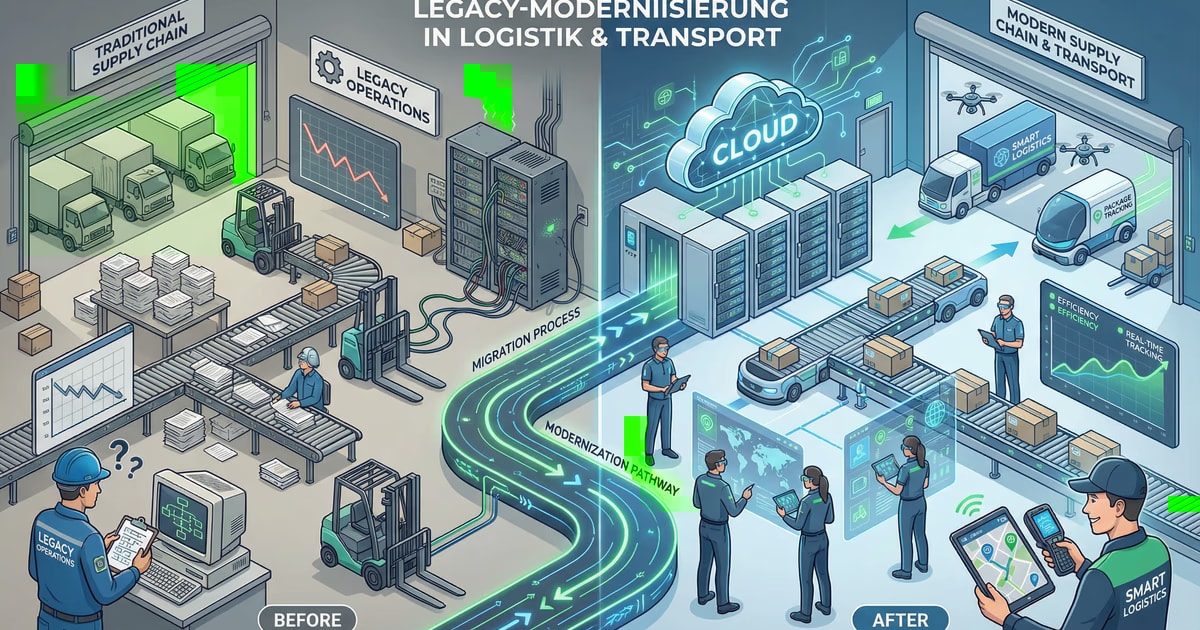
Legacy Modernization in Logistics & Transport: The Way to Digital Supply Chain
The logistics and transport industry is the backbone of the global economy. But while the demands on speed, transparency and sustainability are constantly rising, many companies are fighting with an…
Free download
Checklist: 10 questions before software development
Key points before you start: budget, timeline, and requirements.
Get the checklist in a consultationRelevant next steps
Related services & solutions
Based on this article's topic, these pages are often the most useful next steps.
Related services
Related solutions
Related comparison
Cost calculators
Related industries
Practical next steps after Legacy Modernization in Public Administration: The Way to Citizenship and E-Government Future
Legacy Modernization in Public Administration: The Way to Citizenship and E-Government Future addresses a practical choice for public-sector teams. Start with one clear goal: reduce legacy risk in controlled steps while daily work and key data remain available.
Check the current process, the data involved, and the result users need. Then record the main risks and define a small first step. This keeps the decision easy to review and gives your team a shared basis.
For implementation support, our legacy software modernization connects the article's guidance with architecture, delivery, and stable operations. Engineering and project ownership stay with our team in Leer, Germany.
This post belongs to Legacy-Modernisierung. Browse the related Legacy-Modernisierung articles or use the English software blog for other topics.
When budget is the next question, the software cost calculators provide planning ranges. The IT glossary explains key terms, while in-depth technology guides cover wider decisions.
If the topic affects a live project, book a technical consultation or send the context through our project contact form. We usually reply within one working day.