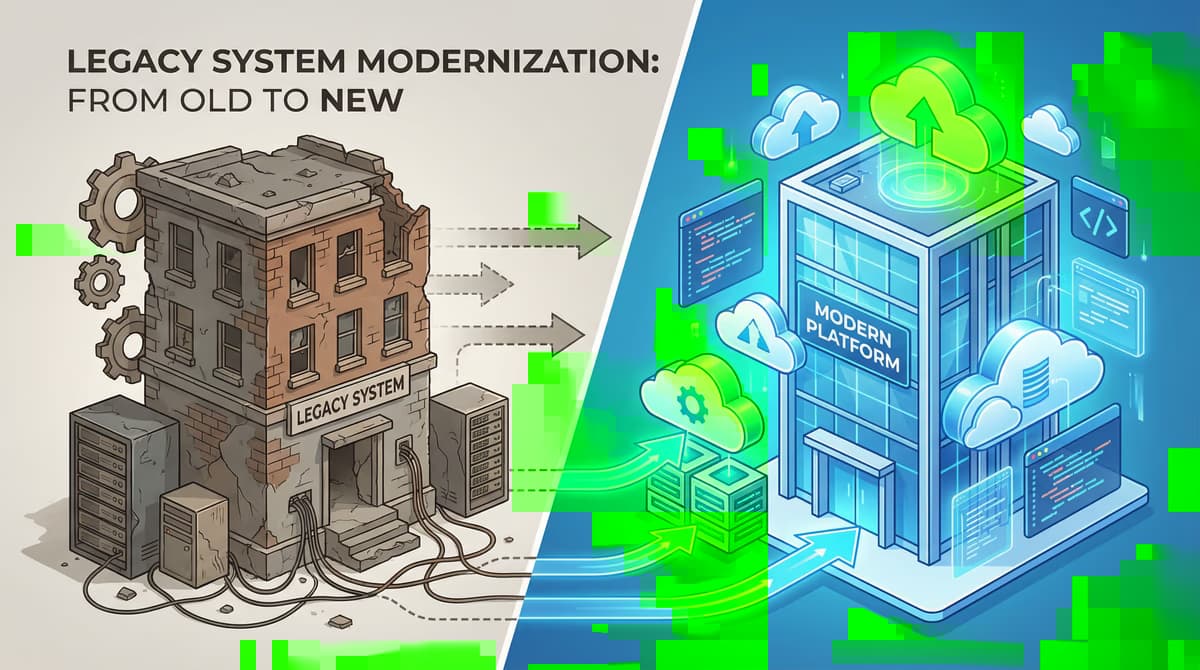
As of: 19 June 2026 · Reading time: 4 min
Key takeaways
- The decision for a **Software migration** is an important step for each company.
- Whether it's about modernizing outdated systems, increasing efficiency or new technol...
The decision for a **Software migration** is an important step for each company. Whether it's about modernizing outdated systems, increasing efficiency or new technol...
“Good software is not an accident—it comes from a structured development process with clear quality standards.”
– Björn Groenewold, Managing Director, Groenewold IT Solutions
The decision for a Software migration is an important step for each company.
Whether it is about modernising outdated systems, increasing efficiency or using new technological possibilities – careful planning and implementation are the key to success.
But what is often underestimated is the decisive role of documentation and reprocessing.
These two aspects are not only administrative tasks, but the foundation for a sustainably successful transition and smooth operation of the new software landscape.
Why is documentation and reprocessing crucial for a software migration?
Short: Executive answer: The decision for a Software migration is an important step for each company.
Executive answer: The decision for a Software migration is an important step for each company.
Decision-makers exploring Software migration: documentation and reprocessing for a smooth… can use Legacy Modernisation, Cost Calculator: Legacy Modernisation, Solution: Legacy Reduction sowie Monolith vs. Microservices as structured entry points.
A Software migration is a complex project with many moving parts. Without a complete documentation, the project resembles a trip without a map.
Important information about configurations, data structures, dependencies and decisions taken is lost.
This not only leads to problems during migration itself, but also makes the future maintenance, troubleshooting and further development of the system considerably more difficult.
The refurbishment ensures that the new software not only works technically, but is also accepted by the users and that the original objectives of migration are achieved.
It is the bridge between technical implementation and actual business use.
The phases of the software migration: An overview
Short: Successful migration can be roughly divided into three main phases, in which documentation and follow-up play a central role.
Successful migration can be roughly divided into three main phases, in which documentation and follow-up play a central role.
Phase 1: Planning and Analysis
Short: In this initial phase, the foundation stone is laid for the entire project.
In this initial phase, the foundation stone is laid for the entire project. A detailed analysis of the existing system landscape is essential.
This includes the collection of all relevant information about the current software, its architecture, the data used and the existing interfaces.
This information forms the basis for the migration strategy and the selection of the new software. A careful documentation at this stage prevents bad surprises and enables realistic time and resource planning.
Phase 2: The actual migration
Short: This is the phase in which the actual technical reaction takes place.
This is the phase in which the actual technical reaction takes place. Data is transferred, applications are implemented on the new platform and configurations are made. Each step should be accurately documented.
What dataset was used when and how to migrate? What adjustments were necessary for the new software? This "daybook" of migration is of invaluable value if unexpected problems occur later.
Phase 3: Refurbishment and Support
Short: After the go-live, the critical phase of post-processing begins.
After the go-live, the critical phase of post-processing begins. It shows how good planning and migration were really. It is
References and further reading
Short: The following independent references complement the topics in this article:
The following independent references complement the topics in this article:
- Bitkom – German digital industry association
- German Federal Office for Information Security (BSI)
- European Commission – Digital strategy
- MDN Web Docs (Mozilla)
- W3C – World Wide Web Consortium
"Privacy by design is an architecture issue—especially when master data is personal."
— Björn Groenewold, Managing Director, Groenewold IT Solutions
Frequently Asked Questions (FAQ)
What is this article about: “Software migration: documentation and reprocessing for a smooth transition”?
This article summarizes practical aspects of Software migration: documentation and reprocessing for a smooth transition for decision-makers and delivery teams.
In short: The decision for a Software migration is an important step for each company. Whether it's about modernizing outdated systems, increasing efficiency or new technol...
Who benefits most from the content described here?
It is especially relevant for organizations in Software development that need reliable systems, clear interfaces, and predictable delivery — from mid-market teams to specialized departments.
How does this topic fit into an IT or digital strategy?
You can map the topic to service building blocks such as custom software and delivery support: architecture reviews and iterative rollout reduce risk and rework. For multi-system landscapes, IT consulting and architecture helps align vendors and internal teams.
What are sensible next steps if we need support?
For architecture, implementation, or a second expert opinion, book a free initial consultation — including timeline and interface alignment.
About the author

Managing Director of Groenewold IT Solutions GmbH and Hyperspace GmbH
Since 2009 Björn Groenewold has been developing software solutions for the mid-market. He is Managing Director of Groenewold IT Solutions GmbH (founded 2012) and Hyperspace GmbH. As founder of Groenewold IT Solutions he has successfully supported more than 250 projects – from legacy modernisation to AI integration.
Blog recommendations
Related articles
These posts might also interest you.
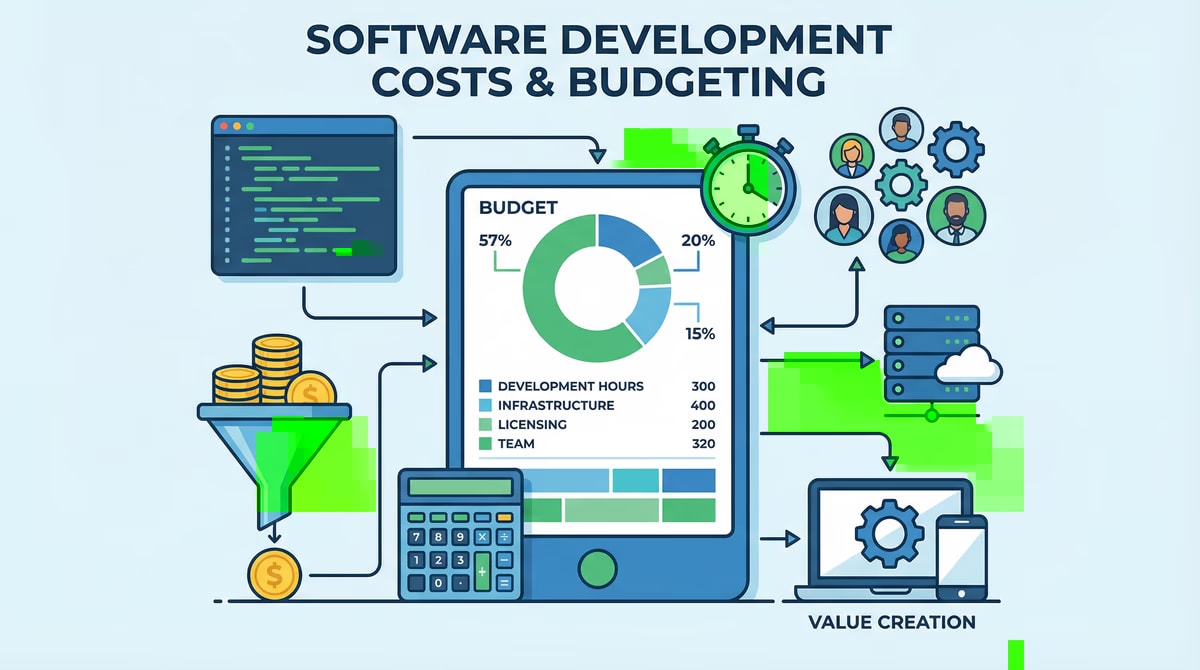
Software Migration: A comprehensive cost-benefit analysis for future-proof IT
In today's rapidly changing digital landscape, companies are constantly facing the challenge of modernizing their technological infrastructure to remain competitive...

ChatGPT for content creation in the company: A guide
In today's digital landscape, high-quality content is the key to success. Companies face the challenge of continuously producing relevant and appealing content,...
ChatGPT cost: How to calculate the API usage for your company
The integration of artificial intelligence, especially advanced language models such as ChatGPT, has proven to be a decisive competitive advantage for many companies. From the...
Free download
Checklist: 10 questions before software development
Key points before you start: budget, timeline, and requirements.
Get the checklist in a consultationRelevant next steps
Related services & solutions
Based on this article's topic, these pages are often the most useful next steps.
Related solutions
Related comparison
More on Software development and next steps
This article is in the Software development topic. In our blog overview you will find all articles; under category Software development more posts on this subject.
For topics like Software development we offer matching services – from app development and AI integration to legacy modernisation and maintenance. We describe typical use cases under solutions. Our cost calculators give initial estimates. Key terms are in the IT glossary. Books and long-form guides appear on the publications page; deeper articles live under topics.
If you have questions about this article or want a non-binding discussion about your project, you can book a consultation or reach us via contact. We usually respond within one working day.