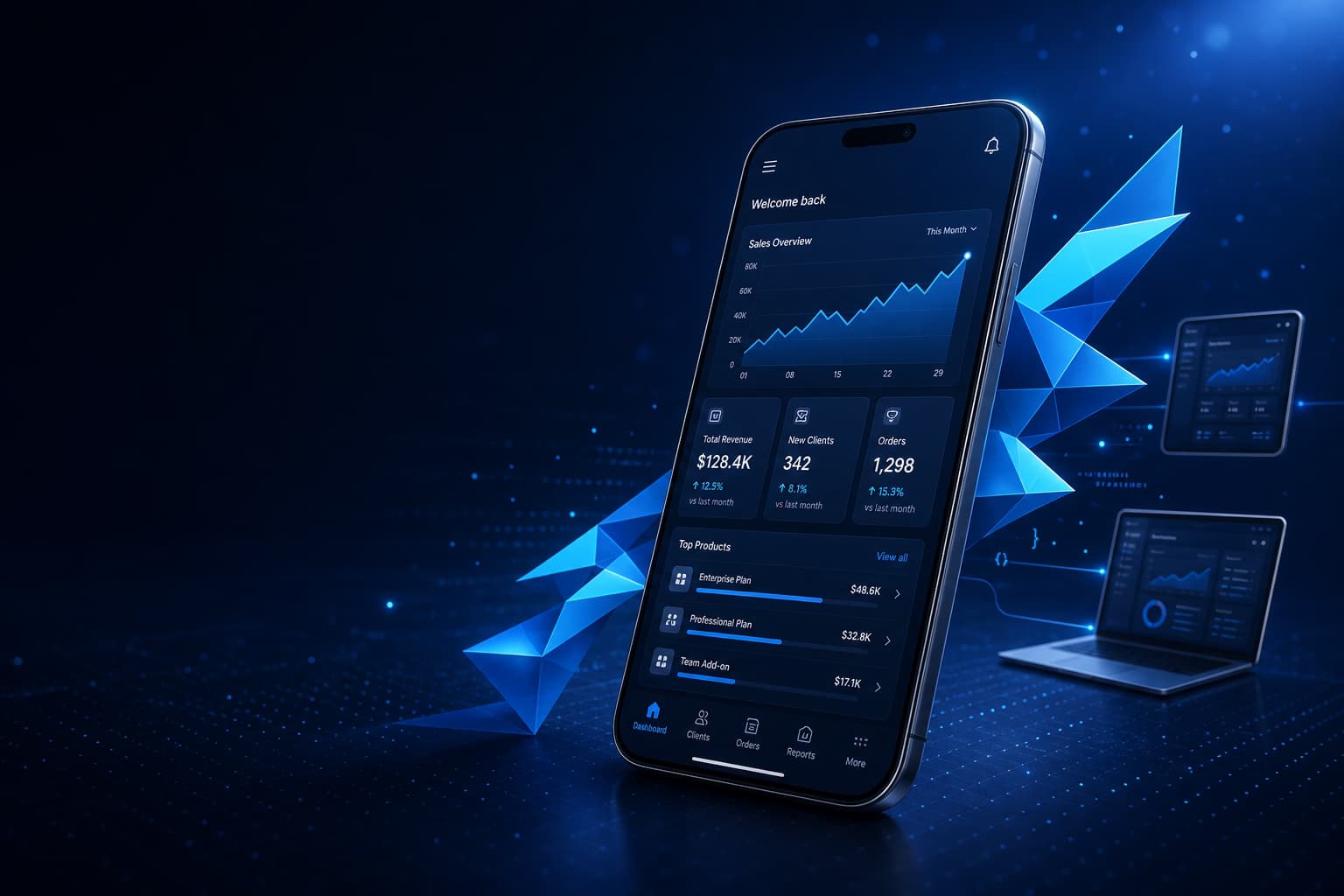
Flutter development – cross-platform apps for iOS and Android from a single codebase
250+ projects · 5.0 on Google · 100% in Germany

Flutter development for Android and iOS apps from one codebase

For mid-sized companies: Cross-platform apps with native feel, fast iteration and connection to your business APIs – delivery and project ownership from Germany (Leer/East Frisia), named contacts, no offshore guesswork.

  • 250+ delivered projects
  • 5.0 stars on Google
  • 100% engineering in Germany

Android app development: context, benefits and typical use cases

Android app development is often the first step in a mobile strategy—especially for field service, customer self-service or internal workflows. With Flutter we deliver Android and iOS from one codebase: one team, one backlog, two stores.

We connect Flutter clients to your APIs, set up push, offline cache and store submission – Made in Germany with transferable source code. Flutter is the stack; Android app development describes your Play Store and device landscape goals.

Technology overview: Flutter Development – stack details on our technology page. See also MVP development and app development.

When businesses should prioritise Android app development

Prioritise Android app development when user data, distribution (Play Store or MDM) and Android device diversity drive your roadmap. Flutter enables iOS in parallel without a second native team. For browser-first strategies see web development for apps and web apps; for React teams see React Native development.

Our Flutter services

From MVP to production app with maintenance contract.

Cross-platform MVPs

Core features testable in 8–12 weeks – with analytics and feedback loops.

B2B & field service apps

Offline capability, barcode, GPS, roles – robust in the field.

API integration

REST/GraphQL to Laravel, Node, .NET – including auth and error handling.

Store & operations

App Store / Play Store process, Crashlytics, OTA updates where useful.

One codebase

iOS and Android in sync – less duplicate maintenance.

UI quality

Material/Cupertino and custom design systems.

Performance

Profiling and optimisation for older devices.

Backend-agnostic

Use existing APIs instead of rebuilding.

Flutter in practice

We structure apps with clear state management (e.g. Riverpod/Bloc), golden tests for critical UI and CI builds per PR.

  • Flavors for staging/prod
  • Secure storage for tokens
  • Deep links and push tested thoroughly
  • Accessibility from the start

Describe target users and must-have flows – we outline MVP scope and architecture for your Android app development with Flutter.


Flutter development: definition and stack comparison

Definition: Flutter development is cross-platform app development with Google's Flutter framework and the Dart language. A single codebase produces native apps for iOS and Android (optionally web and desktop) with a consistent, high-performance UI – instead of two separate native codebases.

Which stack fits depends on UI ambition, team and code sharing. The table compares Flutter with the alternatives; criteria in detail in the Flutter vs React Native comparison.

CriterionFlutterReact NativeNative (Swift/Kotlin)
UI consistency iOS/AndroidVery high (own render engine)High, partly platform-dependentPlatform-specific
PerformanceHigh, close to nativeGood for most appsMaximum
Team requirementDart (quick to learn)React/TypeScript in placeSwift and Kotlin teams
Code sharing with webPossible via Flutter WebStrong (same types/APIs)Low
Ideal forB2B MVPs, two stores without two teamsWeb and mobile sharingSingle-platform, OS depth

Frequently asked questions

FAQ on Flutter development

Android app development overview

What does Android app development mean for businesses?

Android app development targets organisations whose users mainly run Android—field service, logistics, production or consumer apps in the Play Store. With Flutter we deliver Android and iOS from one codebase: one backlog, two stores, documented APIs. Business logic stays in the backend; the app focuses on UX, offline and device integration. Delivery from Germany with transferable source code.

When does Android app development pay off in mid-market companies?

It pays off with a clear Android user base, MDM rollouts or when Play Store distribution and device features (barcode, GPS, offline) are central. Cross-platform Flutter saves budget versus two native teams when platform-only features do not dominate. We recommend an MVP with measurable KPIs and an explicit device matrix—especially for older Android devices in the field.

What cost and risk factors apply to Android app development?

Costs cover concept, UI, development, testing, store lifecycle and maintenance—backend and APIs separately if no API exists yet. Risks include unclear scope, missing offline strategy and unplanned OS/store updates. Quotes separate app, backend and operations; use our cost calculator or a strategy call for a scope sketch.

Technology, costs and agency choice

Flutter or React Native – when does each stack make sense?
Flutter fits when you want a consistent UI on iOS and Android, care about performance, and do not already have a large React/Next.js team. React Native fits when web and mobile should share TypeScript types and API clients. We advise stack-neutral – see our Flutter vs React Native comparison. For many B2B MVPs, Flutter is the faster path to two stores without two native teams.
What does a Flutter app cost – and how transparent is the quote?
MVPs with a core workflow often start from around €20,000; larger B2B apps with roles, offline and integrations tend towards €40,000–100,000. A separate backend (Laravel, Node, .NET) applies if no API exists yet. We separate app, backend and operations in the quote. Use our app development cost calculator or book a strategy call for a scope sketch.
How long does Flutter development take until store launch?

A lean MVP with 5–8 core screens and API integration is often store-ready in 8–12 weeks – including testing on target devices and review prep. Medium B2B apps with offline, roles and integrations typically need 4–6 months. The main time factor is prioritisation and fast feedback loops with business and IT, not Dart itself. We work in two-week sprints with demos.

Do we need native modules or is pure Flutter enough?

Most B2B and MVP projects work with Flutter alone. We add native bridges only for BLE, special payment hardware, MDM requirements or store policy edge cases – documented and with a maintenance plan.

Operations, compliance and backend integration

Do you handle maintenance, OS updates and store submissions after launch?
Yes – with SLA for bugfixes, dependency upgrades (Flutter/Dart, plugins) and feature sprints on request. iOS and Android version jumps need regular updates. We support App Store and Play Store processes, Crashlytics and release tracks. See also software maintenance.
How do you connect Flutter to existing ERP, CRM or Laravel backends?
We use your REST or GraphQL APIs – auth (OAuth2, JWT), error handling, offline cache and retry logic in the client. If no API exists yet, we build the backend in parallel (e.g. Laravel, Node.js). Business logic stays on the server, not in the app.
GDPR, hosting and Made in Germany – what matters for Flutter projects?

Development and coordination run in Leer, Germany – no offshore subcontractors. Personal data flows only through documented APIs and hosting that match your DPA role. Push, analytics and crash tools are chosen GDPR-consciously. Made in Germany means a reachable contact, German contracts and transferable source code in your repository.

When is Flutter not the right choice?
Flutter is less ideal if you need only one platform and already have a strong Swift or Kotlin team, if the app needs extreme OS-only features without bridges, or if the product should live only as a browser PWA. We may recommend native development, React Native or web-only. Use our project check for a quick fit assessment.
Is Flutter suitable for B2B apps with offline and field service?

Yes – typical scenarios include field service with barcode/GPS, offline forms and roles (technician, dispatcher, admin). We plan sync strategies, conflict resolution and secure token storage from day one, including performance tests on older Android devices.

Plan an app or web project

Describe target users and must-have flows – we outline MVP scope, architecture and a realistic timeline Made in Germany.

Technical feasibility, clear documentation and pragmatic collaboration—Android app development with Flutter, Made in Germany.

Scope: Flutter with API connectivity

Flutter development with secure API and offline sync—app product topics on app development.

Backends: API integration. React Native as alternative.

Related paths and adjacent topics

Service overview: Integration & interfaces (overview)

More integration & interface services

Adjacent service categories

Flutter Development: structured project approach

Björn Groenewold

Up to 50% of your investment via BAFA/KfW

Use our funding calculator to see which government grants may apply to your project.

Björn GroenewoldManaging Director