Groenewold IT Solutions LogoGroenewold IT Solutions – Home
Node.js development – APIs, TypeScript backends and real-time services with Express and NestJS
Node.js · TypeScript · Express · NestJS · APIs

Node.js development: performant APIs, real-time and TypeScript backends

For mid-sized companies: REST and GraphQL APIs, WebSockets and full-stack delivery with clear scope, tests and containerised operations – delivery and project ownership from Germany (Leer/East Frisia), named contacts, no offshore guesswork.

  • 250+ delivered projects
  • 5.0 stars on Google
  • 100% engineering in Germany

Node.js – one stack for API and frontend

Node.js suits I/O-heavy APIs, real-time features and teams using JavaScript/TypeScript end to end. With NestJS or Express we build structured backends with clear modules.

We connect Node backends to React/Next.js frontends, mobile apps and third-party systems – with observability and secure auth in mind.

Technology overview: Node.js Development – stack details and use cases on our technology page. For full-stack projects see also Next.js development and MVP development.


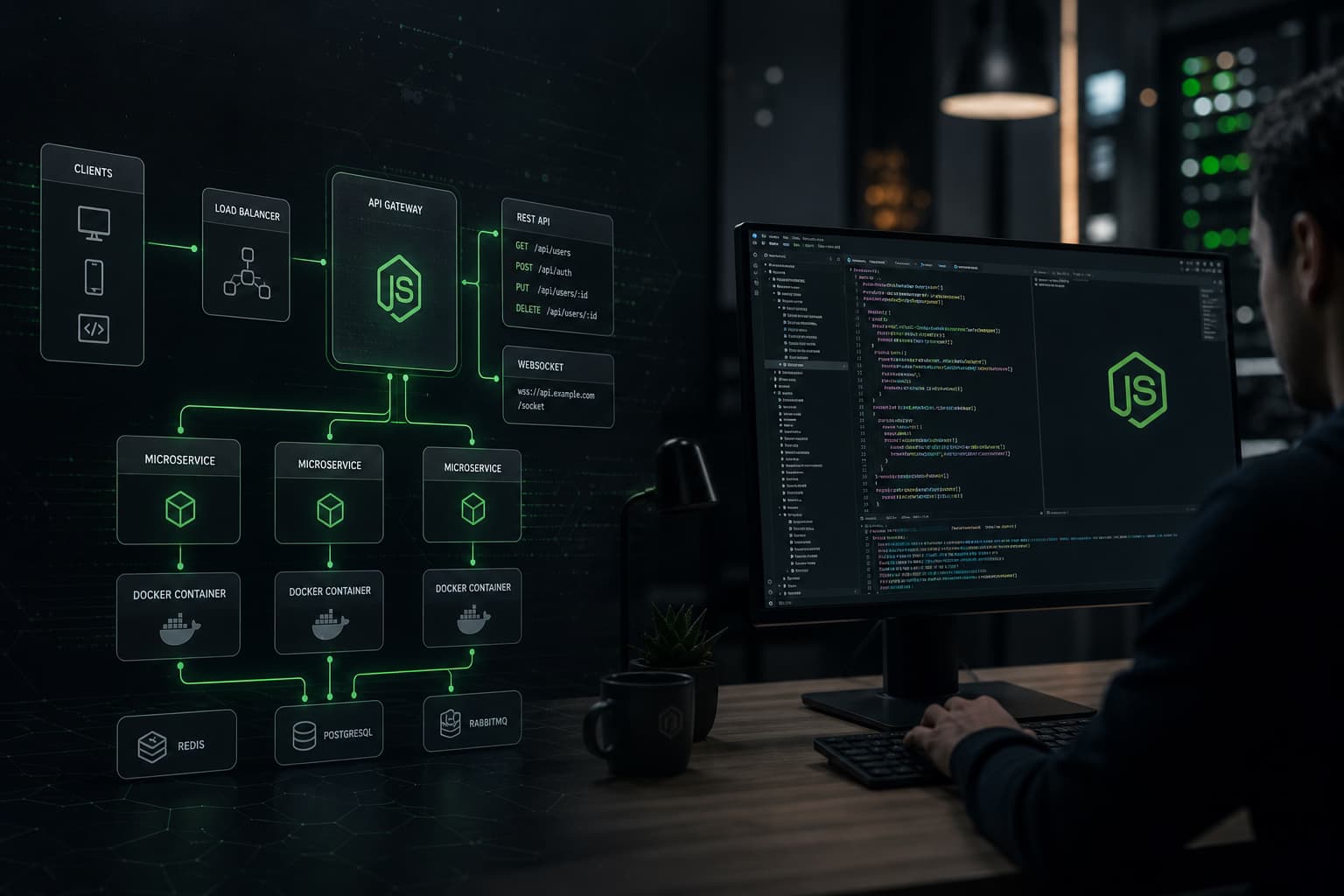
Node.js development – TypeScript APIs, Express and NestJS on a developer workstation
Björn Groenewold
„Node.js pays off when I/O, integrations and a consistent TypeScript stack matter—not when heavy computation sits on the event loop. Then we split cleanly: API in Node, workers in Go or queues.“
Björn GroenewoldDipl. Inf.Managing Director & CTO

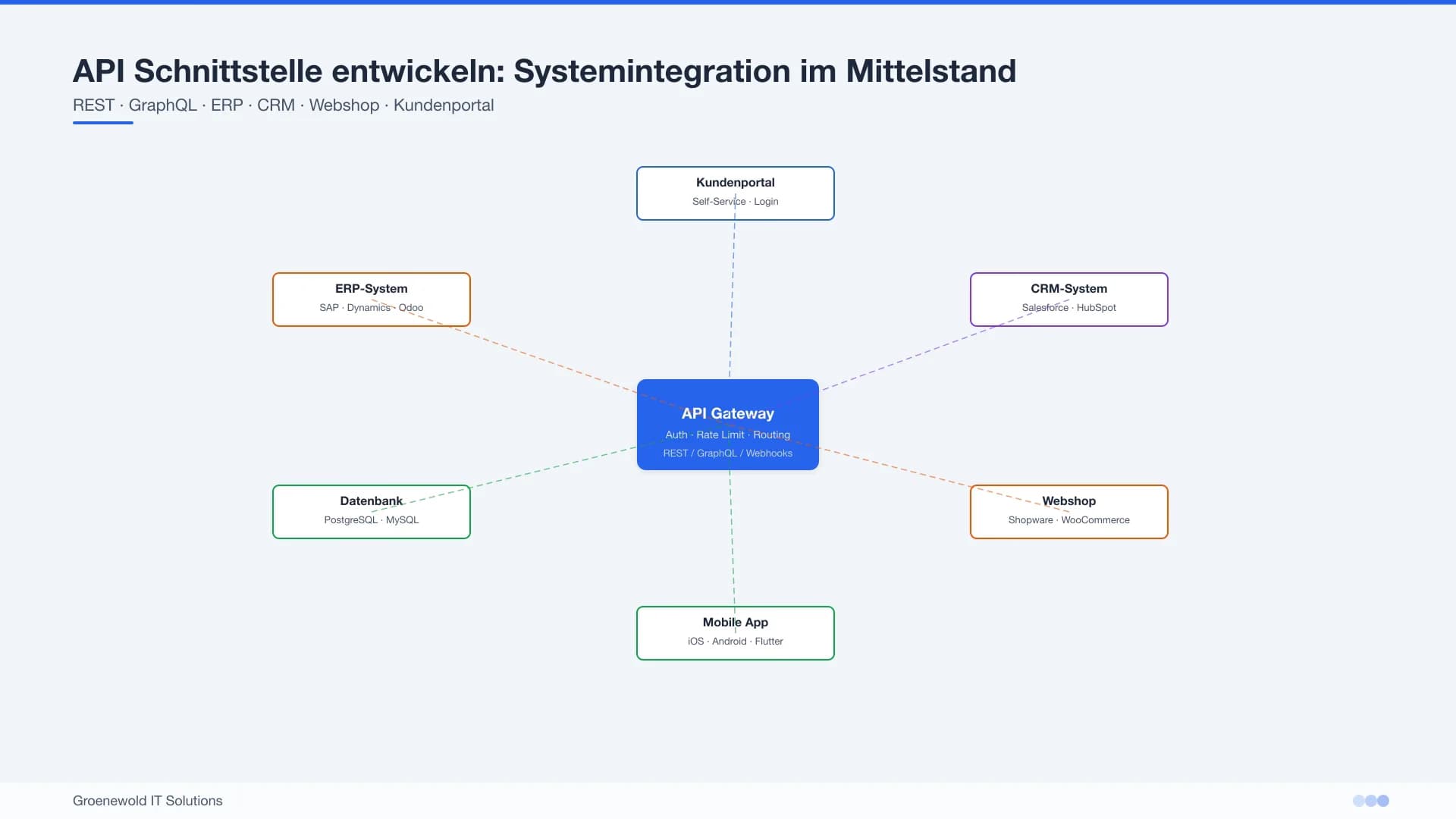
REST and GraphQL APIs – from specification to monitoring

Stable APIs need OpenAPI contracts, auth, validation and measurable SLIs—not just working endpoints. We plan versioning, rate limits and partner documentation from day one.
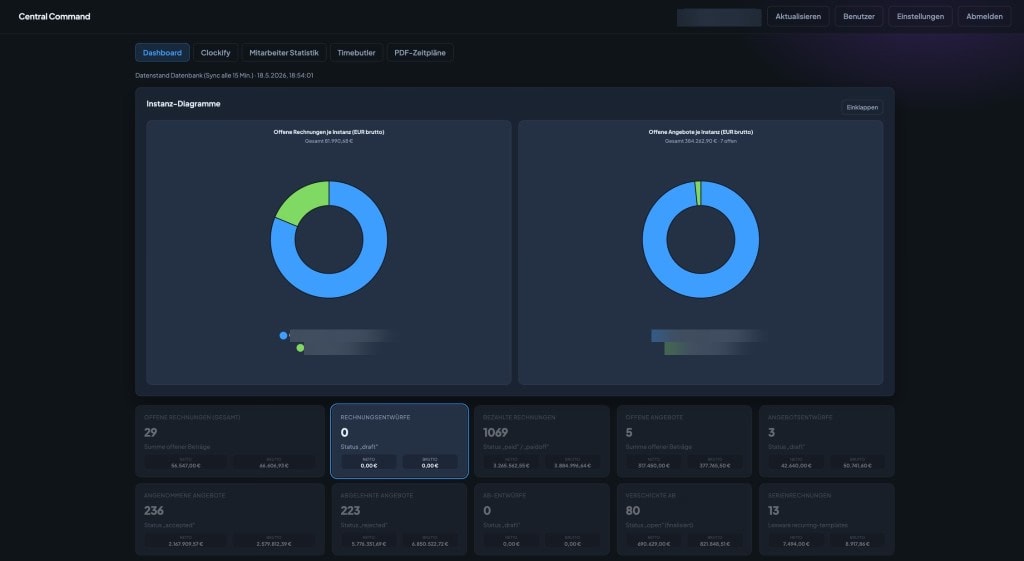
Node.js API dashboard – endpoints, latency, error rate and auth status in monitoring
More on API integration

Full-stack architecture – Node.js backend with Next.js and mobile

We typically connect Node backends to React/Next.js frontends, mobile apps and ERP systems. Shared TypeScript types between API and UI reduce integration errors.
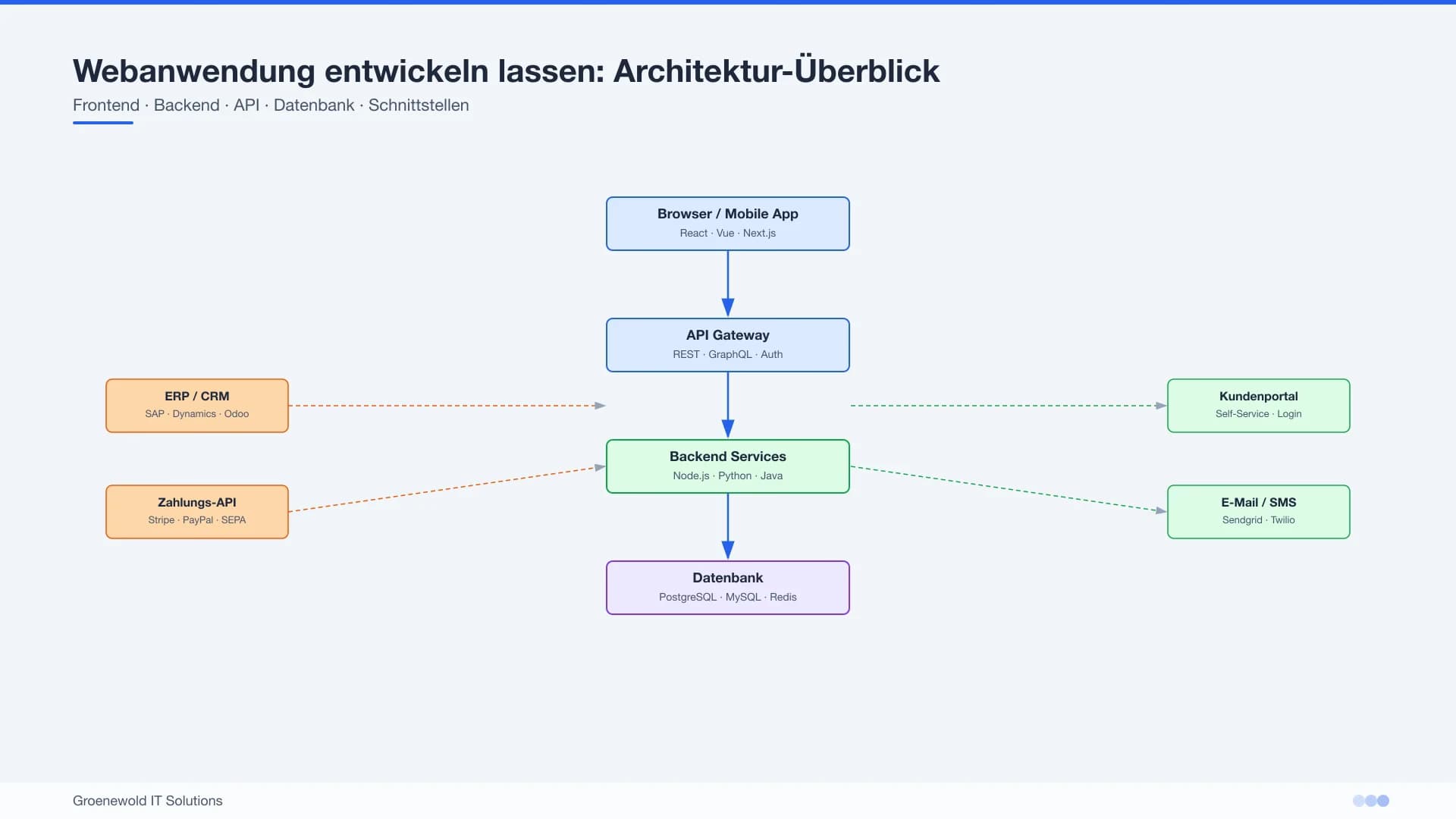
Custom web application architecture – frontend, API, database and integration layers
Frontend often with Next.js development

Node.js technology stack and ecosystem

Express or NestJS, TypeScript, PostgreSQL or MongoDB, Redis for cache and real-time—plus Docker, CI/CD and observability. The stack grows with the project, not before the MVP.

Node.js logo – JavaScript runtime for APIsNode.js
TypeScript logo – type-safe backend developmentTypeScript
Next.js logo – full-stack with React frontendNext.js
React logo – UI layer in full-stack projectsReact
Docker logo – containerised operationsDocker
Redis logo – cache, sessions and pub/subRedis
PostgreSQL logo – relational data storagePostgreSQL
MongoDB logo – document-oriented storesMongoDB

APIs & integration

REST, GraphQL, webhooks and ERP connections with idempotency, retries and OpenAPI documentation.

Real-time & scaling

WebSockets, SSE and queue workers—scaled horizontally with Redis Pub/Sub and load balancers.

DevOps & security

Docker, npm audit in CI, secrets management and monitoring—production-ready, not demo API.

Stack details: Node.js technology; full-stack often with Next.js.

Typical Node.js scenarios in practice
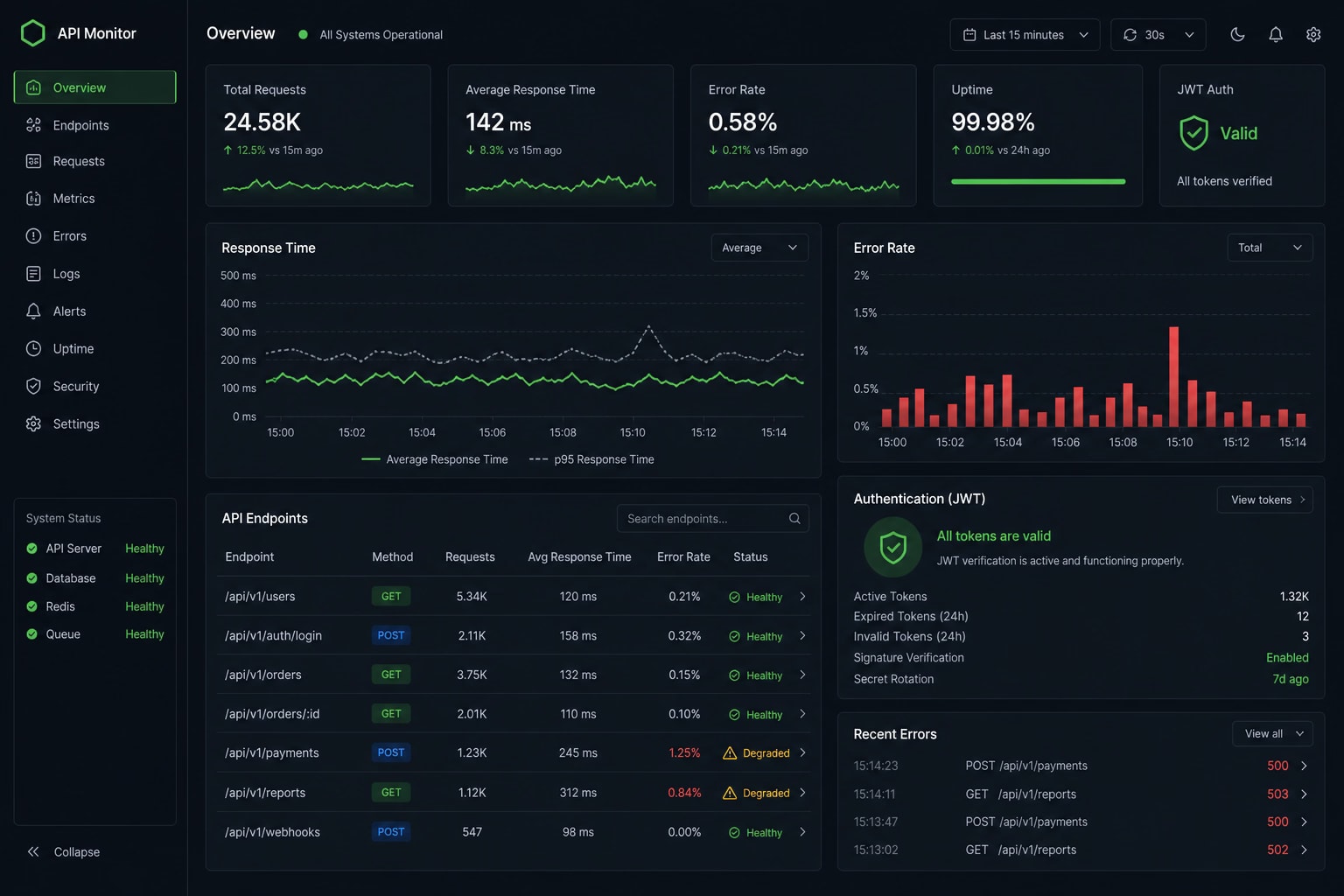
Node.js API monitoring – REST endpoints, latency and error rate in dashboard

B2B API & monitoring

REST APIs with JWT, OpenAPI and SLI dashboards—typical for customer portals, partner integrations and ERP middleware.
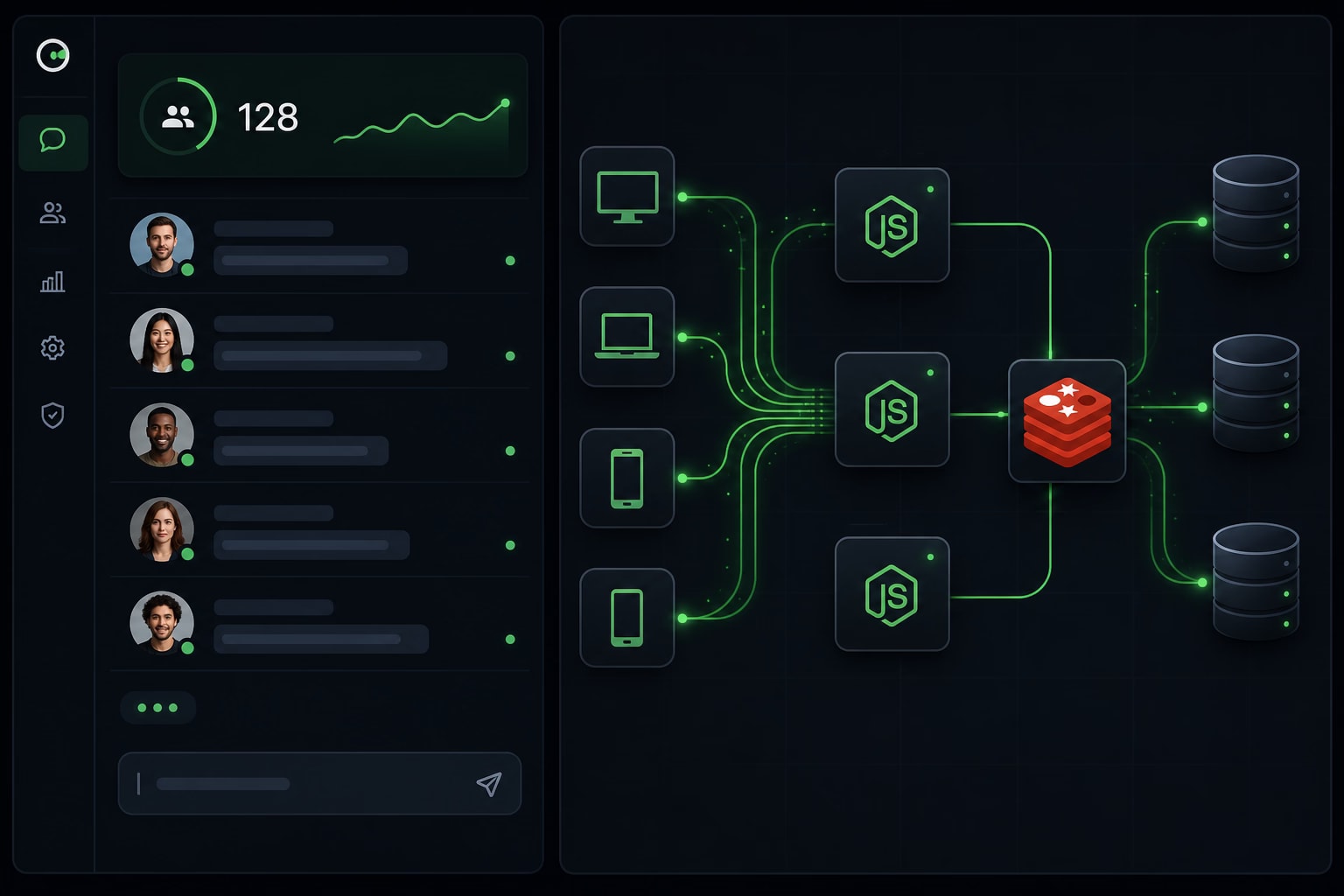
Node.js real-time backend – WebSockets, live dashboard and Redis Pub/Sub

Real-time & WebSockets

Live status, chat or operational dashboards—with backpressure, Redis and horizontal scaling behind the load balancer.

Node.js DevOps – CI/CD pipeline with tests, npm audit and Docker deploy

CI/CD & operations

GitHub Actions, automated tests, container deploy and maintenance—Made in Germany with a named contact.

View web app references

Our Node.js services

From lean APIs to event-driven services.

REST & GraphQL APIs

Versioning, validation (Zod/class-validator), OpenAPI and partner documentation.

Real-time & WebSockets

Live dashboards, chat, status updates – with backpressure and scaling via Redis.

NestJS architecture

Modules, DI and guards for larger teams – without unnecessary complexity for small MVPs.

DevOps & security

Docker, CI/CD, rate limits, Helmet, secrets management and Sentry.

TypeScript-first

Fewer runtime errors, better IDE support.

Full-stack

Shared types between API and Next.js frontend.

Integration

ERP, payment, CRM – robust idempotency and retries.

Scaling

Horizontal with load balancer and queue workers.

Node.js in practice

Stable Node projects use structured logging, health checks and graceful shutdown. We define SLIs for latency and error rate early.

  • pnpm/npm with lockfile and Dependabot
  • Integration tests with Supertest
  • Optional OpenTelemetry for tracing
  • Feature flags for low-risk deployments

In a project check we clarify load profile, auth and integrations – then a clear quote.

Frequently asked questions

FAQ on Node.js development

Stack, architecture and technology choice

Express or NestJS – when do you use which framework?
Express or Fastify fits lean REST APIs, MVPs and small teams that need to ship quickly. NestJS pays off with several developers, clear module boundaries and a growing codebase – with dependency injection, guards and structured layers. We choose pragmatically by team size, integration depth and maintenance window. For full-stack projects we often combine Node backends with Next.js on the frontend.
TypeScript or JavaScript – what do you recommend for Node.js projects?

For B2B and production APIs we default to TypeScript: fewer runtime errors, safer refactoring and shared types with React/Next.js frontends. Plain JavaScript only makes sense for very small scripts or when a legacy codebase already runs without TS and migration is planned separately. We separate TypeScript migration from feature work in quotes so budget and risk stay transparent.

When is Node.js the right choice – and when Go or Python instead?
Node.js fits I/O-heavy APIs, real-time features and teams with JavaScript/TypeScript skills. For CPU-intensive work, heavy batch jobs or extremely latency-critical microservices we add Go or workers – Node remains orchestrator and API layer. Python stays relevant for ML pipelines. In a project check we clarify load profile and polyglot architecture without vendor lock-in.
REST or GraphQL – how do you decide API design?

REST with OpenAPI remains the standard for B2B integrations, partner APIs and ERP connections – easier to version and document. GraphQL pays off with many heterogeneous clients (web, mobile, admin) with different data needs and when overfetching is a real performance problem. We avoid GraphQL without clear benefit because resolver complexity and caching rise quickly. In both cases: validation, rate limits and clear error codes from day one.

Costs, timeline and agency choice

What does Node.js development cost – and how transparent is the quote?
Lean REST APIs with auth and few integrations typically start from around €12,000. Platforms with real-time, multiple roles and ERP/payment integrations tend towards €25,000–70,000. Fixed price after an agreed scope workshop – not vague hourly guesses. Use our web development cost calculator or book a strategy call. Operations, monitoring and maintenance are quoted separately.
How long does Node.js API development take until go-live?

An MVP API with 5–10 endpoints, JWT auth and one integration is often production-ready in 6–10 weeks – including tests and CI/CD. Larger backends with real-time, queues and several third-party systems typically need 3–6 months. The bottleneck is rarely Node.js itself but unclear requirements and missing API contracts to ERP or CRM. We work in two-week sprints with demos and measurable increments.

What should you look for when choosing a Node.js agency in Germany?

References with real APIs (OpenAPI, monitoring, load profile), clear ownership of auth and security, no undocumented npm dependencies and a reachable contact in your timezone. Made in Germany means for us: engineering in Leer/East Frisia, German contracts, handover-ready code in your repository – without undocumented offshore intermediaries.

Security, scaling and operations

How do you secure Node.js APIs?
JWT or OAuth2, role-based access (RBAC), input validation (Zod/class-validator), rate limits, Helmet headers, secrets via vault/env – never in code. npm audits run in CI; critical CVEs block deployments. Audit logs and structured logging are standard. For sensitive data we plan security reviews and GDPR-compliant processing from the start.
Is Node.js suitable for CPU-heavy tasks?

Node.js is optimised for I/O and many parallel connections – not heavy computation on the event loop. For CPU-intensive jobs we use worker threads, Bull/BullMQ queues or complementary Go services. Node then remains orchestrator, API gateway and business logic layer. That avoids blocked event loops while keeping a unified TypeScript stack in frontend and API layer.

How do you scale real-time features with WebSockets?
WebSockets for live dashboards, chat or status updates are planned with backpressure, heartbeats and horizontal scaling via Redis Pub/Sub or a dedicated socket cluster. Load balancers must support sticky sessions or shared state. For push-only notifications we also evaluate Server-Sent Events or queue-based patterns – often simpler to operate than permanent socket connections. See API integration and DevOps consulting in the architecture workshop.
Do you handle maintenance, monitoring and CI/CD after launch?
Yes – with health checks, structured logging, Sentry or OpenTelemetry and defined SLIs for latency and error rate. CI/CD pipelines (GitHub Actions, GitLab CI) including npm audit and automated tests are standard. Optional SLA for bugfixes, dependency upgrades and feature sprints. See also software maintenance and DevOps costs.
How do you connect Node.js to ERP, CRM and existing systems?
Via REST, GraphQL or message queue interfaces with idempotency, retries and dead-letter queues. We document contracts in OpenAPI and keep partner integrations versioned. If your ERP has no modern API yet, we plan adapters or middleware – see system integration. Critical business logic and idempotency keys prevent duplicate bookings on network failures.

Request Node.js project

Describe load profile, auth requirements and integrations – we outline architecture, scope and a realistic timeline Made in Germany.

Node.js Development: structured delivery approach

Björn Groenewold

Up to 50% of your investment via BAFA/KfW

Use our funding calculator to see which government grants may apply to your project.

Björn Groenewold – Managing Director

Node.js Development & Node Agency Germany | Groenewold IT Solutions