As of: 19 June 2026 · Reading time: 7 min
Key takeaways
- The digital transformation has revolutionized trade and e-commerce in the last two decades.
- What was considered innovative yesterday is often an obstacle to growth and agility.
- This challenge focuses on **Le...
The digital transformation has revolutionized trade and e-commerce in the last two decades. What was considered innovative yesterday is often an obstacle to growth and agility. This challenge focuses on **Le...
“The real challenge in legacy modernization is not the code—it is keeping operations running without disruption.”
– Björn Groenewold, Managing Director, Groenewold IT Solutions
Legacy-Modernization for Trade & E-Commerce: The Way to Future-proof Customer Experience
Why Legacy Systems Limit Growth in Retail and E-Commerce
Short: Executive answer: The digital transformation has revolutionized trade and e-commerce in the last two decades.
Executive answer: The digital transformation has revolutionized trade and e-commerce in the last two decades.
When planning Legacy-Modernization for Trade & E-Commerce: The Way to Future-proof… from idea to delivery, CMS & E-Commerce Platforms, Cost Calculator: Online Shop, Solution: Retail & E-Commerce sowie Shopware vs. Magento offer practical next steps on our site.
Retail and e-commerce has changed faster than most sectors over the past two decades. Customer expectations, channel variety, and competitive pressure are all higher than they were ten years ago.
Many companies are trying to meet these demands using IT systems designed for a simpler era.
Legacy systems in retail typically cover three critical areas:
- WWS (Warenwirtschaftssystem) — Merchandise Management System: tracks inventory, purchases, and sales
- CRM (Customer Relationship Management): manages customer data, purchase history, and marketing
- E-commerce platform: handles the online sales channel
These systems often run on outdated programming languages or proprietary databases. They were not designed to work together. Data silos and manual reconciliation are the result.
1. High Maintenance Costs and Technical Debt
Short: Legacy systems in retail require specialists who understand older technologies.
Legacy systems in retail require specialists who understand older technologies. These specialists are scarce. Maintenance is expensive.
Every small change — a new payment method, a different tax rule, a new supplier data format — becomes a complex project.
Technical debt is the accumulated cost of quick fixes and workarounds applied to a system over years. In retail legacy systems, this debt is often substantial.
Each year the system runs without modernization, the debt grows and the cost of change increases.
2. Lack of Scalability
Retail has extreme seasonal peaks.
Black Friday, Christmas, and promotional campaigns can multiply transaction volumes overnight.
Monolithic legacy platforms cannot scale quickly to handle this load.
The consequences are direct and measurable:
- Slow page loading during peak periods
- System failures at the highest-revenue moments of the year
- Lost sales that cannot be recovered after the event
New business models create additional scalability demands.
Omnichannel retail — selling across physical stores, online, and mobile at the same time — requires systems that sync inventory and orders in real time across all channels.
Legacy systems struggle with this or cannot support it at all.
BOPIS (Buy Online, Pick Up In Store) is a standard customer expectation in many retail segments. It requires real-time inventory visibility and order routing between e-commerce and store systems.
Without this integration, BOPIS either does not work or relies on error-prone manual processes.
3. Security Risks and Compliance
Short: Retail systems store large volumes of customer data — names, addresses, payment information, purchase history.
Retail systems store large volumes of customer data — names, addresses, payment information, purchase history. Outdated software that no longer receives security updates is an easy target.
GDPR requires that this data is protected, accessible on request, and deletable on demand.
Legacy systems often lack:
- Current encryption standards for data at rest and in transit
- Audit trails that document who accessed which data and when
- Mechanisms to delete customer data reliably across all system modules
A data breach in retail damages customer trust and triggers regulatory penalties. Security alone is a strong reason to modernize.
4. What Modern Architecture Enables
Short: Modernizing retail IT unlocks capabilities that legacy systems cannot provide.
Modernizing retail IT unlocks capabilities that legacy systems cannot provide.
Unified Inventory in Real Time
Short: A modern merchandise management system updates inventory across all channels at the same time.
A modern merchandise management system updates inventory across all channels at the same time. Online, in-store, and mobile channels always show the same stock levels. Customers see accurate availability.
Staff can fulfill orders from any location.
Omnichannel Customer Experience
Short: Modern platforms give every customer touchpoint access to the same customer profile.
Modern platforms give every customer touchpoint access to the same customer profile.
Purchase history, loyalty status, preferences, and active promotions are consistent across the online store, the mobile app, and the point of sale in-store. Personalized recommendations work across channels.
Customer service has full context when a customer calls.
AI-Powered Recommendations and Personalization
Short: Modern e-commerce platforms include AI recommendation engines.
Modern e-commerce platforms include AI recommendation engines.
These analyze individual customer behavior and suggest products that increase conversion and average order value.
Legacy platforms cannot support this without significant custom development.
Automated Replenishment
Short: Modern merchandise management systems connect to supplier systems via APIs.
Modern merchandise management systems connect to supplier systems via APIs. Replenishment orders are triggered automatically when stock falls below defined thresholds.
Procurement staff focus on supplier relationships and exceptions — not manual order placement.
5. Modernization Approaches for Retail
Strangler Fig Pattern
Short: New capabilities are built alongside the existing legacy system.
New capabilities are built alongside the existing legacy system. The e-commerce front end is replaced with a modern platform.
The legacy merchandise management system continues to run as a back end, connected through APIs. Over time, additional modules are migrated.
The legacy system handles progressively less until it can be shut down. This approach keeps operations running across the modernization. There is no big-bang cutover.
Headless Commerce Architecture
Short: The customer-facing front end (web store, mobile app) is separated from the back-end business logic and data.
The customer-facing front end (web store, mobile app) is separated from the back-end business logic and data. Each layer can be updated independently.
This allows the customer experience to be improved right away without replacing the entire system at once.
Phased Migration by Module
Short: Individual business functions — inventory management, order processing, CRM, loyalty program — are migrated to modern platforms in sequence.
Individual business functions — inventory management, order processing, CRM, loyalty program — are migrated to modern platforms in sequence. Each migration is a contained project with defined scope and a rollback plan.
6. What IT Managers Need to Address
Before starting modernization in retail:
- Map all current systems and document the data flows between them
- Identify which system holds the master record for inventory, customers, and orders
- Assess API availability in the current system — can it expose data to modern tools?
- Define which seasonal events create system load peaks and what the current failure threshold is
- Confirm GDPR compliance gaps in current systems and prioritize fixing them
7. Getting Started
Short: A practical first step for retail modernization:
A practical first step for retail modernization:
- Select one system with a documented performance or compliance problem
- Map its data dependencies and current integrations
- Design a migration path with a defined rollback plan
- Run a pilot migration during a low-traffic period
- Validate that all integrations work correctly before expanding
"The real challenge in legacy modernization is not the code — it is keeping operations running without disruption." — Björn Groenewold, Managing Director, Groenewold IT Solutions
Groenewold IT Solutions supports retail and e-commerce companies through system assessments, integration architecture, and phased migration programs.
References and Further Reading
- Bitkom – German digital industry association
- German Federal Office for Information Security (BSI)
- European Commission – Digital strategy
- MDN Web Docs (Mozilla)
- W3C – World Wide Web Consortium
Author: Björn Groenewold (Dipl.-Inf.), Managing Director, Groenewold IT Solutions GmbH
Frequently Asked Questions (FAQ)
What is this article about: “Legacy-Modernization for Trade & E-Commerce: The Way to Future-proof Customer Experience”?
Here we cover Legacy-Modernization for Trade & E-Commerce: The Way to Future-proof Customer Experience — focused on architecture, process, and business outcomes.
In short: The digital transformation has revolutionized trade and e-commerce in the last two decades. What was considered innovative yesterday is often an obstacle to growth and agility.
This challenge focuses on **Le...
Who benefits most from the content described here?
Typical readers are business and IT leaders in Legacy-Modernisierung who want to secure quality, security, and maintainability over the long term.
How does this topic fit into an IT or digital strategy?
In a digital strategy, prioritize stable core processes first, then extensions. See also professional software development and consulting. For multi-system landscapes, IT consulting and architecture helps align vendors and internal teams.
What are sensible next steps if we need support?
If you need support with design, delivery, or modernization: schedule an appointment or outline your project via contact.
About the author

Managing Director of Groenewold IT Solutions GmbH and Hyperspace GmbH
Since 2009 Björn Groenewold has been developing software solutions for the mid-market. He is Managing Director of Groenewold IT Solutions GmbH (founded 2012) and Hyperspace GmbH. As founder of Groenewold IT Solutions he has successfully supported more than 250 projects – from legacy modernisation to AI integration.
Blog recommendations
Related articles
These posts might also interest you.
Legacy-Modernization for Crafts & Services: Your way from the IT-Falle
In an increasingly digitized economy, craft businesses and service companies face the challenge of making their business processes efficient, safe and sustainable. While modern technologies such as…
Legacy Modernization for Financial Services & Banks: The Way to the Digital Future
The financial sector is facing a profound change. Driven by new digital competitors (FinTechs), changing customer expectations and a steadily more complex regulatory system, banks and financial…
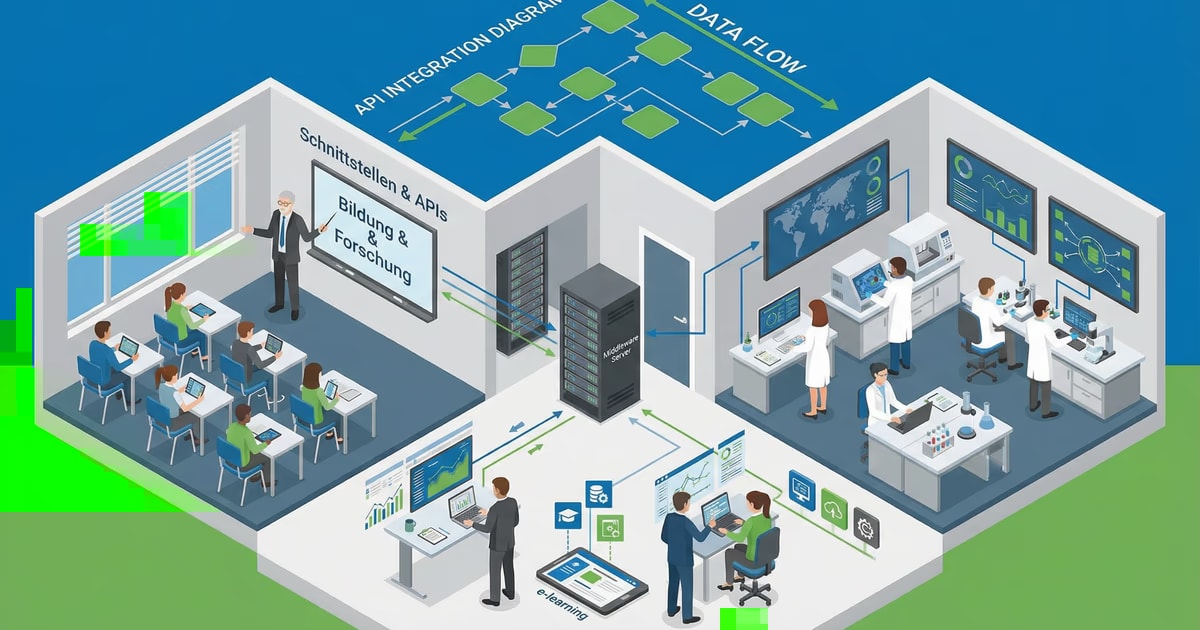
Legacy Modernization in Logistics & Transport: The Way to Digital Supply Chain
The logistics and transport industry is the backbone of the global economy. But while the demands on speed, transparency and sustainability are constantly rising, many companies are fighting with an…
Free download
Checklist: 10 questions before software development
Key points before you start: budget, timeline, and requirements.
Get the checklist in a consultationRelevant next steps
Related services & solutions
Based on this article's topic, these pages are often the most useful next steps.
Related solutions
Related comparison
More on Legacy-Modernisierung and next steps
This article is in the Legacy-Modernisierung topic. In our blog overview you will find all articles; under category Legacy-Modernisierung more posts on this subject.
For topics like Legacy-Modernisierung we offer matching services – from app development and AI integration to legacy modernisation and maintenance. We describe typical use cases under solutions. Our cost calculators give initial estimates. Key terms are in the IT glossary. Books and long-form guides appear on the publications page; deeper articles live under topics.
If you have questions about this article or want a non-binding discussion about your project, you can book a consultation or reach us via contact. We usually respond within one working day.