Shop Scope and Features
At project start we define edition, sales channels, catalogue, customer groups, pricing logic and checkout. Community Edition can provide an open-source base; commercial capabilities and vendor services are included only when their benefit justifies recurring cost. The proposal records current vendor prices and contract terms with source and check date.
Our scope can include architecture, configuration, theme, plugin, migration, interfaces and testing. A Shopware-specific reference is published only when the project, version and our contribution are confirmed. General e-commerce work is not presented as proof of Shopware delivery.
Plugins and ERP Integration
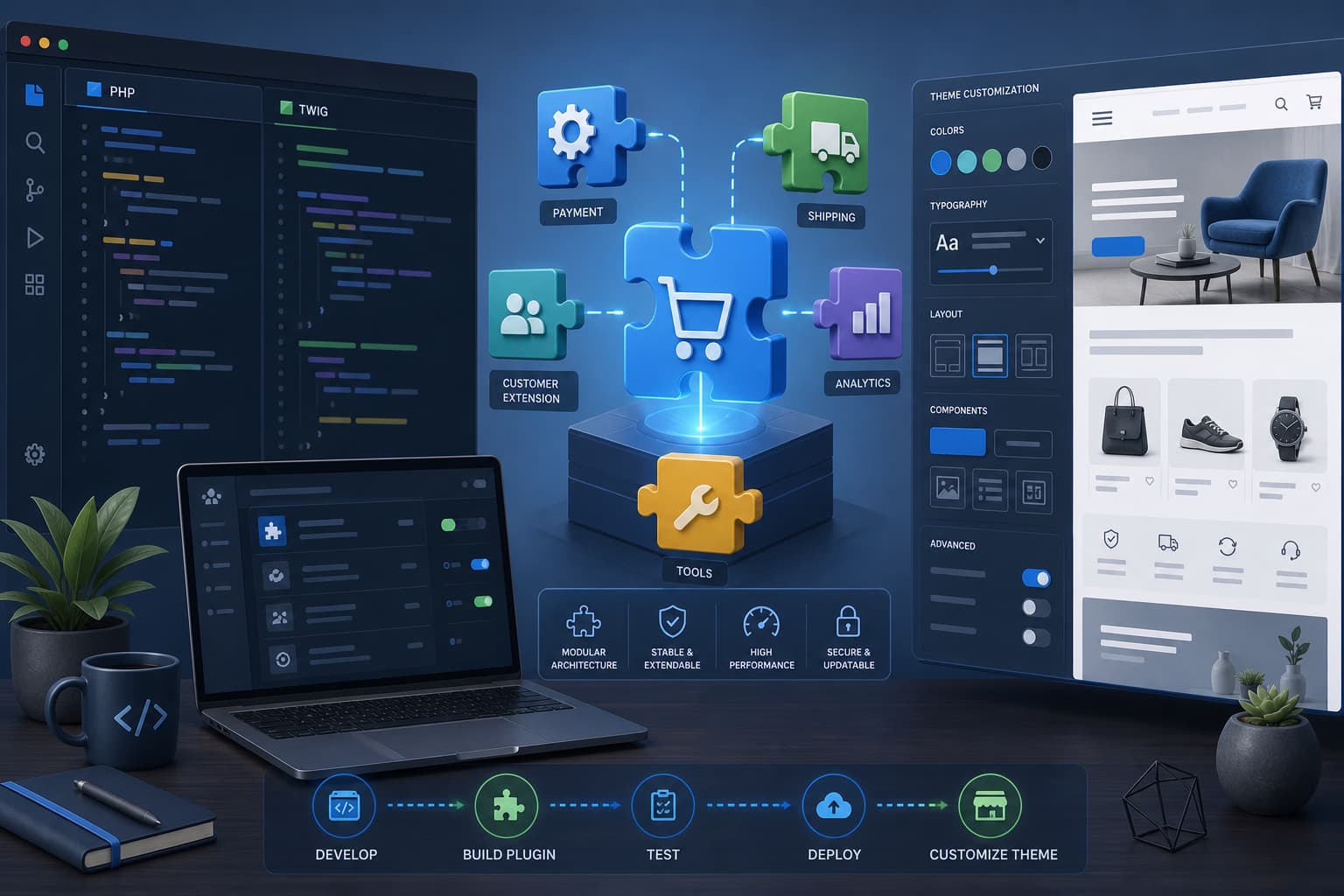
A custom plugin keeps business logic outside the Shopware core. For example, an order can receive defined attributes based on customer group, delivery mode and approval status. Automated tests cover installation, deactivation, updates and affected cart and checkout paths, reducing later release risk.
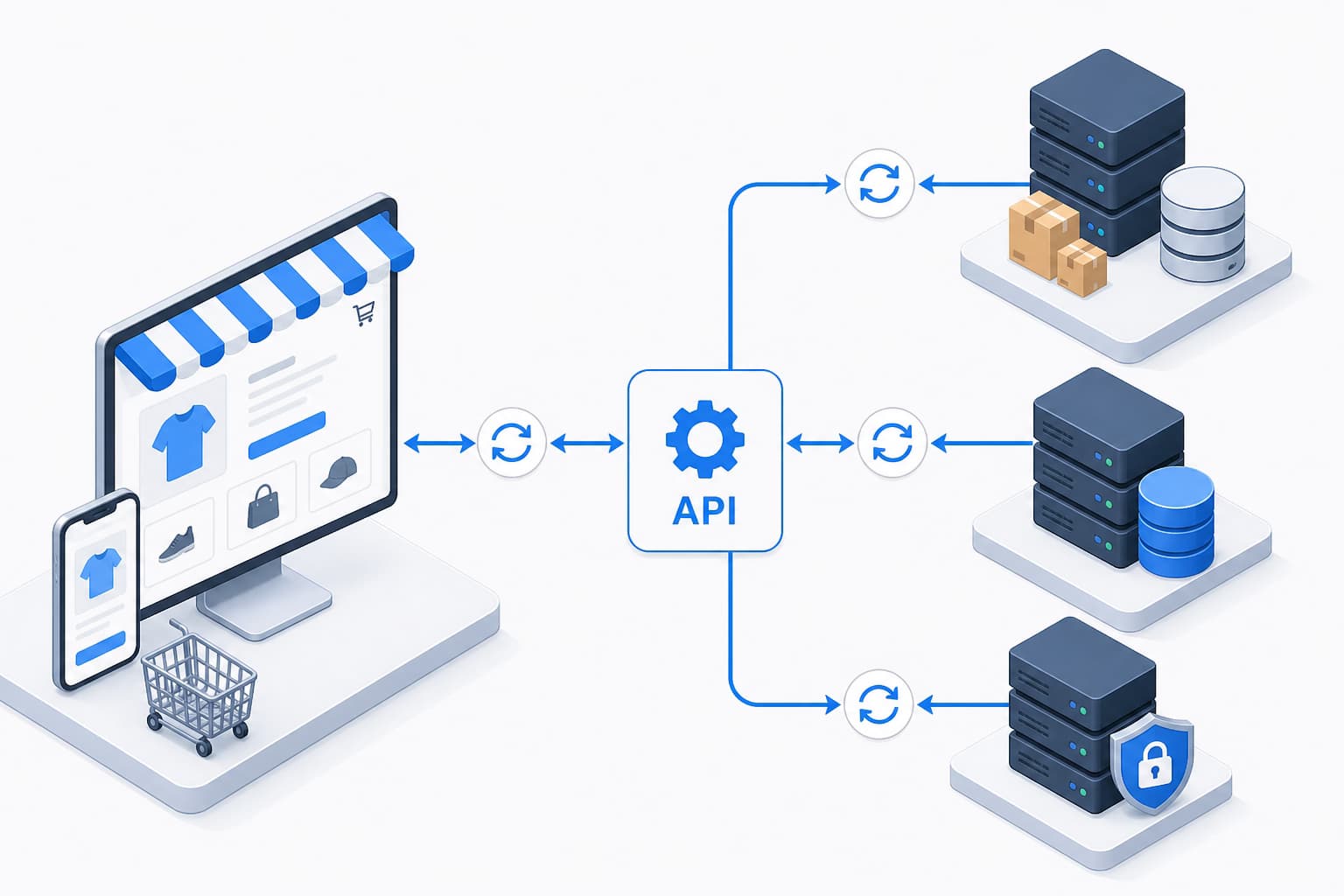
ERP integration sends products, variants, prices and stock to the shop and returns orders and status messages. Delta synchronisation, an error queue, retry rules and manual overrides belong to the flow. Technical delivery is detailed in our API integration service.
Migration and Updates
Migration starts with a data inventory, URL mapping, extension assessment and acceptance criteria. Test imports cover products, variants, customers, orders and media. Before cutover we validate redirects, payment, shipping, tax logic and ERP reconciliation and document a rollback path.
Updates run on staging first. Compatibility checks, automated core journeys, performance comparison and business acceptance precede production. For platform selection, compare our online shop delivery and Magento development.
Shopware 6 — the leading e-commerce platform in the DACH region
Shopware 6 is an API-oriented commerce platform for B2B and B2C scenarios. Fit depends on catalogue, pricing logic, integrations, team and operating model. We do not treat market-position, edition-feature or vendor-price statements as permanent; they are checked against current Shopware material before each decision.
As a specialised Shopware agency based in East Frisia we develop custom shops, themes and plugins – from concept and implementation through to ongoing maintenance. We integrate Shopware into your existing IT landscape: ERP (Odoo, SAP, Navision), PIM, inventory systems and payment providers.
Related: online shop creation, e-commerce and CMS platforms and e-commerce solutions. Technology overview: Shopware Development.

Our Shopware services
From B2C relaunch to B2B suite with ERP sync – with clear scope and fixed price after a discovery workshop.
Shopware 6 shop development
We build custom Shopware 6 shops from the ground up: UX concept, custom theme and full shop configuration (payment methods, shipping rules, tax classes, multilingual setup). For B2B shops we configure customer groups, tier prices, approval workflows and quick-order features.
Shopware plugin development
When standard plugins do not meet your requirements, we develop custom Shopware plugins: product configurators, calculation logic, interfaces to external systems, custom checkout extensions or admin modules for special workflows.
ERP and PIM integration
Shopware 6 offers a full REST API. We build interfaces between Shopware and your ERP (Odoo, SAP, Navision), PIM or inventory system: products, prices and stock sync automatically; orders flow back into the ERP.
Shopware migration and performance
Still on Shopware 5 or another platform (Magento, WooCommerce, Oxid)? We migrate your data structurally to Shopware 6 – with minimal downtime and full data consistency. We also optimise performance: caching, Elasticsearch, CDN and lazy loading for better Core Web Vitals.
Shop development
Custom Shopware 6 shops for B2B and B2C – custom theme, configuration and GDPR baseline.
Plugin development
Tailored plugins for individual requirements – update-compatible and following Shopware best practices.
ERP integration
Automatic sync of products, prices and orders with SAP, Odoo and similar systems.
Performance and migration
Shopware 5 migration, platform switch and performance tuning – fast shops, better conversion.

„With Shopware 6, architecture matters—not the theme alone: B2B pricing logic, ERP sync without double maintenance and plugins that survive updates—or the shop becomes an expensive island solution.“
Shopware B2B and checkout – processes before pixels
Successful Shopware projects clarify roles, approvals and integration paths first—then theme, Rule Builder and checkout. That keeps the shop scalable as catalogues and customer groups grow.
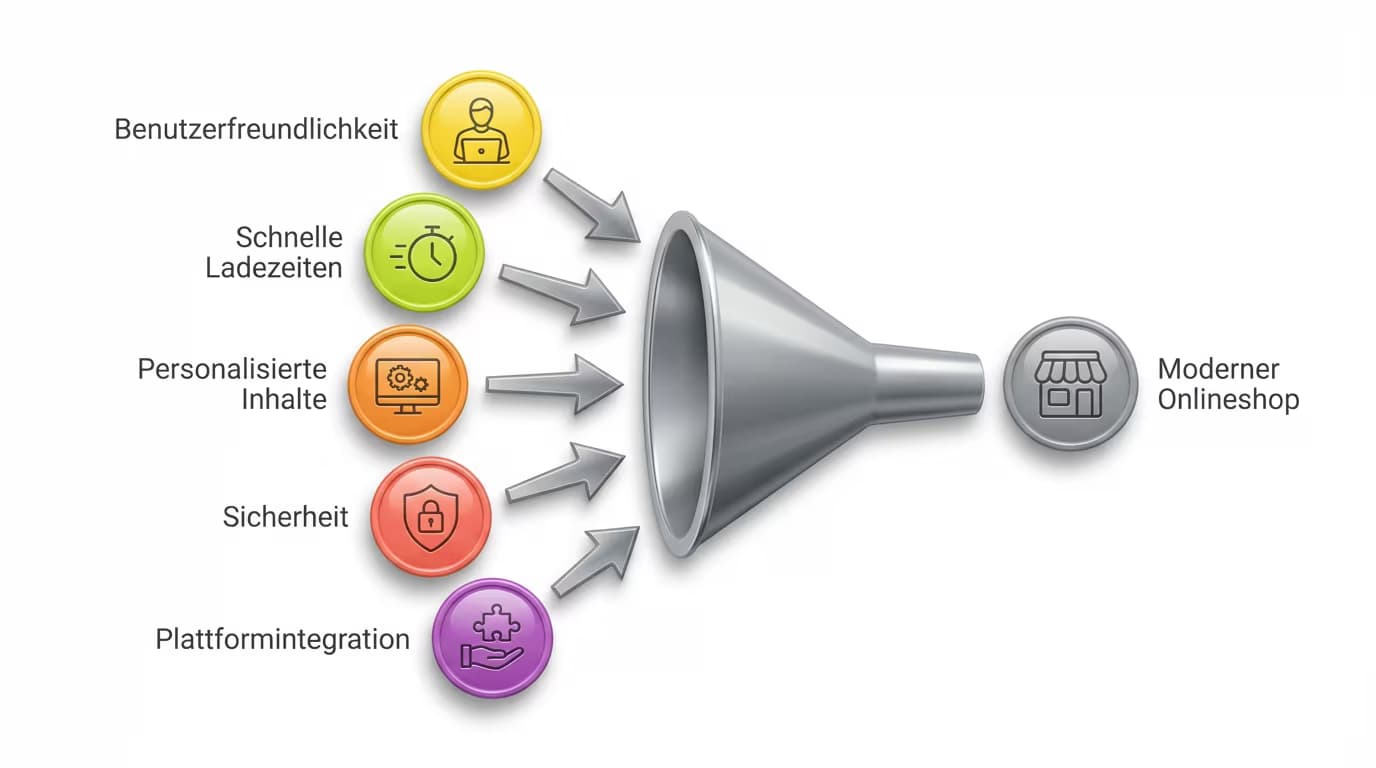
Shopware technology stack and integration ecosystem
Shopware 6 builds on Symfony, PHP and MySQL—plus Elasticsearch, Redis, CDN and ERP interfaces. We choose edition, extensions and hosting to match catalogue size and peak traffic.
 Shopware 6
 Symfony
 PHP
PHP MySQL
MySQL Redis
Redis Stripe
B2B & catalogue
Customer groups, tier prices and approval workflows—even with large variant catalogues at scale.
Storefront & conversion
Custom themes, Rule Builder and stable checkout flows—measurable under load, not only in demos.
Integration & operations
ERP sync, payment routes and Shopware updates on a plan—with staging, monitoring and clear SLAs.
We plan ERP, PIM and payment connections in the workshop—see API integration and Shopware technology.
Typical Shopware scenarios in practice
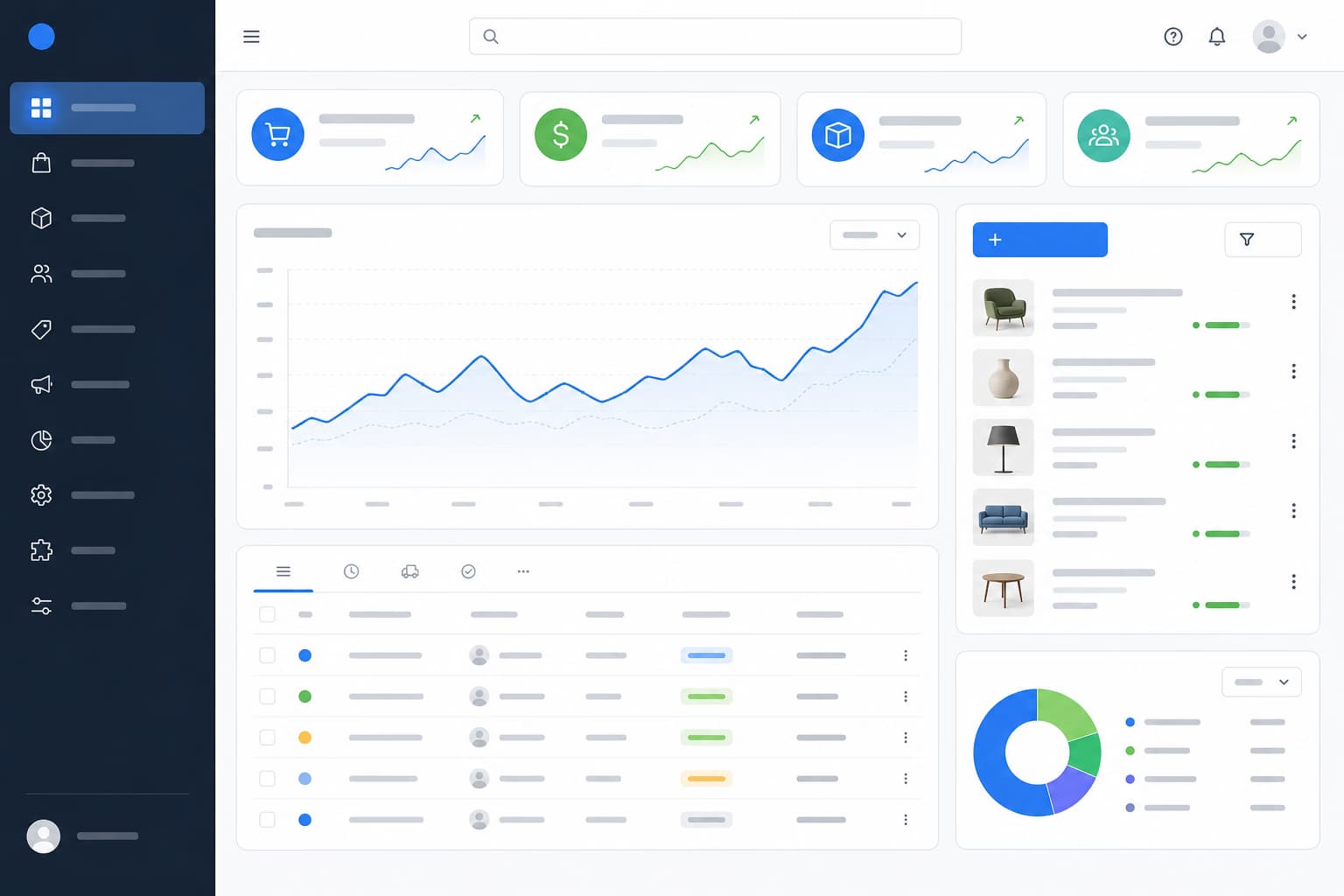
Shop dashboard & orders
Shopware 6 administration with order overview, revenue charts and catalogue control—for e-commerce and sales teams.
ERP & PIM connection
REST API sync for products, stock, prices and orders—typically with Odoo, SAP or Navision.
Plugins & themes
Custom extensions and Twig themes kept update-safe—no core hacks, following Shopware best practices.
Shopware 6: enterprise e-commerce for mid-market merchants
Shopware 6 provides a modular architecture for mid-market merchants. Plugins extend functionality outside the core, while APIs connect ERP, PIM, marketplaces and other channels. Suitability and effort are assessed from the actual data and business process, not an unverified market-leadership claim.
A professional Shopware 6 project starts with system architecture: which extensions, which ERP integration, which hosting infrastructure. We build performance-optimised shops with Varnish cache, CDN and structured data for maximum SEO impact.
- Shopware 6 Open Source: free baseline with full API access
- Plugin ecosystem: 5,000+ extensions in the Shopware Store
- ERP integration: REST API for SAP, Navision, Odoo and other systems
- Headless commerce: Shopware as API backend for React/Vue.js frontends
- Multilingual and multi-currency: native support for international shops
- B2B suite: customer groups, minimum order quantities and individual price lists
We develop Shopware 6 shops from concept to launch – including ERP integration, SEO optimisation and team training. First consultation free of charge.