
As of: 19 June 2026 · Reading time: 11 min
Key takeaways
- In an increasingly digitized economy, craft businesses and service companies face the challenge of making their business processes efficient, safe and sustainable.
- While modern technologies such as cloud computing...
In an increasingly digitized economy, craft businesses and service companies face the challenge of making their business processes efficient, safe and sustainable. While modern technologies such as cloud computing...
“The real challenge in legacy modernization is not the code—it is keeping operations running without disruption.”
– Björn Groenewold, Managing Director, Groenewold IT Solutions
Legacy-Modernization for Crafts & Services: Your Way From IT-Fall
The most important thing in the short term: Craftsmen and services companies can reduce their maintenance costs by up to 70% by means of legacy moderation, while introducing mobile solutions for site documentation, time recording and digital customer portals.
The Strangler Pattern allows step-by-step detachment without interruption of operation.
In an increasingly digitized economy, craft businesses and service companies face the challenge of making their business processes efficient, safe and sustainable.
While modern technologies such as cloud computing, mobile applications and artificial intelligence open up new opportunities, many companies still struggle with outdated IT systems, the so-called Legacy systems.
These systems, often grown for decades and deeply rooted in the business processes, were once the main pillars of the business.
Today, however, they are increasingly developing into an invisible brake that prevents innovation, raises costs and threatens competitiveness.
The Legacy modemization is therefore not only a technical necessity, but a strategic decision that decides on the long-term success in the digital age.
This complete guide highlights why the departure from old IT is indispensable, what concrete advantages modernization offers and how crafts and service companies can successfully master this change.
Why Legacy systems become cost traps in crafts and service providers
Short: Executive answer: In an increasingly digitized economy, craft businesses and service companies face the challenge of making their business processes efficient, safe and sustainable.
Executive answer: In an increasingly digitized economy, craft businesses and service companies face the challenge of making their business processes efficient, safe and sustainable.
For Legacy-Modernization for Crafts & Services: Your way from the IT-Falle, Legacy Modernisation, Cost Calculator: Legacy Modernisation, Solution: Legacy Reduction sowie Monolith vs. Microservices help you align implementation, scope and budget before you commit.
The idea that an old, working system does not cost is a widespread misbelief.
In fact, the hidden costs of legacy systems are often higher than the investment in a modern IT infrastructure.
These costs manifest themselves in different areas, from maintenance to inefficiency in daily business.
## Outdated software: The underestimated risk for the middle class
Short: One of the biggest pain points is the high maintenance costs and missing spare parts.
One of the biggest pain points is the high maintenance costs and missing spare parts.
Legacy systems are often based on programming languages or hardware for which there are hardly qualified experts or substitute components.
Maintenance becomes an expensive and time-consuming undertaking, which can often only be guaranteed by specialized, high-priced service providers.
Any necessary adjustment or troubleshooting becomes a risky and costly project. .There are also serious safety gaps and compliance problems.
Outdated software no longer receives security updates, making it a light target for cyber attacks.
In the crafts and service providers that process sensitive customer data, data leakage can not only lead to massive reputational damage, but also to high fines, in particular with regard to the General Data Protection Regulation (GDPR).
The Incompatibility with modern tools such as cloud solutions, mobile apps or modern interfaces (APIs) also insulates the company and prevents the use of pioneering technologies that are essential for growth and efficiency enhancement.
## The brake in the daily business: Inefficiency through manual processes
Short: Legacy systems are often the main reason for media breaks and double data input.
Legacy systems are often the main reason for media breaks and double data input.
If, for example, an order is entered in the ERP system, then handwrittenly transferred to a worksheet and later must be entered manually into the accounting software, error sources and enormous time losses arise.
This Inefficiency due to manual processes leads to slow supply creation and accounting, which directly affects liquidity and customer satisfaction.
In addition, it lacks real-time data for decisions.
In a modern service company it is crucial to have at any time an overview of the utilisation of employees, the status of projects or stocks.
Outdated systems do not offer this transparency or only by expensive manual reports. The result is a reactive rather than proactive corporate management that misses opportunities and recognizes risks too late.
The advantages of ITmodernization: More than just an update
Short: IT moderation is far more than just replacing old technology.
IT moderation is far more than just replacing old technology. It is an investment in the sustainability of the company, which is reflected in concrete, measurable benefits.
## Cost savings and efficiency enhancement through modern IT
Short: One of the most immediate benefits is the ** reduction of operating costs**.
One of the most immediate benefits is the ** reduction of operating costs**. By migrating to modern, often cloud-based systems, companies can dramatically reduce costs for outdated, oversized hardware, energy and specialized maintenance contracts. Studies show that the Legacy software modernize craftsmanship costs for maintenance can be reduced by up to 70% (Source: McKinsey Digital, 2023) if the transition to a lean, standardized and automated solution is achieved. .The Automatization of routine tasks is another central point. Modern ERP and CRM systems can, for example, take over automatic production of invoices after project completion, digital time recording or automatic material ordering. This relieves employees of administrative tasks and allows them to focus on value-generating activities. The Scalability for future growth is also guaranteed: Modern architectures (e.g. microservices or cloud solutions) can be flexibly adapted if the company grows or opens up new business areas without immediately requiring expensive hardware upgrades.
## competitive advantage through improved customer experience
Short: In the service industry, customer experience is the decisive competitive factor.
In the service industry, customer experience is the decisive competitive factor. Modern IT allows faster response times and better accessibility**.
Mobile apps for service technicians or digital order management allow to process customer requests immediately and to communicate the status of repairs or projects in real time.
The introduction of Digital customer portals and mobile services offers customers the opportunity to book dates themselves, view documents or digitally balance invoices. This increases customer satisfaction and relieves the back office.
The better data analysis that enables modern systems allows service providers to create personalized offers and proactively respond to the needs of their customers, which sustainably strengthens customer retention.
Concrete application cases: Legacy resolution in your industry succeeds
Short: The modernization is different in every company.
The modernization is different in every company. Craftsmen focus on other challenges than pure service providers.
## Application Case Craftsmanship: From Drawing Economy to Digital Master Operations
Short: Many craft businesses still use island solutions or outdated local ERP systems that no longer meet the requirements of a modern, mobile operation.
Many craft businesses still use island solutions or outdated local ERP systems that no longer meet the requirements of a modern, mobile operation.
Modernization often begins here with the detachment of these systems.
The modernization of ERP systems for material management and personnel planning is essential. A modern, cloud-based ERP system integrates all processes: from supply skalkulation to warehouse management to wage billing.
This ensures a consistent database and eliminates media breaks. .Mobile solutions for site documentation and time recording are especially important.
Service technicians or technicians can record their working hours directly on site, upload photos from the site and create digital acceptance protocols.
This accelerates the entire process from the delivery of services to the invoice.
The question of how to modernize Legacy software craftsmanship cost-efficient is answered by these modular, step-by-step solutions that provide immediate efficiency gains.
## Application case Services: Agility and security as a success factor
Short: Services companies, from tax consulting to IT consulting, need above all agility, data security and flexible working models.
Services companies, from tax consulting to IT consulting, need above all agility, data security and flexible working models.
The Resolution of old CRM systems by cloud solutions is a typical modernization step. Outdated CRM systems are often inflexible and complicate the integration of new marketing or sales tools.
Modern cloud CRMs provide a 360-degree view on the customer, are accessible from anywhere and can be seamlessly integrated into other applications.
The provision of safe and flexible remote workstations is indispensable for service providers whose employees often work on the mobile or home office.
The modernization of IT infrastructure towards a zero-trust architecture and the use of modern collaboration tools (e.g. Microsoft 365 or Google Workspace) based on a modern IT foundation is the key here.
The need to replace ** outdated IT systems service providers** is often due to the desire for more security and compliance.
A modern system not only provides better protection against cyber attacks, but also a revision-proof documentation that is required by law for many service industries.
Strategies for modernization: Step by step to success
Short: The idea of replacing a legacy system that has grown over years is scary and risky.
The idea of replacing a legacy system that has grown over years is scary and risky. Successful modernization projects rely on a gradual, controlled approach.
## The Strangler Pattern: Gentle detachment instead of Big Bang
Short: A proven method is the so-called Strangler pattern (Würger pattern).
A proven method is the so-called Strangler pattern (Würger pattern). Instead of switching off the old system immediately, the new system is gradually built around it.
New functions are only implemented in the new system, while the old system only provides the most necessary core functions.
The functions of the old system are gradually replaced by the new, modern components. .This procedure allows a controlled construction of new systems alongside the old, minimises the risk of interruptions and ensures the ** continuous operation**.
It allows a modular modernization of core functions, where the most urgent and most susceptible parts are replaced first. This creates quick success and acceptance among employees.
## The right choice of partners: competence and industry knowledge are crucial
Short: The success of a modernization project depends largely on the choice of the right partner.
The success of a modernization project depends largely on the choice of the right partner. It is not enough to commission a pure technology service provider.
A partner with profound Industrial knowledge and experience in dealing with complex legacy structures is asked.
The importance of a precise demand analysis cannot be estimated high enough.
A competent partner starts with a detailed inventory of the existing IT landscape and business processes to identify the actual pain points and optimization potentials.
Experience with Migration and data acquisition is critical because the transfer of historical data into the new system must be error-free and without data loss.
Finally, the partner should offer long-term support and maintenance to ensure that the new IT infrastructure remains stable and up-to-date.
Conclusion and your next step
Short: Legacy modemization is not an option for crafts and service companies, but a need to compete in digital competition.
Legacy modemization is not an option for crafts and service companies, but a need to compete in digital competition.
It is the key to reducing costs, increasing efficiency and creating a convincing customer experience.
The path may seem complex, but with the right strategy and an experienced partner on your side, the change can be implemented safely and successfully.
## Action Challenge (Call to Action - CTA)
Short: Are you faced with the challenge of modernizing your Digitalization craft ERP systems , or do outdated applications slow down your service business?
Are you faced with the challenge of modernizing your Digitalization craft ERP systems, or do outdated applications slow down your service business? Don't wait until your legacy systems become uncalculable risk.
Groenewold IT Solutions is your competent partner for strategic and gradual legacy modernization.
We have specialized know-how to analyze your individual business processes and develop a tailor-made modernization strategy that ensures continuous operation and sustainably strengthens your competitiveness. .Take advantage of the opportunity for a future-proof IT.
Contact us today for a free first call and a non-binding need analysis. Together we lay the foundation for your digital success.
Further articles
## Legacymodernization for other industries
- Legacy-Modernization for Education & Research
- Legacy Modernization for Energy & Supply
- Legacy Moderation for Financial Services
- Legacy-Modernization for Healthcare
- Legacy-Modernization for Retail & Retail
- Legacy Modernization for Crafts & Services
- Legacy Modernization for Real Estate & Construction
- Legacy-Modernization for Production & Manufacturing
- Legacy Modernization for Public Administration
## More IT solutions for logistics & transport
- App development for logistics & transport
- KI solutions for logistics & transport
- Odoo ERP & CRM for Logistics & Transport
- Interfaces & APIs for Logistics & Transport
- Software Rescue for Logistics & Transport
- Maintenance & Support for Logistics & Transport
You are interested in legacy moderation? Learn more on our [performance page legacy moderation](/services/legacy modernization) or contact us for non-binding advice.
Frequently Asked Questions (FAQ)
What is this article about: “Legacy-Modernization for Crafts & Services: Your way from the IT-Falle”?
This post explores Legacy-Modernization for Crafts & Services: Your way from the IT-Falle from the perspective of requirements, typical pitfalls, and sensible next steps.
In short: In an increasingly digitized economy, craft businesses and service companies face the challenge of making their business processes efficient, safe and sustainable. While modern technologies such as cloud computing...
Who benefits most from the content described here?
Useful for project leads and product owners in Legacy-Modernisierung who must choose between standard software, custom development, and integration.
How does this topic fit into an IT or digital strategy?
Technically and organizationally, alignment with experienced partners pays off — from requirements to operations; start with the [services overview](/en/services/software-development). For multi-system landscapes, [IT consulting and architecture](/en/services/it-consulting) helps align vendors and internal teams.
What are sensible next steps if we need support?
A practical next step: book a consultation and clarify which MVP or pilot fits your team and landscape.
References and further reading
Short: The following independent references complement the topics in this article:
The following independent references complement the topics in this article:
About the author

Managing Director of Groenewold IT Solutions GmbH and Hyperspace GmbH
Since 2009 Björn Groenewold has been developing software solutions for the mid-market. He is Managing Director of Groenewold IT Solutions GmbH (founded 2012) and Hyperspace GmbH. As founder of Groenewold IT Solutions he has successfully supported more than 250 projects – from legacy modernisation to AI integration.
Blog recommendations
Related articles
These posts might also interest you.
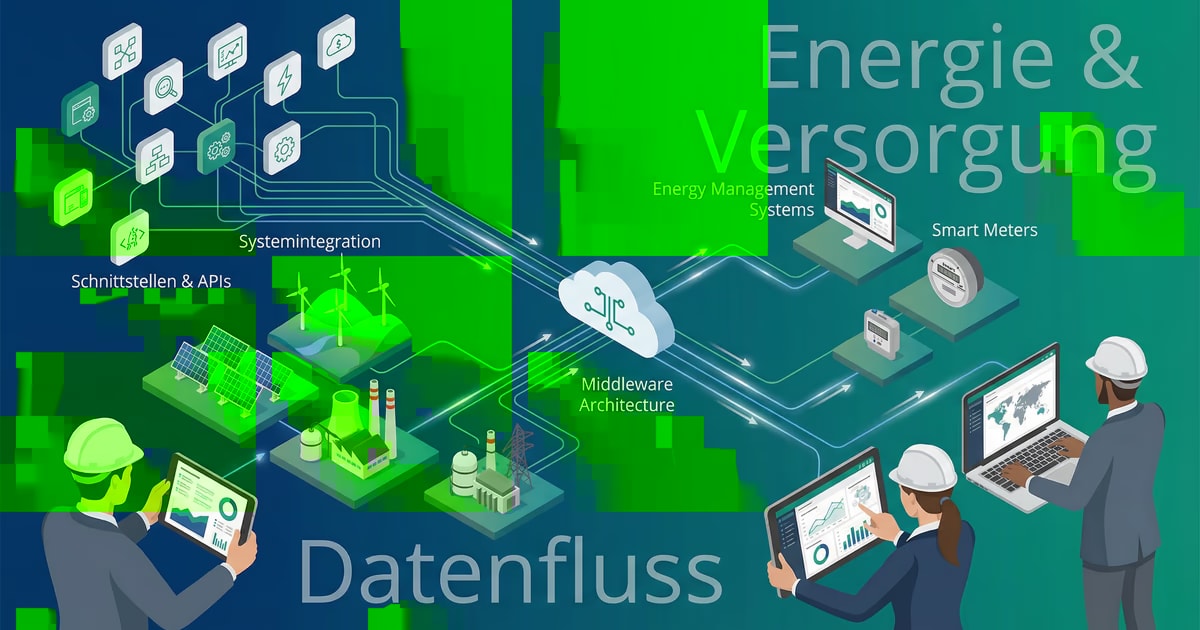
Legacy Modernization for Financial Services & Banks: The Way to the Digital Future
The financial sector is facing a profound change. Driven by new digital competitors (FinTechs), changing customer expectations and a steadily more complex regulatory system, banks and financial…
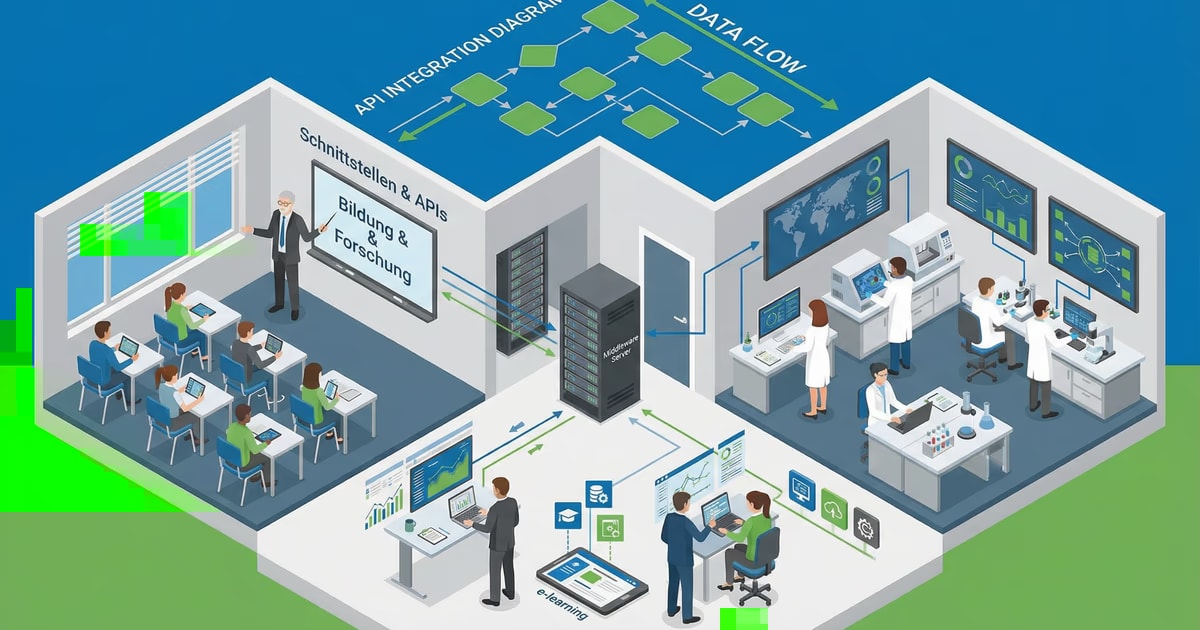
Legacy Modernization in Logistics & Transport: The Way to Digital Supply Chain
The logistics and transport industry is the backbone of the global economy. But while the demands on speed, transparency and sustainability are constantly rising, many companies are fighting with an…
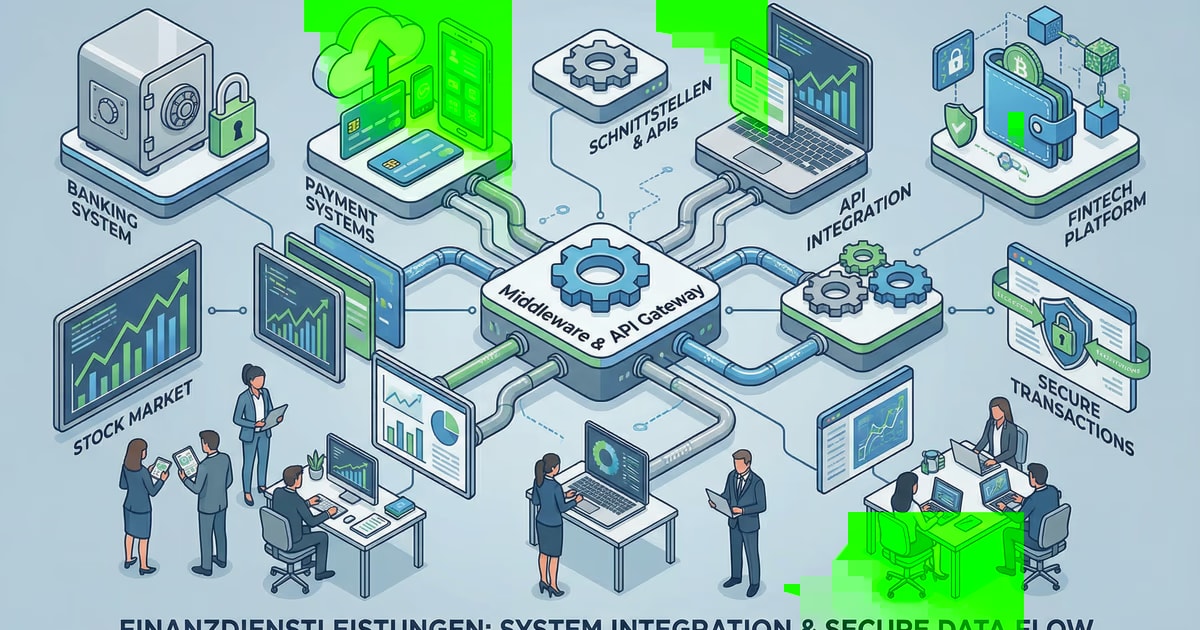
Legacy-Modernization in Healthcare: The Way to Future-proof Patient Care
The healthcare industry is facing a fundamental change worldwide. Driven by technological progress, demographic developments and increasing patient requirements, Digitalization is no longer an option…
Free download
Checklist: 10 questions before software development
Key points before you start: budget, timeline, and requirements.
Get the checklist in a consultationRelevant next steps
Related services & solutions
Based on this article's topic, these pages are often the most useful next steps.
Related services
Related solutions
Related comparison
Cost calculators
More on Legacy-Modernisierung and next steps
This article is in the Legacy-Modernisierung topic. In our blog overview you will find all articles; under category Legacy-Modernisierung more posts on this subject.
For topics like Legacy-Modernisierung we offer matching services – from app development and AI integration to legacy modernisation and maintenance. We describe typical use cases under solutions. Our cost calculators give initial estimates. Key terms are in the IT glossary. Books and long-form guides appear on the publications page; deeper articles live under topics.
If you have questions about this article or want a non-binding discussion about your project, you can book a consultation or reach us via contact. We usually respond within one working day.