Legacy Modernization – references from maintenance and migration
Here you'll find selected case studies on legacy modernization. The examples range from Delphi to the cloud and software rescue to data migration – built in East Frisia, Made in Germany.
What we modernize
Keep the base, reduce risk, renew step by step
Grown software is often the backbone of day-to-day operations — and hard to maintain at the same time. We open the base via interfaces, reduce technical debt and migrate module by module instead of risking a big-bang rewrite.
Modernize Delphi
Keep productive Delphi systems and extend them with REST interfaces, cloud connectivity and offline sync — without a risky full rebuild.
To the serviceReplace COBOL & VB6
Step-by-step migration of outdated platforms into modern, maintainable architectures — with clear phases instead of a big bang.
To the serviceSoftware rescue & analysis
Stabilize inherited code, repair builds and tests, and assess code bases transparently for due diligence.
To the serviceReference projects
Nine case studies from legacy practice
From Delphi development and COBOL and VB6 replacement to software rescue — these projects show how legacy systems can be renewed during ongoing operations.

Logistics: Delphi dispatching to the cloud
We replaced an error-prone Delphi dispatching system step by step. The solution combines a cloud web application, a driver PWA and REST interfaces, with measurable time and cost savings.
Related: Legacy Modernization
Highlights:
Technologies:
Delphi base: new interfaces without a big-bang rewrite
Extending a Delphi suite with REST and batch interfaces to a new CRM — the productive legacy base stays in place and is opened up selectively.
Related: Delphi Development
Highlights:
Technologies:
Delphi scheduling: fleet API & offline sync for the field
A REST interface connects the Delphi scheduling tool to a fleet provider. A local queue covers radio dead zones while planning and field status remain consistent.
Related: API Integration
Highlights:
Technologies:
Delphi editorial plan: subscription status synced with shop & CRM
Secure jobs connect Delphi title planning with the web shop and CRM — delivery lists and addresses stay consistent, with no core system replacement.
Related: System Integration
Highlights:
Technologies:
Delphi rental management: digital signature & DATEV export
Multi-tenant handover to a signature platform plus structured accounting exports — the contract lists in Delphi remain the leading source.
Related: API Integration
Highlights:
Technologies:
Legacy code analysis for technology due diligence
Structured assessment of a multi-year code base for an acquisition decision — risks, technical debt and effort scenarios made transparent.
Related: Legacy Code Analysis
Highlights:
Technologies:
Software rescue: stabilizing inherited code & fixing CI
Taking over a half-finished portal after the previous partner left — build, tests and security made plannable again.
Related: Software Rescue
Highlights:
Technologies:
Data migration between legacy systems with UiPath
A UiPath workflow migrates data between desktop systems without an interface. It reads, validates and maps UI data before entering it in the target system, with an audit-proof log.
Related: Legacy Modernization
Highlights:
Technologies:
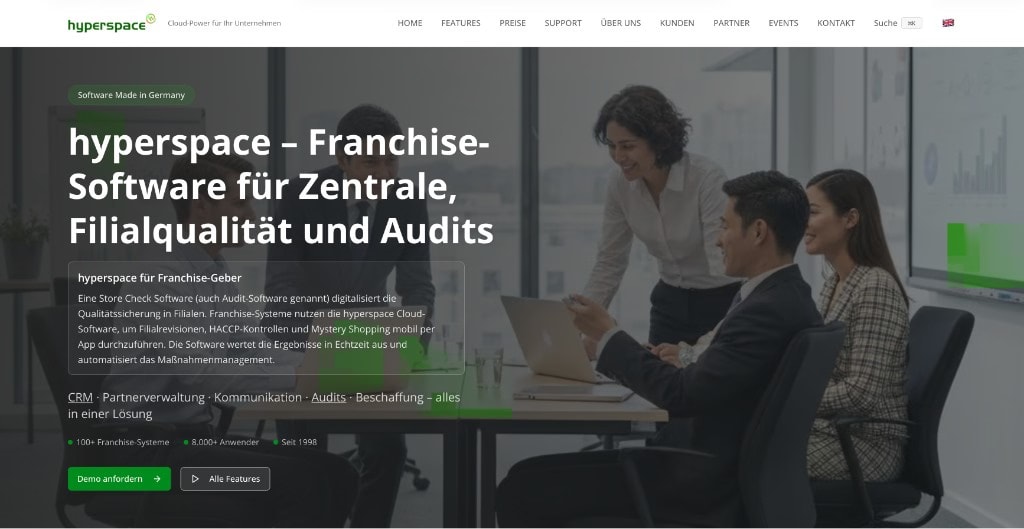
Hyperspace GmbH – web application (ColdFusion)
Architecture, implementation and further development of a ColdFusion platform (CFML) in production — close collaboration with the client, developed in Germany (East Frisia).
Related: Software Maintenance
Highlights:
Technologies:

Become our next success story
Tell us about your initiative. In a direct conversation, we map relevant references, architecture and economic levers. You receive strategy, technology and next steps from one partner – Made in Germany in Leer, East Frisia.
Björn Groenewold – Managing Director
Why legacy modernization has to happen step by step
Short answer for decision-makers: Legacy systems often run the day-to-day business but block new requirements, interfaces and compliance. Instead of a risky full rebuild, we modernize iteratively — with clear phases, stable operations and measurable milestones, developed in East Frisia, Made in Germany.
Typical starting points
We frequently see three starting points:
- A central Delphi application that has run for years but lacks modern interfaces.
- COBOL or VB6 programs without a sustainable maintenance path.
- A half-finished project that needs structured software rescue after a service provider left.
In all these cases, the base is too valuable to switch off — and too fragile to keep running without a plan. A legacy code analysis first creates transparency about risks and effort.
Our approach
We separate analysis, interface opening, step-by-step migration and operations. Where possible, the productive legacy system stays the leading source while new functions are added via REST interfaces or cloud components. This creates traceable milestones instead of an all-or-nothing risk.
Beyond these references, find more context under all references, in the legacy modernization cost overview and via the contact form.
Plan your modernization
Choose the entry point that fits your phase — a consultation, cost research or a written inquiry.
FAQ
Frequently asked questions about legacy modernization references
Approach & cost-effectiveness
What do these legacy references say about how you work?
When is modernization worth more than a rebuild?
Step-by-step modernization is often cheaper and safer when a legacy system still supports the business but lacks interfaces or maintainability.
We open the base via APIs, extract sub-functions and migrate module by module. We only recommend a complete rebuild when the architecture or technology is no longer viable.
How do you estimate effort and risk before a project?
Technologies & operations
Which legacy technologies do you work with?
How do you migrate data between legacy systems without an interface?
Do you also handle maintenance after modernization?
Transparency about these reference projects
This page puts results from different types of projects side by side. So the figures can be judged properly, we disclose which case types appear here, what the statements are based on and who reviewed them. How we plan, measure and sign off projects is described in our project approach.
Case types in this list
- Client project with a named customer: Customer, delivery and timeline are real; the publication scope is documented in the reference record.
- Client project, anonymised or shown under a project name: Real project; company name, industry details or individual figures are generalised at the customer's request.
- In-house product built by Groenewold IT Solutions: Product developed in-house: operations, metrics and roadmap are entirely ours.
- Illustrative scenario case study – not a named client project: Model-based depiction drawn from comparable projects. The figures are calculated, not measured at a named customer.
Which type applies to a given project is stated on its detail page in the section “Transparency about this case study”.
- Results methodology
- Effort and risk statements are based on code analyses at project start (size, dependencies, test coverage) compared with the state after modernisation.
- Data source
- Analysis tooling on the legacy system, migration records and acceptance sessions together with the customer's departments.
- Scope of the figures
- Legacy systems differ widely. Duration and effort of a modernisation can only be stated reliably after analysing the specific code base.
- Technical review
- Björn Groenewold, Managing Director of Groenewold IT Solutions GmbH and Hyperspace GmbH –
Change history
- Analysis basis for the effort and risk statements of the modernisation projects added.
- Project descriptions and result statements in the legacy modernisation references revised and aligned with the German version.
- Page for the legacy modernisation references published in its current structure.