🇩🇪
Legacy Modernization – System Modernization
250+ projects · 5.0 on Google · 100% in Germany

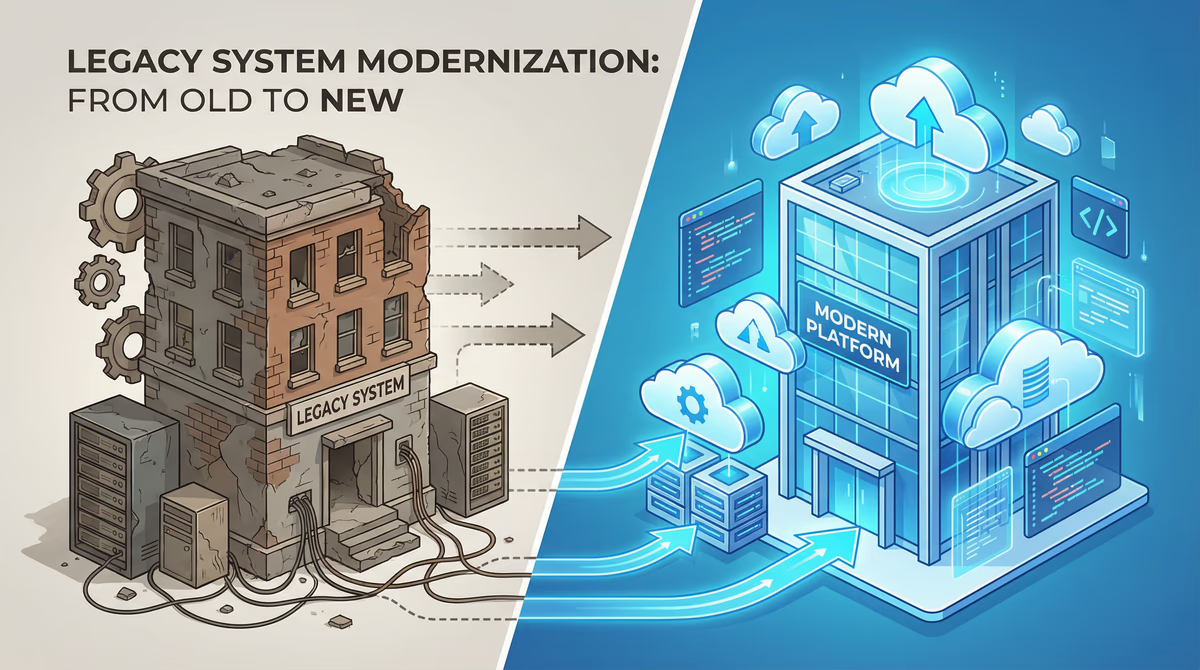
Legacy modernisation: replace legacy software safely – no big-bang cut-over

For mid-sized companies: COBOL, Delphi, VB6 and older .NET estates—fixed-scope analysis first, then phased cut-over – delivery and project ownership from Germany (Leer/East Frisia), named contacts, no offshore guesswork.

  • 250+ delivered projects
  • 5.0 stars on Google
  • 100% engineering in Germany

For B2B teams we replace legacy software step by step—software modernization with parallel operation and controlled technical debt reduction. We start with a fixed-scope analysis, then phased migration with transparent milestones. Production stays online. Made in Germany from Lower Saxony.

Replace legacy software: options, risks and migration paths

Software modernization rarely means a single big release. We map rehosting, refactoring, replatforming and targeted rewrites to your risk profile—so ERP, production and customer-facing systems keep running while technical debt is reduced module by module.

Deep dives: modernise legacy software (strategies) · legacy code analysis · legacy modernization costs.

Legacy modernization: expert view and process

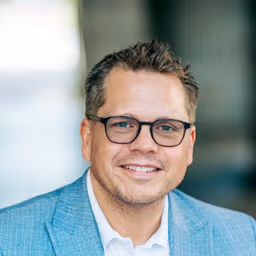
Björn Groenewold – Managing Director, Groenewold IT Solutions
Modernisation pays off when each step reduces risk: parallel run, validated data migration and a clear decommission plan beat a single big-bang cutover.
Björn GroenewoldManaging Director, Groenewold IT Solutions
Björn Groenewold – Managing Director, Groenewold IT Solutions
Legacy programmes survive when owners accept measurable milestones—otherwise "rewrite someday" blocks every budget cycle.
Björn GroenewoldManaging Director, Groenewold IT Solutions

More voices from legacy and migration programmes are in our project references and on the full customer testimonials overview (5.0 ★).

Our Modernization Services

Analysis of Existing Legacy Systems

Comprehensive analysis of your existing systems to identify modernization potential.

  • Technical Debt Assessment
  • Risk Analysis

Modernization Strategies

Development of customized modernization strategies for your systems.

  • Replatforming
  • Refactoring

Gradual Migration

Step-by-step migration with minimal business disruption.

  • Phased Approach
  • Parallel Operation

Clean documentation, pragmatic phases and traceable interfaces — engineering in Germany from Lower Saxony.

Assess legacy rescue options
Björn Groenewold – Managing Director, Groenewold IT Solutions
Refactoring without tests is guesswork: characterise behaviour first, then carve boundaries the strangler pattern can eat safely.
Björn GroenewoldManaging Director, Groenewold IT Solutions

Frequently Asked Questions

FAQ about Legacy Modernization

Replacing legacy software

What does replacing legacy software mean for businesses?

Replacing legacy software means retiring outdated applications in a controlled way—without a big-bang cutover or silent data loss. Business logic is usually preserved while platforms, interfaces and operations are modernised. Teams regain predictable releases, lower security and compliance risk, and spend less time on expensive workarounds. We start with a baseline assessment and phased roadmap so every step delivers measurable value.

When is replacing legacy software worth it for mid-sized companies?

It pays off when maintenance costs rise, specialists for the old stack are scarce, or integrations with ERP, commerce and production stall. End-of-life platforms, audit gaps and growing technical debt are also clear triggers. For mid-sized firms, parallel operation is often decisive: phased replacement keeps daily work stable while modules migrate. A fixed-scope analysis clarifies effort, risk and ROI before you commit budget.

How does replacing legacy software differ from software modernization?

Software modernization is the broader process: code, architecture, data and operations improve step by step—via refactoring, replatforming or a strangler pattern. Replacing legacy software focuses on retiring a specific old application with a clear decommission goal. In practice we combine both: stabilise and decouple first, then replace modules. That keeps technical debt measurable and budgets in phased, controllable slices.

Basics & Assessment

How do I know if my software needs modernization?

Typical signs: Increasing maintenance costs, performance problems, lack of interfaces, security concerns, or the technology is no longer supported. We offer a free initial assessment.

Can you also modernize software without documentation?

Yes, we regularly take over systems where only the code exists. Through reverse engineering and structured analysis, we understand the logic and document it for the future.

Strategy & Approach

Rewrite or refactor – what do you recommend?

Depends on the situation. Often a gradual migration makes sense: new functionality on new technology, old system runs in parallel until it's replaced. We analyze costs and risks with you.

Can existing data and processes be preserved?

Yes, that's usually the goal. We plan data migration carefully, validate quality, and ensure no business-critical information is lost.

Thorsten Frieling – Project Manager Groenewold IT Solutions

Plan modernization? We analyze your system and develop a pragmatic migration strategy.

Schedule Consultation

Costs & Timeline

What does a modernization project cost?

Highly dependent on scope and complexity. A small application from 15,000 €, larger enterprise systems correspondingly more. We start with an assessment to get a realistic estimate.

How long does modernization take?

Small systems: 2-4 months. Complex migrations: 6-18 months. We work in sprints and deliver usable results early, so you can see progress and give feedback.

Risk & Security

How do you minimize the risk of failure?

Through gradual migration, parallel operation of old and new systems, comprehensive testing, and rollback strategies. We never switch everything at once.

What happens if the original developers no longer exist?

Not uncommon with legacy systems. We work ourselves into the code, analyze structure and logic, and build a new knowledge base. This takes time but is feasible.

Björn Groenewold – CEO Groenewold IT Solutions

Questions about modernization? We advise honestly about possibilities, costs, and risks – from experience with many legacy projects.

Contact Us

30-minute intro call: Legacy Modernization

On the scheduling page, pick a free slot for a 30-minute intro call about Legacy Modernization – straightforward next steps.

Free & non-binding · 30-minute intro call

Book next available slot

Legacy Modernization: Breathing New Life into Aging Systems

Why legacy systems need a deliberate plan

Legacy systems are often the backbone of successful businesses. They run critical processes that generate revenue every day.

The problem is not that they work poorly today. They grow expensive to maintain. They are hard to integrate with modern tools. They face security threats that did not exist when they were built.

Our modernization practice helps companies preserve the business logic in these systems. We migrate toward contemporary platforms that support future growth.

Technologies we modernize and how we protect knowledge

We have modernized applications written in Delphi, Visual Basic 6, COBOL, FoxPro, and classic ASP among many others.

Each legacy technology brings unique challenges. Examples include proprietary data formats and undocumented business rules buried in thousands of lines of code.

Our reverse engineering process extracts this institutional knowledge. We document it properly. We translate it into modern architectures.

Nothing valuable gets lost during the transition, even when the original developers are long gone.

Strangler fig pattern: lower risk than a big-bang rewrite

The strangler fig pattern is our preferred modernization strategy for most enterprise systems.

We avoid a risky big-bang rewrite. We gradually replace legacy components with modern services. The old system keeps running in parallel.

New features ship on the modern platform. Existing functionality moves module by module.

This approach cuts project risk. The business does not depend on an unproven system. Each migration phase delivers immediate, measurable improvements.

Data migration and parallel-run testing

Data migration deserves special attention in any modernization project. Legacy databases often hold decades of business history.

We build migration strategies that include data cleansing, format transformation, and thorough validation. We aim for every record to transfer correctly.

Our parallel-run testing compares outputs from old and new systems side by side. We catch discrepancies before cutover.

The result is a smooth transition. It preserves data integrity and business continuity through the full modernization journey.

Understanding and Reducing Technical Debt

Every legacy system carries technical debt — shortcuts and compromises that have built up over the years. Before modernising, we run a thorough Technical Due Diligence. We review code quality, architecture and dependencies, then create a prioritised roadmap. You get a clear picture of which problems are urgent and which can wait for gradual refactoring. This transparency is the foundation for realistic timeline and budget planning.

From Monolith to Modern Architecture

Many legacy systems have grown into a monolith — a single, tightly connected application that is hard to scale and maintain. Our approach is gradual. We break the monolith into loosely coupled microservices, packaged in Docker containers and managed with Kubernetes. We use the Strangler Pattern: new features are built as separate services while the monolith keeps running and slowly shrinks. This removes the risk of a big-bang cutover. Your team learns the new architecture one step at a time.

Data Migration: The Most Critical Step

Data migration carries the highest risk in any modernisation project. That is why we give it the most attention. Decades of business data must be moved, transformed, cleaned and validated. We build automated migration scripts that are repeatable and testable. Before the production switch, data goes through multiple dry runs in a staging environment until every record is verified. We only proceed with the cutover when old and new systems produce identical results. Rollback options are in place at all times.
Ready to replace legacy software step by step?

We assess risk, document interfaces and propose a phased software modernization path — without forcing an immediate full rewrite.

Assess legacy rescue options

Blog & related channels

Modernisation decisions often sit alongside new product work, ERP programmes and integration projects. Browse these links for further reading on legacy strategy.

Decision logic: Legacy modernization

Legacy modernization replaces legacy software step by step—without big-bang and without unnecessary downtime.

Use caseBenefitDifferentiationOutcomeNext step
VB6/Delphi/COBOL blocks integrationStrangler path with parallel operationNot acute software rescueModernizable architectureLegacy code analysis
Concrete VB6 replacement plannedMigration or encapsulation with testsVB6 specialty page—not general overviewReplacement without downtimeVB6 replacement
Maintenance only, no replacement budgetSoftware maintenance until modernization is readyModernization ≠ maintenanceStable operations with roadmapSoftware maintenance

Scope: Legacy modernization vs. APIs and analysis

Overview for legacy modernization, replacement and stepwise renewal—not due diligence on legacy code analysis. VB6 and COBOL: VB6 replacement, COBOL modernization.

Target architecture interfaces: API integration, system integration. Overview: integration & interfaces.

Related paths and adjacent topics

Service overview: Integration & interfaces (overview)

More integration & interface services

Adjacent service categories

Legacy modernization: step by step without big-bang risk

Björn Groenewold

Up to 50% of your investment via BAFA/KfW

Use our funding calculator to see which government grants may apply to your project.

Björn GroenewoldManaging Director

Service cluster

Related services for System integration interfaces: connect APIs, ERP & legacy

Quick orientation for APIs, system landscapes, ERP, Microsoft 365 and legacy – with separate entry points for interface and integration projects.

Related topics

Complementary services from other areas

These services are frequently requested together with Legacy Modernization or complement it thematically.

Software development services: entry to web, app & ERP

IT operations support: maintenance, monitoring & rescue

IT consulting strategy: roadmaps & digitalisation