
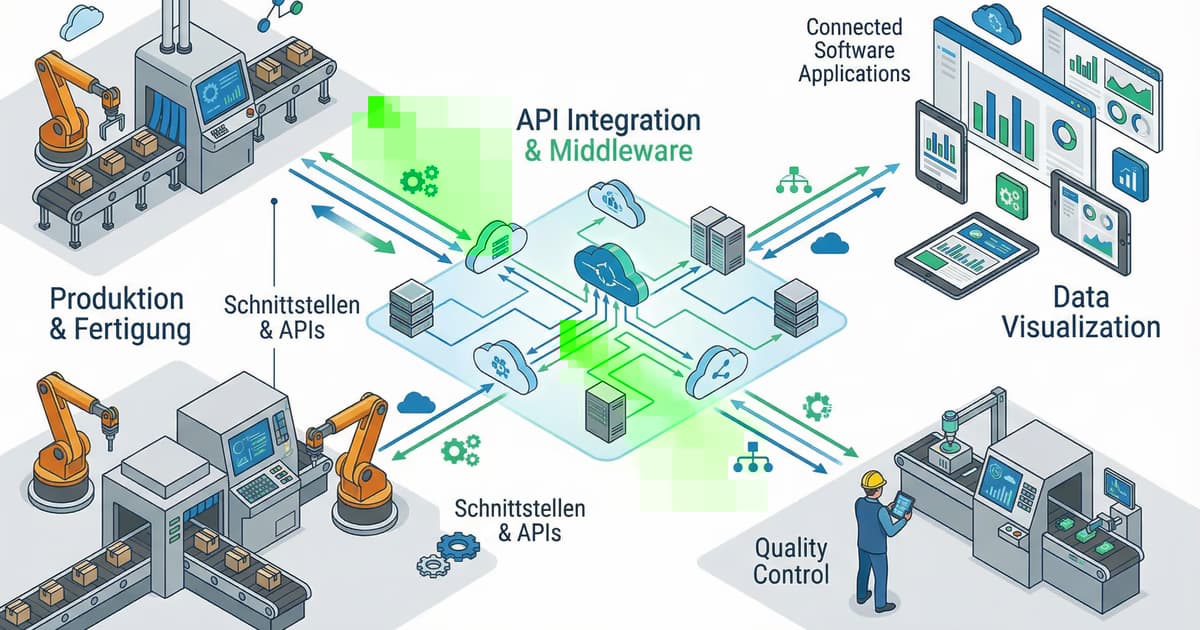
The energy and supply industries are facing a fundamental change. The Energiewende, driven by the expansion of decentralised renewable energies (EE), the increasing electromobility and the need for sector coupling, requires unprecedented flexibility and networking. At the same time, Digitalization forces utilities to rethink their business models to remain competitive and meet increasing customer expectations. In this complex environment, traditional, monolithic IT systems are an obstacle to innovation. The solution lies in the intelligent networking of these systems and the creation of a digital ecosystem.
This is where interfaces and application programming interfaces (APIs) come into play. They are the digital bridge builders that allow different software applications to communicate seamlessly and in real time with each other and exchange data. For energy suppliers, APIs are not just a technical detail, but the strategic basis for meeting tomorrow's challenges. This article examines in detail the advantages and concrete applications that the consistent use of APIs for the industry brings and how they become the driving force of digital transformation.
Basics: What are APIs and why are they indispensable in the energy sector?
A API (Application Programming Interface) is basically a set of definitions and protocols that allow software to interact with each other. One can imagine an API as a digital translator or waiter in a restaurant: it accepts an order (request), forwards it to the kitchen (backend system) and returns the result (data) in a standardized format.
Unlike classic, often proprietary and punctual interfaces developed for a specific application, modern APIs (such as REST or GraphQL) are based on open standards. This standardization is crucial because it drastically reduces the complexity of system integration. For energy suppliers operating a variety of legacy systems (legacy systems) such as CRM, billing, network control systems and measurement data management systems (MDM), APIs enable decoupling of these systems. Instead of performing expensive and lengthy complete renovations, new digital services can access the functions and data of the old systems via an API layer.
Implementation of a comprehensive API management for energy suppliers is therefore a must. It ensures the necessary governance, security and scalability to control the traffic between internal systems, market partners and customer applications. A sophisticated Open API strategy utilities also opens the company for external innovations and participation in new digital markets.
.
About the author
Groenewold IT Solutions
Softwareentwicklung & Digitalisierung
Praxiserprobte Einblicke aus Projekten rund um individuelle Softwareentwicklung, Integration, Modernisierung und Betrieb – mit Fokus auf messbare Ergebnisse und nachhaltige Architektur.
Related topics:
Read more
Related articles
These posts might also interest you.
Legacy Modernization in Logistics & Transport: The Way to Digital Supply Chain
The logistics and transport industry is the backbone of the global economy. But while the demands on speed, transparency and sustainability are constantly rising, many companies are fighting with an invisible but powerful opponent:...
5 February 2026
Interfaces & APIsLegacy-Modernization in Healthcare: The Way to Future-proof Patient Care
The healthcare industry is facing a fundamental change worldwide. Driven by technological progress, demographic developments and increasing patient requirements, **Digitalization** is no longer an option but a...
30 January 2026
Interfaces & APIsInterfaces & APIs: The Guide to Successful System Integration
Interfaces and APIs are the nervous system of modern IT landscapes. They enable data exchange between systems, automate processes and create the basis for innovative business models. This guide will show you how to...
30 January 2026
Free download
Checklist: 10 questions before software development
What to clarify before investing in custom software – budget, timeline, requirements and more.
Get the checklist in a consultationRelevant next steps
Related services & solutions
Based on this article's topic, these pages are often the most useful next steps.