
Every app that today uses millions of people began as a vague idea. As a sketch on a whiteboard. As a nightly thought that didn't leave. As frustration about a problem that nobody solved.
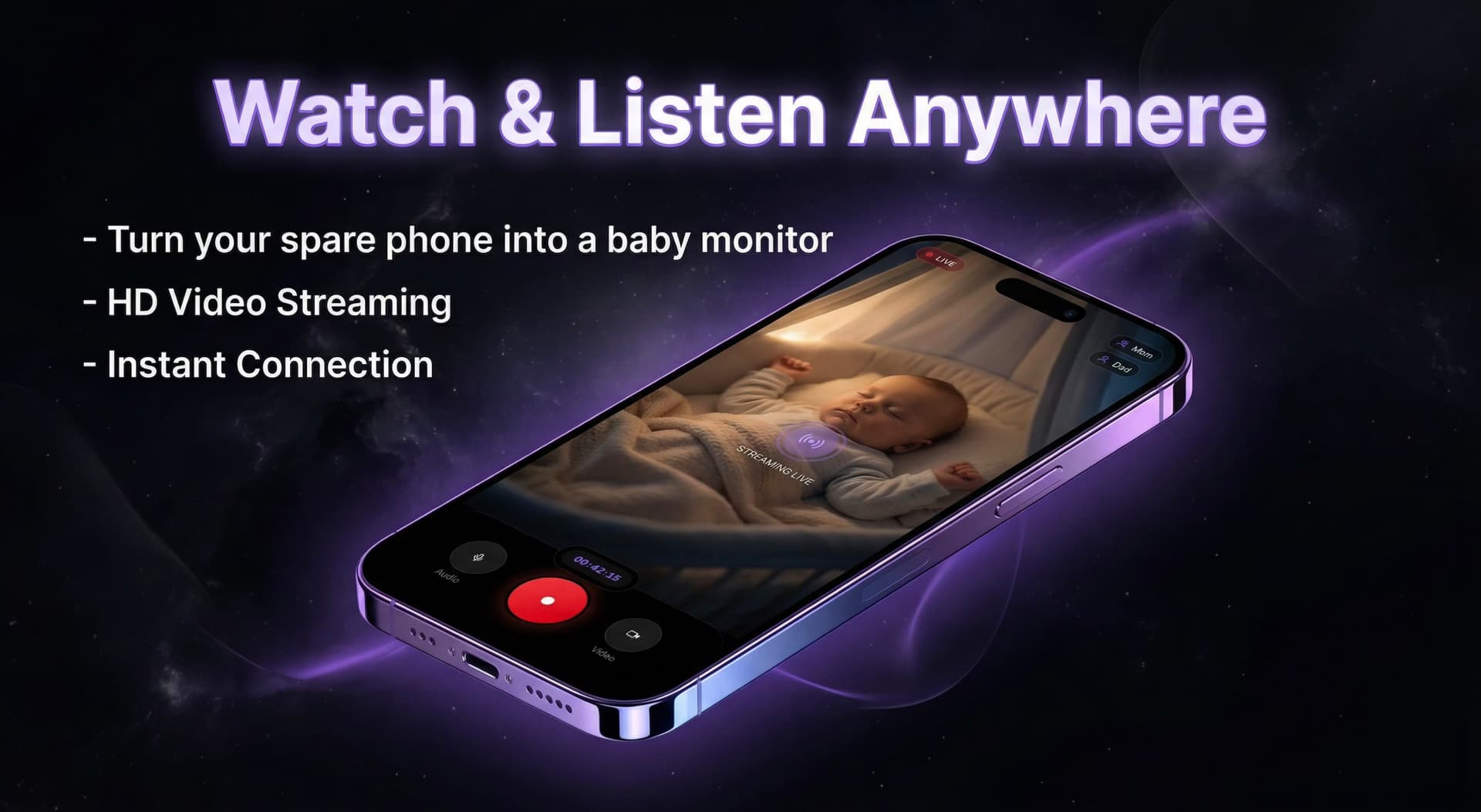
The story of the Lullio Babyphone app is such a story. And it shows how a real need becomes an app that makes life easier for more than 50,000 parents.
The spark: How to get ideas from problems
It was 3 a.m. at night when our later customer was awakened for the third time this week by the beep of the baby monitor. Again false alarm. The baby slept deep and firm, but the cheap device from the electric market responded to any noise – the wind, the gun of the house, the cat in the hallway.
"There must be a better solution," he thought. *"We have all smartphones in the bag that are smarter than any baby monitor on the market." *
So start the best ideas: Not with a technology that seeks a problem. But with a real problem that screams for a solution.
When he contacted us, he had no technical specifications. No business plan. Only these one realization: *"Smartphones can be more. Why don't we use it?" *
And that's how it should be.
The moment in which everything begins
The first call lasted 45 minutes. We didn't talk about technology. We talked about parents. Over sleepless nights. About the fear of missing something. About the desire for safety – without permanent false alarms.
At the end of the conversation we knew: this is not just a good idea. This is an idea that really helps people.
This is the first test of every app idea: Does it solve a real problem for real people? If so, it has a chance. If not, it will be another icon that will be deleted after two weeks.
The first workshop: When visions become concrete
Two weeks later we sat together – with whiteboards, post-its and lots of coffee. The Discovery workshop is the moment in which something can be grasped from a vague idea.
Ask the right questions
We did not start with "What features do you want?", but with:
"Who will use this app?" (Overtied parents, at 3 o'clock at night, closed with an eye half) "In which situation will they open them?" (Quick, by the way, often under stress) "What is the worst scenario?" (The app doesn't work when it is needed) "What would users delight?" (Not only reliable – but calming)
These questions sound easy. But they change everything. Because they force us not to think in features, but in experiences.
From post-its to prototypes
After four hours, the whiteboard was full. Dozens of ideas, sorted by priority. Some brilliant, some impracticable, some somewhere in between.
Then came the moment our customers love most: **The first prototype. **
With simple sketches and a click thumb showed
About the author
Groenewold IT Solutions
Softwareentwicklung & Digitalisierung
Praxiserprobte Einblicke aus Projekten rund um individuelle Softwareentwicklung, Integration, Modernisierung und Betrieb – mit Fokus auf messbare Ergebnisse und nachhaltige Architektur.
Related topics:
Read more
Related articles
These posts might also interest you.
App Development Costs 2026: The Complete Price Guide
What does the development of an app really cost? Our prize guide for 2026 gives you a detailed insight into the cost factors and helps you plan your budget realistically.
9 February 2026
App developmentApp Maintenance and Support: What happens after launch
Your app is in the store, but the work is not over. Learn all about the cost and needs of app maintenance, support and further development.
7 February 2026
App developmentFlutter vs. React Native: Developer productivity compared
Choosing the right framework is crucial for the success of mobile application projects. In the world of cross-platform development, two heavyweights have emerged...
3 February 2026
Free download
Checklist: 10 questions before software development
What to clarify before investing in custom software – budget, timeline, requirements and more.
Get the checklist in a consultationRelevant next steps
Related services & solutions
Based on this article's topic, these pages are often the most useful next steps.