
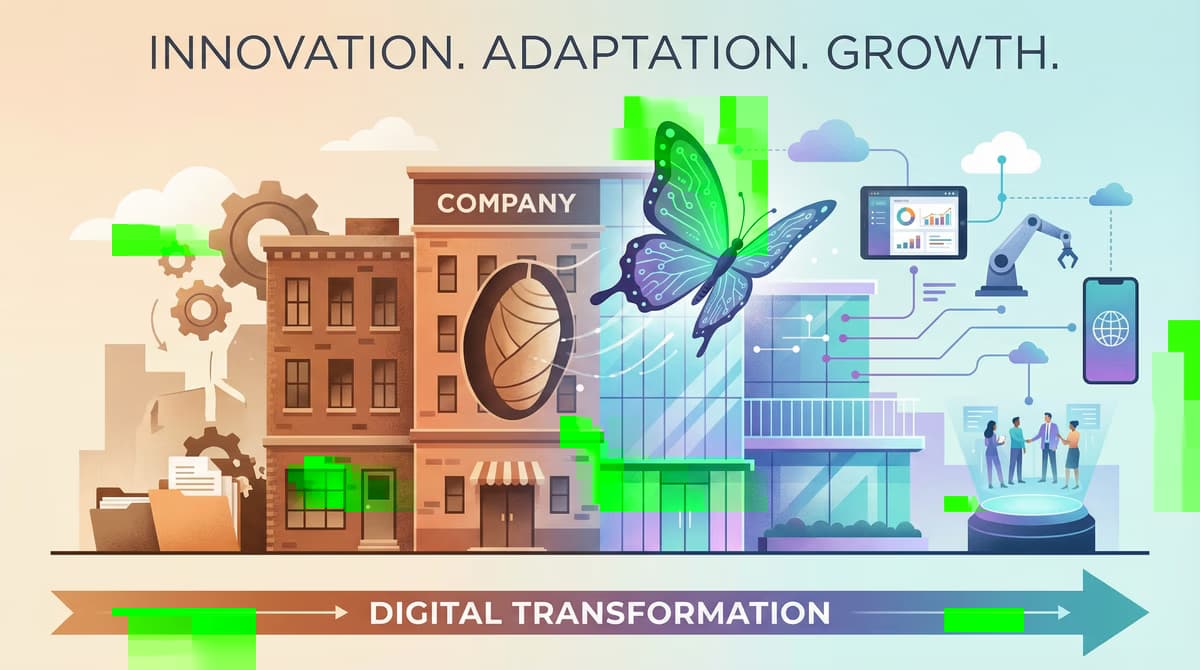
Digital Transformation: Technology as an Enabler
Digital transformation is more than just a keyword – it is a fundamental change that affects companies of all sizes. Especially for small and medium-sized enterprises (SMEs), digitalization offers enormous opportunities to increase competitiveness and remain sustainable. But what exactly hides behind the concept and how can SMEs use the digital transformation successfully for themselves?
Digital Transformation in SMEs: A Need for Time Change
Customer expectations have changed dramatically in the digital age. Online shopping, fast communication and personalized offers have become standard. In order to meet these requirements and not to lose access to competition, SMEs must also rethink their business models and processes. The Digital Transformation SMEs is therefore not an optional upgrade, but a strategic necessity.
Opportunities and Challenges of Digital Transformation
Digital transformation brings both great opportunities and challenges for SMEs. Careful weighing and planning is therefore essential.
| Opportunities | Challenges |
|---|---|
| Increased efficiency through automation | High initial investment |
| Developing new markets and customer groups | |
| Improved customer relationships and retention | Data security and protection from cyber attacks |
| Data-based and sound decisions | Cultural change in the company |
| Development of innovative products and business models | Selection of the right technologies |
The opportunities in detail
Automation of repetitive tasks releases valuable resources that can be used for more strategic activities. By using digital marketing and sales channels, SMEs can unlock new target groups and significantly increase their reach. Modern CRM systems (Customer Relationship Management) enable a 360-degree view on the customer and a personalized address, which sustainably strengthens customer retention. Analysis of business data provides valuable insights and enables sound, data-based decisions. Last but not least, digitalization promotes a culture of innovation and enables the development of new, digital products and business models.
Master the challenges
The implementation of new technologies often requires high initial investment. In addition, there is an acute shortage of skilled workers in many digital professions. The increasing networking also involves risks in the form of cyber attacks, which is why IT security must play a central role. The digital transformation is also not a pure technology theme, but requires a profound cultural change throughout the company. The selection of suitable technologies
About the author
Groenewold IT Solutions
Softwareentwicklung & Digitalisierung
Praxiserprobte Einblicke aus Projekten rund um individuelle Softwareentwicklung, Integration, Modernisierung und Betrieb – mit Fokus auf messbare Ergebnisse und nachhaltige Architektur.
Related topics:
Read more
Related articles
These posts might also interest you.
Onshore vs. Offshore: 3 reasons why local development provides better ROI
The hourly rate is only half the truth. We show why onshore development in Germany has its nose at speed, quality and ROI.
18 February 2026
Software developmentCrowdfunding for software projects: A promising alternative?
In the dynamic world of software development, securing financing is often one of the largest obstacles for innovative projects. Traditional ways such as bank loans or venture capital are...
16 February 2026
Software developmentAgile vs. Waterfall: What method fits your project?
A detailed comparison between agile methods (Scrum, Kanban) and the traditional waterfall model. Learn the strengths, weaknesses and when which method is best suited.
16 February 2026
Free download
Checklist: 10 questions before software development
What to clarify before investing in custom software – budget, timeline, requirements and more.
Get the checklist in a consultationRelevant next steps
Related services & solutions
Based on this article's topic, these pages are often the most useful next steps.