
MVP vs. complete product: When is what investment worth?
In today's fast-paced digital world, companies and start-ups often face the crucial question: Should they start with a minimum of Viable Product (MVP) or invest directly in the development of a complete product? This decision has far-reaching consequences for the budget, market launch time and long-term success. In this article we highlight the differences, advantages and disadvantages of both approaches and give you a well-founded decision-making aid.
What is a minimum Viable Product (MVP)?
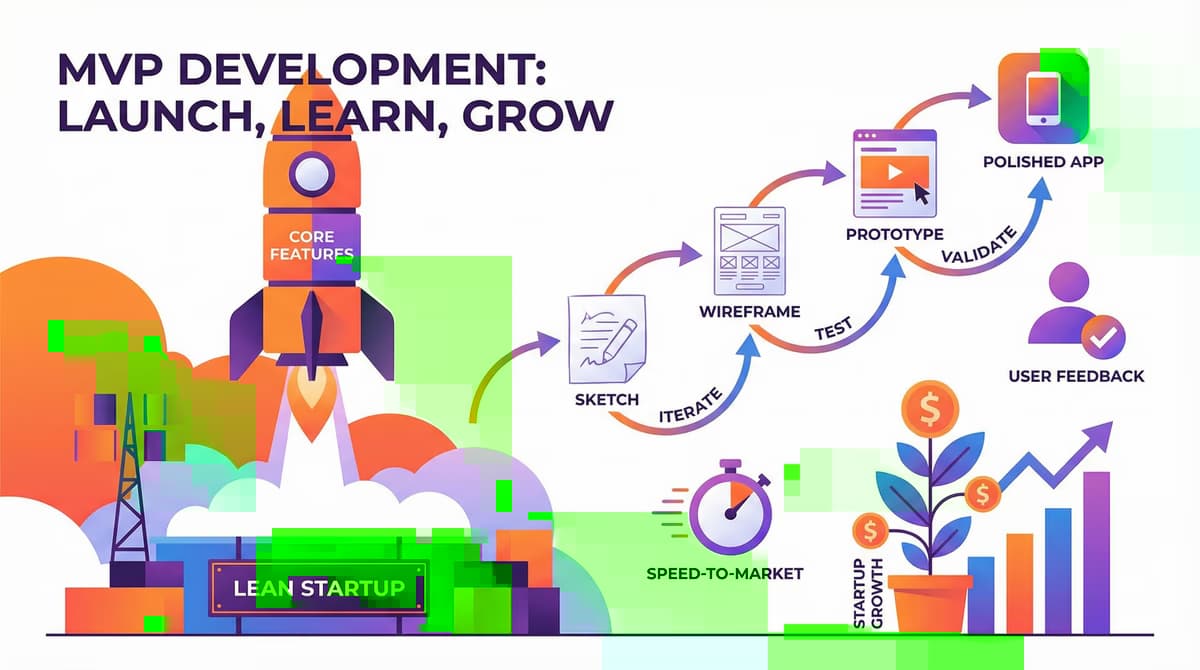
A Minimum Viable Product, or MVP short, is a version of a new product created with minimal effort to provide basic functions for first users. The main objective of a MVP is to validate the core idea of the product on the market, to collect valuable feedback from real users and to make data-based decisions for further development on this basis. It is not about publishing an unfinished or inferior product, but about maximising the learning process and minimising the development risk.
The core features of a MVP:
- ** Focus on core functionality:** A MVP focuses exclusively on the essential features that solve the main problem of the target group.
- Simplified market launch: By reducing the range of functions, an MVP can be developed and marketed in a significantly shorter time.
- Feedback-driven development: The feedback from the first users is essential to improve the product iteratively and to adapt it to the actual market needs.
What is a complete product?
A complete product, often called "Full-Blown Product", is a fully functional and sophisticated application that offers a wide range of functions, a polished design and a comprehensive user experience. The development of a complete product requires a significant investment in time, money and resources from the outset. This approach is often chosen if the market and user requirements are already well understood or if a high quality standard is indispensable from the outset.
MVP vs. complete product: A direct comparison
To illustrate the differences, we compared the two approaches in a table:
| Criterion | Minimum Viable Product (MVP) | Full product | |---------- ** Objective Validate hypotheses, learn to gain market share, maximize sales | ** ** Functional scope** | Minimal, only core functions | Comprehensive, many features | ** ** Development time** | Short (less weeks to months) | Long (more months to years) | Costen | Risiko | Gering, as early feedback | High, as late market validation | ** Flexibility | High, easy adjustments | Gering, changes sin
About the author
Groenewold IT Solutions
Softwareentwicklung & Digitalisierung
Praxiserprobte Einblicke aus Projekten rund um individuelle Softwareentwicklung, Integration, Modernisierung und Betrieb – mit Fokus auf messbare Ergebnisse und nachhaltige Architektur.
Related topics:
Read more
Related articles
These posts might also interest you.
Onshore vs. Offshore: 3 reasons why local development provides better ROI
The hourly rate is only half the truth. We show why onshore development in Germany has its nose at speed, quality and ROI.
18 February 2026
Software developmentCrowdfunding for software projects: A promising alternative?
In the dynamic world of software development, securing financing is often one of the largest obstacles for innovative projects. Traditional ways such as bank loans or venture capital are...
16 February 2026
Software developmentAgile vs. Waterfall: What method fits your project?
A detailed comparison between agile methods (Scrum, Kanban) and the traditional waterfall model. Learn the strengths, weaknesses and when which method is best suited.
16 February 2026
Free download
Checklist: 10 questions before software development
What to clarify before investing in custom software – budget, timeline, requirements and more.
Get the checklist in a consultationRelevant next steps
Related services & solutions
Based on this article's topic, these pages are often the most useful next steps.