
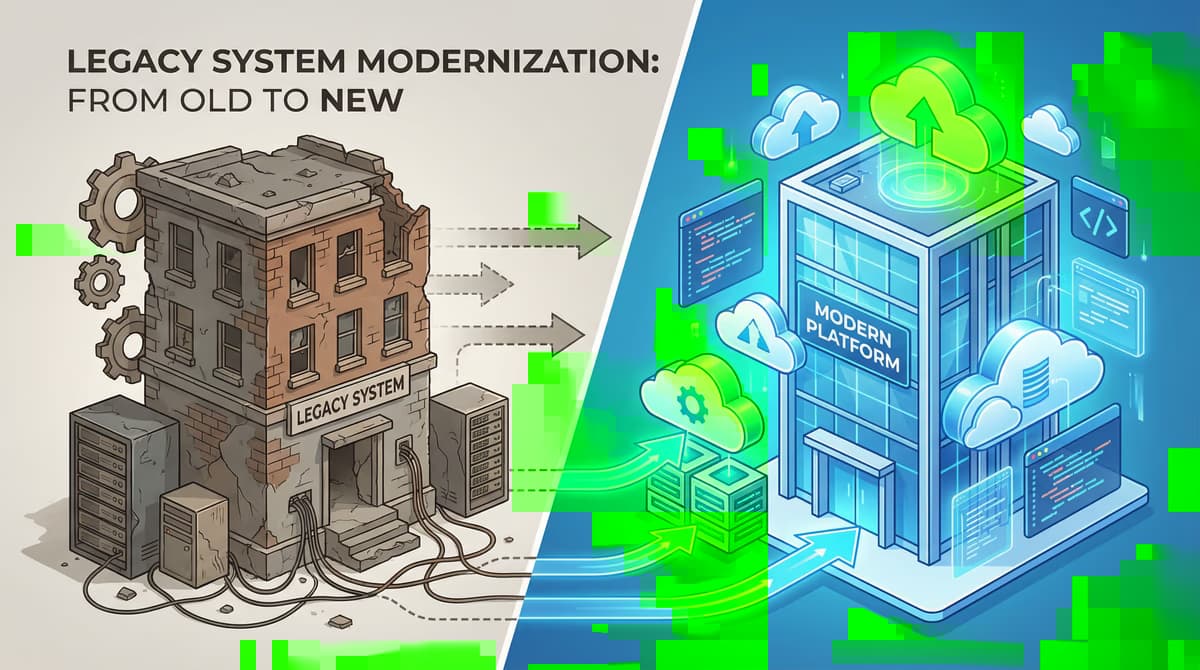
Software Resolution: Lessons Learned from Practice
In today's rapidly changing digital landscape, many companies face the challenge of modernizing or replacing outdated software systems. The decision to replace old software is often the beginning of a complex project that goes far beyond pure technology. In this article, we share practical findings and proven procedures that help you successfully shape your software release project.
Why software release is necessary
Over time, legacy systems, also called legacy systems, can develop into a significant business risk. The reasons for this are manifold:
- Old technology: The software is based on outdated technologies that are no longer supported and risk security.
- Quality: Adjustments to new business requirements are complicated, expensive or no longer possible.
- High maintenance costs: The maintenance of old systems binds valuable resources that are lacking for innovation.
- Fealing know-how: Experts on old technologies are fast and expensive, making maintenance and development more difficult.
- Integration problems: Connection to modern systems and cloud services is often complicated and susceptible to errors.
Phases of a successful detachment project
A software release project can be roughly divided into four phases. Careful planning and implementation of each phase is crucial for overall success.
1. Analysis and strategy development
At the beginning of each detachment project is a thorough analysis of the existing system landscape and business processes. Please clarify the following questions:
- What functions of the old system are critical for business?
- What processes should be optimized or redesigned?
- What requirements do future users have?
- What technological and economic objectives are pursued with redemption?
Based on this analysis, you will develop a clear strategy for detachment. There are various approaches, such as the "Big Bang" (replace everything at once) or a gradual migration.
2. Selection of the new solution
Choosing the right software is a critical success factor. Instead of being dazzled by a long list of features, you should focus on the core requirements of your company. Perform a Proof of Concept (PoC) with one or two favorite providers to verify the most important functions in practice. Please also take into account the experience of the provider with the Alte software and ask for references.
3. Implementation and Migration
The implementation phase is often the most elaborate and time-intensive. A detailed project plan with clear milestones and verantwor
About the author
Groenewold IT Solutions
Softwareentwicklung & Digitalisierung
Praxiserprobte Einblicke aus Projekten rund um individuelle Softwareentwicklung, Integration, Modernisierung und Betrieb – mit Fokus auf messbare Ergebnisse und nachhaltige Architektur.
Related topics:
Read more
Related articles
These posts might also interest you.
Onshore vs. Offshore: 3 reasons why local development provides better ROI
The hourly rate is only half the truth. We show why onshore development in Germany has its nose at speed, quality and ROI.
18 February 2026
Software developmentCrowdfunding for software projects: A promising alternative?
In the dynamic world of software development, securing financing is often one of the largest obstacles for innovative projects. Traditional ways such as bank loans or venture capital are...
16 February 2026
Software developmentAgile vs. Waterfall: What method fits your project?
A detailed comparison between agile methods (Scrum, Kanban) and the traditional waterfall model. Learn the strengths, weaknesses and when which method is best suited.
16 February 2026
Free download
Checklist: 10 questions before software development
What to clarify before investing in custom software – budget, timeline, requirements and more.
Get the checklist in a consultationRelevant next steps
Related services & solutions
Based on this article's topic, these pages are often the most useful next steps.