

As of: 26 May 2026 · Reading time: 3 min
Key takeaways
- In today's digitalized business world, an efficient enterprise resource planning (ERP) system is crucial for the success of a company.
- It integrated and automated...
In today's digitalized business world, an efficient enterprise resource planning (ERP) system is crucial for the success of a company. It integrated and automated...
“Good software is not an accident—it comes from a structured development process with clear quality standards.”
– Björn Groenewold, Managing Director, Groenewold IT Solutions
In today's digitalized business world, an efficient enterprise resource planning (ERP) system is crucial for the success of a company.
It integrates and automates central business processes such as finance, human resources, manufacturing and supply chain management.
While traditional proprietary ERP solutions dominated the market, open source ERP systems are becoming increasingly important.
But what exactly is behind the term Open Source ERP and what opportunities and risks are associated with it?
In this article, we highlight the advantages and disadvantages of open source ERP systems to provide you with a sound basis of decision.
What are open source ERP systems?
Short: Open source ERP systems are enterprise software solutions whose source code is publicly accessible.
Open source ERP systems are enterprise software solutions whose source code is publicly accessible. This means that companies can freely download, modify and adapt the software to their specific needs.
Unlike proprietary systems where the provider has full control over the code, open source solutions offer a high level of flexibility and transparency.
Known examples of open source ERP systems are Odoo, ERPNext and Dolibarr.
The advantages of open source ERP
The decision for a Open Source ERP system can bring a number of benefits to companies. Here are the most important at a glance:
1. Cost savings
One of the most obvious advantages of open source ERP systems is the lower initial costs. Since no royalties are incurred, companies can achieve significant savings.
This makes open source solutions especially attractive for small and medium-sized enterprises (SMEs), which often have a limited IT budget. However, it is important to note that "free" does not mean "free".
Implementation, adaptation, training and maintenance continue to cause costs.
2. Flexibility and adaptability
Since the source code is freely accessible, companies can adapt an open source ERP system precisely to their individual business processes.
This high flexibility allows to develop customized solutions that can grow with the changing requirements of the company. Proprietary systems often offer limited adaptation possibilities.
3. Independence of providers
With an open source ERP system, companies avoid dependency on a single provider (Vendor-Lock-in).
They are not bound to the product and price policy of a manufacturer and can freely choose the service provider for support and maintenance.
This creates a greater negotiating power and long-term security.
4. Transparency and security
The open source code allows developers and security experts to check the code for vulnerabilities. This often leads to higher safety, as errors and
References and further reading
Short: The following independent references complement the topics in this article:
The following independent references complement the topics in this article:
- Bitkom – German digital industry association
- German Federal Office for Information Security (BSI)
- European Commission – Digital strategy
- MDN Web Docs (Mozilla)
- W3C – World Wide Web Consortium
"Privacy by design is an architecture issue—especially when master data is personal."
— Björn Groenewold, Managing Director, Groenewold IT Solutions
About the author

Managing Director of Groenewold IT Solutions GmbH and Hyperspace GmbH
Since 2009 Björn Groenewold has been developing software solutions for the mid-market. He is Managing Director of Groenewold IT Solutions GmbH (founded 2012) and Hyperspace GmbH. As founder of Groenewold IT Solutions he has successfully supported more than 250 projects – from legacy modernisation to AI integration.
Blog recommendations
Related articles
These posts might also interest you.

Open source ERP: The best systems compared
In today's digital business world, an efficient enterprise resource planning (ERP) system is crucial for the success of a company. It integrates all essential...
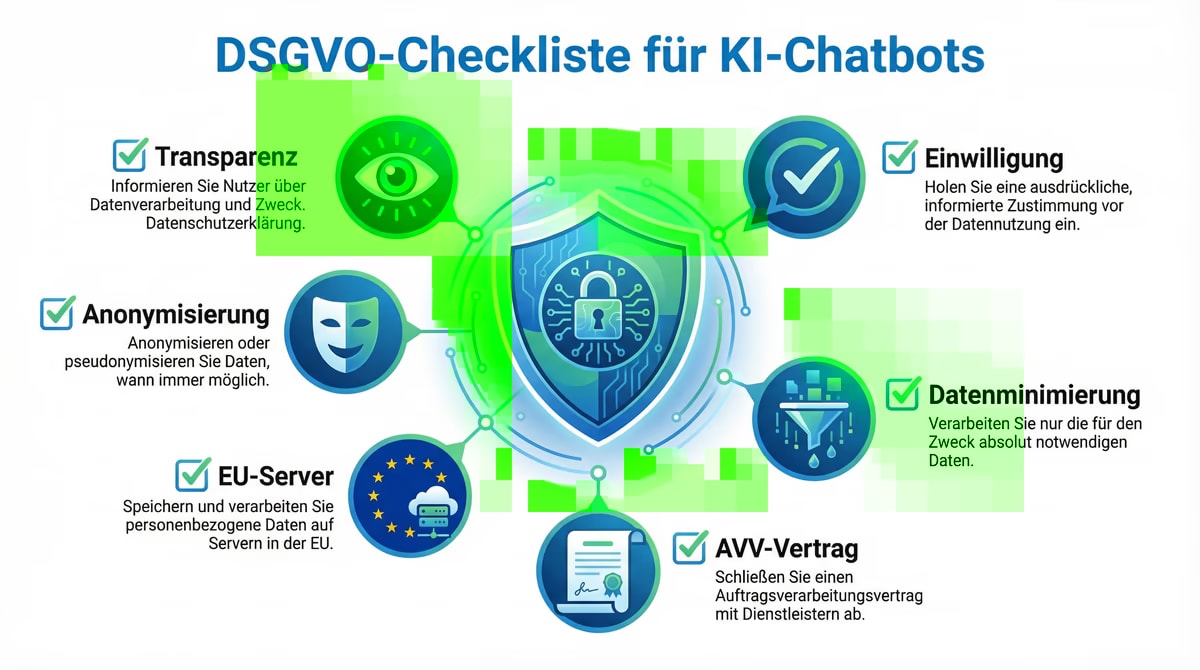
Developing GDPR-compliant software: Requirements and Checklist
In today's digital landscape, software is the backbone of countless business processes. But with increasing digitalization, the responsibility for dealing with personal data is also increasing.
Privacy by Design: GDPR from the start
In an increasingly digitized world where data are the new gold, the protection of personal data is increasingly focused. The General Data Protection Regulation (GDPR) has...
Free download
Checklist: 10 questions before software development
Key points before you start: budget, timeline, and requirements.
Get the checklist in a consultationRelevant next steps
Related services & solutions
Based on this article's topic, these pages are often the most useful next steps.
Related services
Related solutions
Related comparison
Cost calculators
More on Software development and next steps
This article is in the Software development topic. In our blog overview you will find all articles; under category Software development more posts on this subject.
For topics like Software development we offer matching services – from app development and AI integration to legacy modernisation and maintenance. We describe typical use cases under solutions. Our cost calculators give initial estimates. Key terms are in the IT glossary. Books and long-form guides appear on the publications page; deeper articles live under topics.
If you have questions about this article or want a non-binding discussion about your project, you can book a consultation or reach us via contact. We usually respond within one working day.