
The real estate industry is facing a profound change. While PropTech innovations and the digital transformation open up new opportunities for efficiency and customer experience, many companies still struggle with outdated IT systems. These so-called Legacy systems are often the foundation on which business has been built for decades. But they are also a brake pad that massively limits the agility, scalability and innovative capability. The Legacymodernisation for real estate management is therefore not only an option, but a strategic necessity to compete and fully exploit the potential of digitalization.
This comprehensive guide highlights why the modernisation of old systems in the real estate sector is so crucial, what concrete advantages it offers and what applications promise the greatest added value.
- The challenge: Why legacy systems in the real estate industry become a risk
The real estate industry is traditionally conservative and process-oriented. Many core processes – from lease management to asset management to accounting – run on systems developed in the 1990s or early 2000s.
1.1. High maintenance costs and inefficiency (H2)
Legacy software is often written in outdated programming languages whose experts are harsh and expensive. Each adaptation or extension becomes a complex, risky and costly undertaking. Maintenance costs for old systems eat a large part of the IT budget that would actually be needed for innovation.
1.2. Lack of scalability and integration capability (H2)
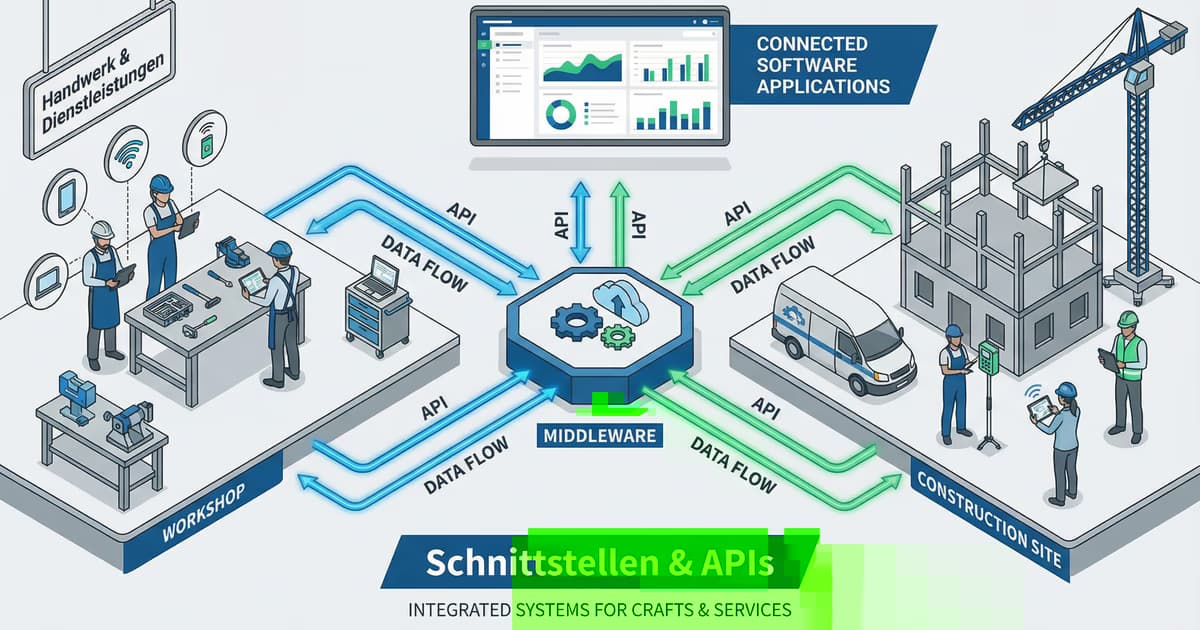
Modern requirements such as the connection to PropTech solutions (e.g. digital tenant portals, IoT devices in the smart building) or the processing of large amounts of data (big data), quickly bring legacy systems to their limits. The missing API capability makes seamless integration of new services more difficult and leads to data silos.
1.3. Security risks and compliance problems (H2)
Outdated systems often no longer get security updates, which makes them a light target for cyber attacks. In an industry that manages sensitive tenants and object data, this is an untenable risk. Furthermore, compliance with new Compliance regulations (e.g. GDPR) can be severely impeded by rigid old systems.
Two. The solution: Strategic advantages of legacy moderation (H1)
Modernization of legacy applications is a multi-stage process aimed at maintaining business logic while renewing the technological base. The advantages are far-reaching and have a direct impact on competitiveness.
2.1. Significant cost reduction and efficiency increase (H2)
The conversion to modern, cloud-native architectures (e.g. microservices) dramatically reduces the ** operating costs**. Automatic
About the author
Groenewold IT Solutions
Softwareentwicklung & Digitalisierung
Praxiserprobte Einblicke aus Projekten rund um individuelle Softwareentwicklung, Integration, Modernisierung und Betrieb – mit Fokus auf messbare Ergebnisse und nachhaltige Architektur.
Related topics:
Read more
Related articles
These posts might also interest you.
Legacy Modernization in Logistics & Transport: The Way to Digital Supply Chain
The logistics and transport industry is the backbone of the global economy. But while the demands on speed, transparency and sustainability are constantly rising, many companies are fighting with an invisible but powerful opponent:...
5 February 2026
Interfaces & APIsLegacy-Modernization in Healthcare: The Way to Future-proof Patient Care
The healthcare industry is facing a fundamental change worldwide. Driven by technological progress, demographic developments and increasing patient requirements, **Digitalization** is no longer an option but a...
30 January 2026
Interfaces & APIsInterfaces & APIs: The Guide to Successful System Integration
Interfaces and APIs are the nervous system of modern IT landscapes. They enable data exchange between systems, automate processes and create the basis for innovative business models. This guide will show you how to...
30 January 2026
Free download
Checklist: 10 questions before software development
What to clarify before investing in custom software – budget, timeline, requirements and more.
Get the checklist in a consultationRelevant next steps
Related services & solutions
Based on this article's topic, these pages are often the most useful next steps.