
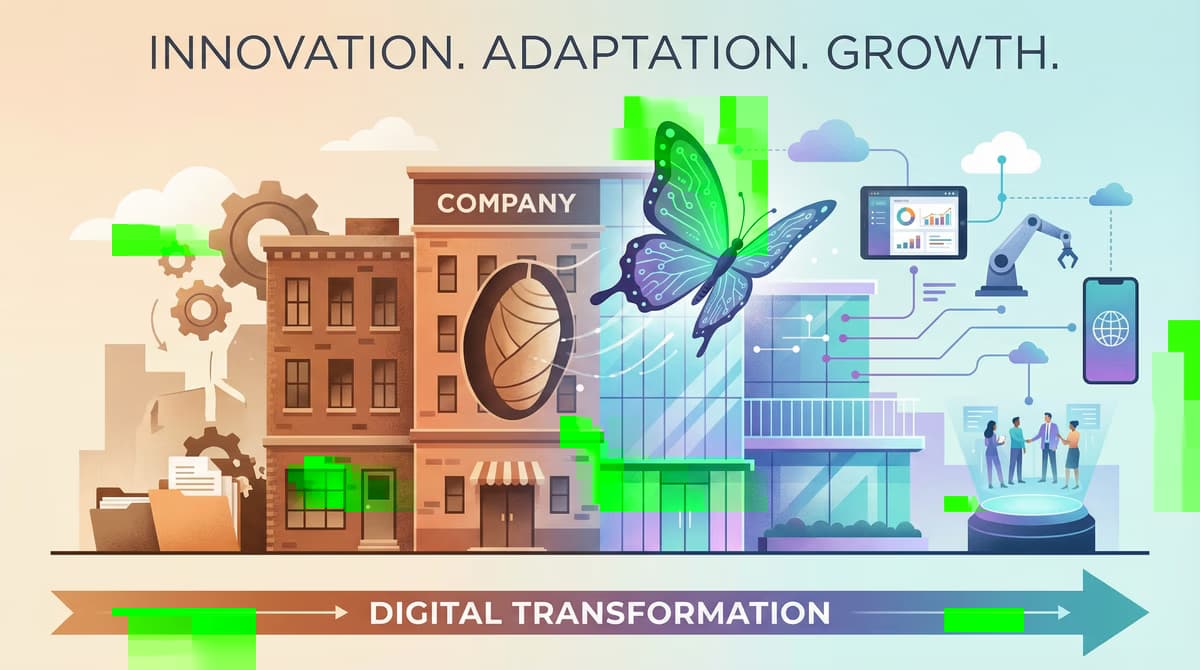
Digital transformation is more than just a fashion word – it is a key factor for the future viability of small and medium-sized enterprises (SMEs). In an increasingly connected area...
> Key Takeaway: This practical guide takes SMEs through digital transformation: from a digital readiness check through prioritization of digitalization projects to implementation with agile methods. The most important principle: processes before technology — optimize the workflow first, then digitalize.
Digital transformation is more than just a fashion word – it is a key factor for the future viability of small and medium-sized enterprises (SMEs). In an increasingly connected world, the ability to use digital technologies profitably is no longer an optional extra, but a need for sustainable success. But what exactly hides behind the concept and how can SMEs take the chances associated with it without losing their complexity? This practical guide provides a comprehensive overview and concrete steps for a successful digital transformation in SMEs.
What is the digital transformation?
The digital transformation describes the profound process of change triggered by digital technologies that affects all areas of a company. This is not only about the introduction of new software or the digitization of individual processes. Rather, it is a strategic change that fundamentally redesigns business models, operations, corporate culture and interaction with customers. For SMEs, this means the opportunity to become more agile, efficient and customer-oriented and thus to compete.
The advantages of digital transformation for SMEs
The investment in digital transformation pays off for SMEs in many ways. The main advantages include:
- ** Increased efficiency:** By automating routine tasks and optimizing workflows, valuable resources can be released and costs reduced.
- Improved customer relationships: Digital channels enable more direct and personalized communication with customers. Data analyses help to better understand customer needs and develop tailor-made offers. *Developing new business models: Digitization opens up opportunities for innovative products, services and sales channels that were previously unthinkable.
- High competitiveness: Companies that successfully master digital transformation are more flexible and can react faster to market changes.
- Activity as an employer: A modern, digital working environment makes a company more attractive for qualified professionals.
Challenges in Implementation
Despite the obvious advantages, SMEs often face specific obstacles in digital transformation. Proactive confrontation with these challenges is the first step towards their overcoming.
| Challenge | Solution approach |
|---|---|
| Financial resources | Targeted investments with clear ROI (return on investment), use of funding and gradual implementation. |
| ** Fealing know-how | Continuing training of employees, involving external experts and building cooperation. |
About the author

Managing Director & Founder
For over 15 years Björn Groenewold has been developing software solutions for the mid-market. As founder of Groenewold IT Solutions he has successfully supported more than 250 projects – from legacy modernisation to AI integration.
Read more
Related articles
These posts might also interest you.
Onshore vs. Offshore: 3 reasons why local development provides better ROI
The hourly rate is only half the truth. We show why onshore development in…
Crowdfunding for software projects: A promising alternative?
In the dynamic world of software development, securing financing is often one…
Software migration: Why user training is the key to success
Introducing new software is a crucial step for companies. A software migration…
Free download
Checklist: 10 questions before software development
Key points before you start: budget, timeline, and requirements.
Get the checklist in a consultationRelevant next steps
Related services & solutions
Based on this article's topic, these pages are often the most useful next steps.