
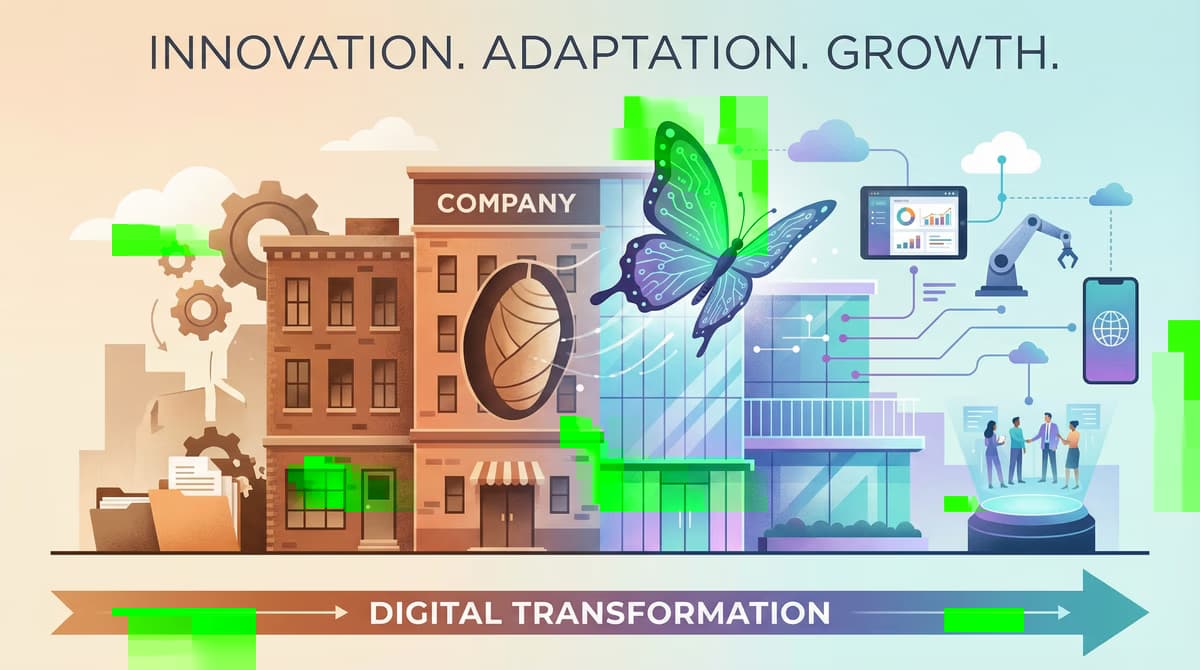
In today's rapidly changing business world, **Digitalization for the middle class** is no longer a hurdle, but a strategic necessity. In view of the increasing bet...
> Key Takeaway: Process automation is the most impactful entry point into digitalization for SMEs. Typical quick wins: automated invoice processing, digital order capture, and workflow automation in administration. The key to success is gradual implementation — starting with the process that consumes the most manual effort.
In today's rapidly changing business world, Digitalization for the middle class is no longer a hurdle, but a strategic necessity. In view of increasing competitive pressure, shortage of skilled workers and increasing customer expectations, medium-sized companies face new challenges. One of the most effective answers to these developments is the targeted automation of business processes. But what lies behind this concept, what potentials are slumbering in it and how can companies successfully master the entry? This post provides the answers and shows why now is the ideal time to set the course for a digital and successful future.
What exactly is process automation?
Process automation means the use of modern technologies to automate recurring, manual and rule-based tasks and workflows in a company. The primary objective is to maximise efficiency, minimise susceptibility to errors and release valuable human labour for creative, strategic and value-creating activities. The bandwidth ranges from the simple automation of individual tasks, such as the automatic collection and processing of input invoices, to the orchestration of complex, cross-departmental workflows in areas such as production, logistics or marketing.
The unmistakable advantages of process automation for the middle class
The implementation of automated processes offers medium-sized companies a wealth of advantages that directly affect business success and go far beyond a pure increase in efficiency. An investment in the digitalization of the middle class pays off in a variety of ways.
Drastic cost reduction and efficiency increase
By reducing manual interventions and minimizing human errors, operating costs can be significantly reduced. Time-consuming routine tasks are done by the software in a fraction of time, which leads to a considerable increase in productivity. Employees are relieved of monotonous activities and can concentrate their energy on more complex problems and customer support.
Improved quality and higher customer satisfaction
Automated processes work with constant precision and according to predefined rules. This leads to a consistently high quality of the results and a drastically reduced error rate. Faster throughput times, for example when processing orders or service requests, lead to a noticeably higher customer satisfaction and strengthen customer loyalty.
Agility, scalability and future security
About the author

Managing Director & Founder
For over 15 years Björn Groenewold has been developing software solutions for the mid-market. As founder of Groenewold IT Solutions he has successfully supported more than 250 projects – from legacy modernisation to AI integration.
Read more
Related articles
These posts might also interest you.
Onshore vs. Offshore: 3 reasons why local development provides better ROI
The hourly rate is only half the truth. We show why onshore development in…
Crowdfunding for software projects: A promising alternative?
In the dynamic world of software development, securing financing is often one…
Software migration: Why user training is the key to success
Introducing new software is a crucial step for companies. A software migration…
Free download
Checklist: 10 questions before software development
Key points before you start: budget, timeline, and requirements.
Get the checklist in a consultationRelevant next steps
Related services & solutions
Based on this article's topic, these pages are often the most useful next steps.