
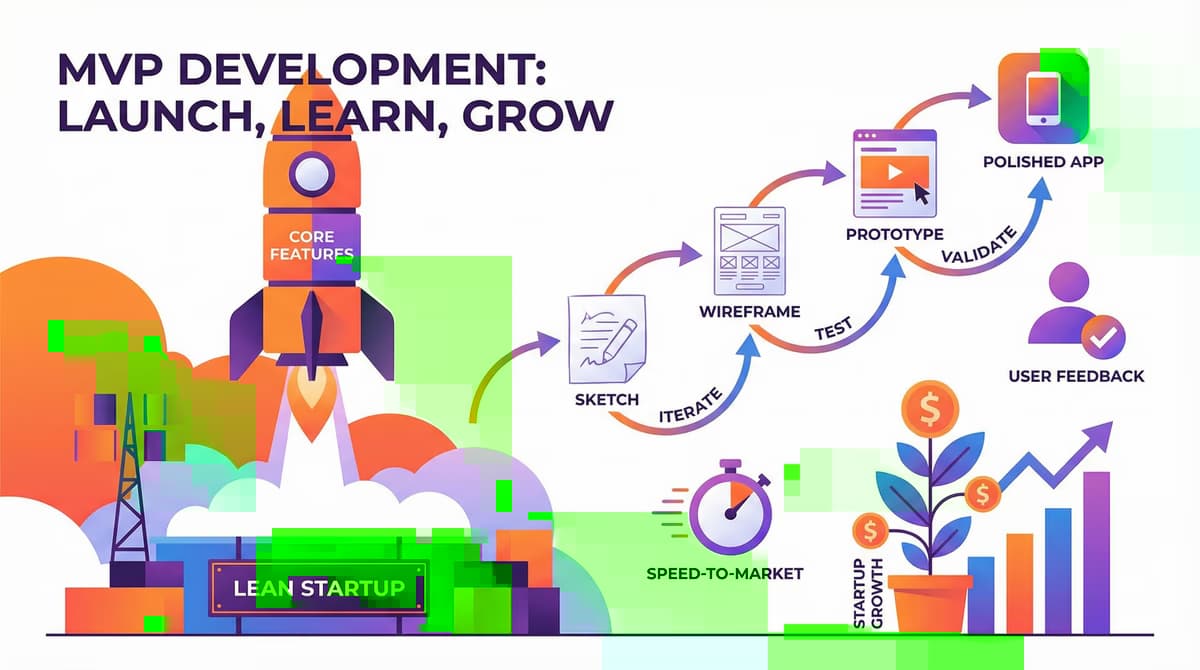
The development of a minimum Viable Product (MVP) is a crucial strategic step for start-ups and established companies. It allows for an innovative product idea...
> Key Takeaway: MVP costs in 2026 range from EUR 15,000 to 80,000 for software MVPs, depending on feature scope, chosen technology, and backend integration depth. The biggest cost drivers are real-time features, third-party integrations, and elaborate UI designs — a focused feature set keeps costs manageable.
The development of a minimum Viable Product (MVP) is a crucial strategic step for start-ups and established companies. It allows to validate an innovative product idea with minimal resource use directly on the market and to collect valuable user feedback. One of the most central and often complex questions in this process is the MVP development costs. In 2026, the market for [software development](/services/software development) is more dynamic than ever. Factors such as emerging technologies, rising salaries for experienced developers and an increasingly globalised talent landscape influence pricing. This article provides a comprehensive analysis of current market prices and key trends to give you a solid and realistic basis for your budget planning.
What does the cost of a MVP increase?
The cost of developing a MVP is never flat, but the result of a variety of variable factors. A deep understanding of these cost drivers is essential to precisely plan your budget, minimise financial risks and avoid unpleasant surprises during the development process.
Complexity and strategic scope
The most significant cost driver is the strategically defined scope and technical complexity of the functions you choose for your MVP. A simple MVP, which concentrates on a single core functionality, will naturally be significantly cheaper than a multilayered application. Projects are more cost-intensive through the integration of third-party services (e.g. payment gateways, card APIs), the implementation of artificial intelligence (AI) and machine learning, or the development of sophisticated multi-stage security architectures to protect sensitive data. The number of screens to be designed, the definition of different user roles with different permissions and the complexity of user interactions are further aspects that directly affect development costs.
Design, user experience (UI/UX) and brand identity
A professional, appealing and, above all, intuitive design is not a luxury, but a critical success factor for every digital product. The investment in User Interface (UI) and User Experience (UX) design can vary significantly. The costs depend on whether you can rely on a standardized design template or create a completely individual design tailored to your brand with custom animations, microinteractions and a thoughtful user flow. A well-founded investment in an excellent design pays off in the long term, as it significantly and sustains user acceptance, conversion rates and customer retention
About the author

Managing Director & Founder
For over 15 years Björn Groenewold has been developing software solutions for the mid-market. As founder of Groenewold IT Solutions he has successfully supported more than 250 projects – from legacy modernisation to AI integration.
Read more
Related articles
These posts might also interest you.
Onshore vs. Offshore: 3 reasons why local development provides better ROI
The hourly rate is only half the truth. We show why onshore development in…
Crowdfunding for software projects: A promising alternative?
In the dynamic world of software development, securing financing is often one…
Software migration: Why user training is the key to success
Introducing new software is a crucial step for companies. A software migration…
Free download
Checklist: 10 questions before software development
Key points before you start: budget, timeline, and requirements.
Get the checklist in a consultationRelevant next steps
Related services & solutions
Based on this article's topic, these pages are often the most useful next steps.