
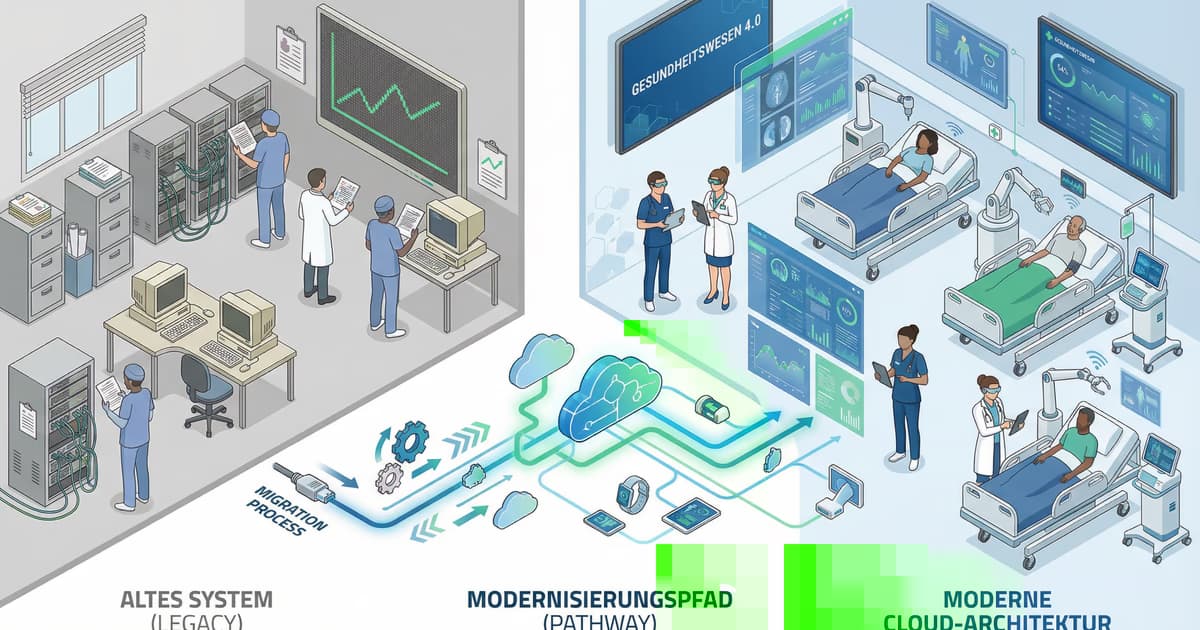
The public administration in Germany is facing a mammoth task: the complete digital transformation. While citizens and businesses in the private sector benefit from state-of-the-art, intuitive digital services, many authorities are still fighting with Legacy systems. These old systems, often grown for decades and written in outdated programming languages, are not only a cost factor but also a massive obstacle on the way to a modern, citizen-oriented and efficient E-Government future.
This detailed blog post highlights why the Legacy moderation is unavoidable for the public hand, what concrete advantages it offers and what strategic paths lead to the successful IT transformation.
The digital Zwickmill of administration
The challenge: Why legacy systems become a problem in administration
Legacy systems are not bad per se. They are the main pillars that have reliably completed critical administrative tasks over decades. But their disadvantages increasingly outweigh the advantages.
Old programming languages and architectures: Many core applications are based on technologies for which there are hardly any specialist personnel. This leads to a technical debt which makes maintenance extremely expensive and risky. Every small adaptation becomes a complex, lengthy project.
High maintenance costs and missing know-how: The operating costs for old systems are often exorbitant. Most of the IT budget flows into pure System Care instead of innovation. At the same time, knowledge about the internal processes of these systems is lost with the excretion of long-term employees, which increases the dependence of few experts.
**Safety risks and compliance problems:**Old software and operating systems often no longer receive security updates. This makes it an easy target for cyber attacks and makes it difficult to comply with modern data protection regulations such as the GDPR.
**Reducing digitalization and e-government objectives:**The rigid structures of legacy systems prevent the rapid implementation of new digital services, as required by the Online Access Act (OZG). They are not designed for networking and data exchange, which makes the "Once-Only" principle (citizens only have to submit data once) almost impossible.
What does legacymodernisation mean in the context of public service?
Legacy Moderation is more than just a software update. It is a strategic process in which old systems are replaced, adapted or expanded by modern, sustainable architectures. In the public service, this means:
> ** Focus on core processes and data keeping:** Modernisation must ensure the complex, often legally enshrined administration processes and the Data Highness of the authorities.
>
> **Objective: resilience, scalability
About the author
Groenewold IT Solutions
Softwareentwicklung & Digitalisierung
Praxiserprobte Einblicke aus Projekten rund um individuelle Softwareentwicklung, Integration, Modernisierung und Betrieb – mit Fokus auf messbare Ergebnisse und nachhaltige Architektur.
Related topics:
Read more
Related articles
These posts might also interest you.
Legacy Systems in the Financial Sector: Compliance and Security
Learn why legacy systems for banks and insurance companies are a ticking time bomb and how secure and compliant modernization can be achieved.
9 February 2026
LegacymodernizationLegacy-Modernization: How to make old systems fit for the future
Legacy systems are often the backbone of a company – but also a growing risk. Outdated technologies, lack of documentation and dependency on special knowledge make maintenance expensive and further development difficult. This Gui...
30 January 2026
LegacymodernizationThe Future of Money: How App Development Revolutionizes Financial Services and Banks
The financial world is undergoing profound change. Driven by technological innovations and changed customer expectations, **App development has played a central role in financial services & banks**. What once...
28 January 2026
Free download
Checklist: 10 questions before software development
What to clarify before investing in custom software – budget, timeline, requirements and more.
Get the checklist in a consultationRelevant next steps
Related services & solutions
Based on this article's topic, these pages are often the most useful next steps.