
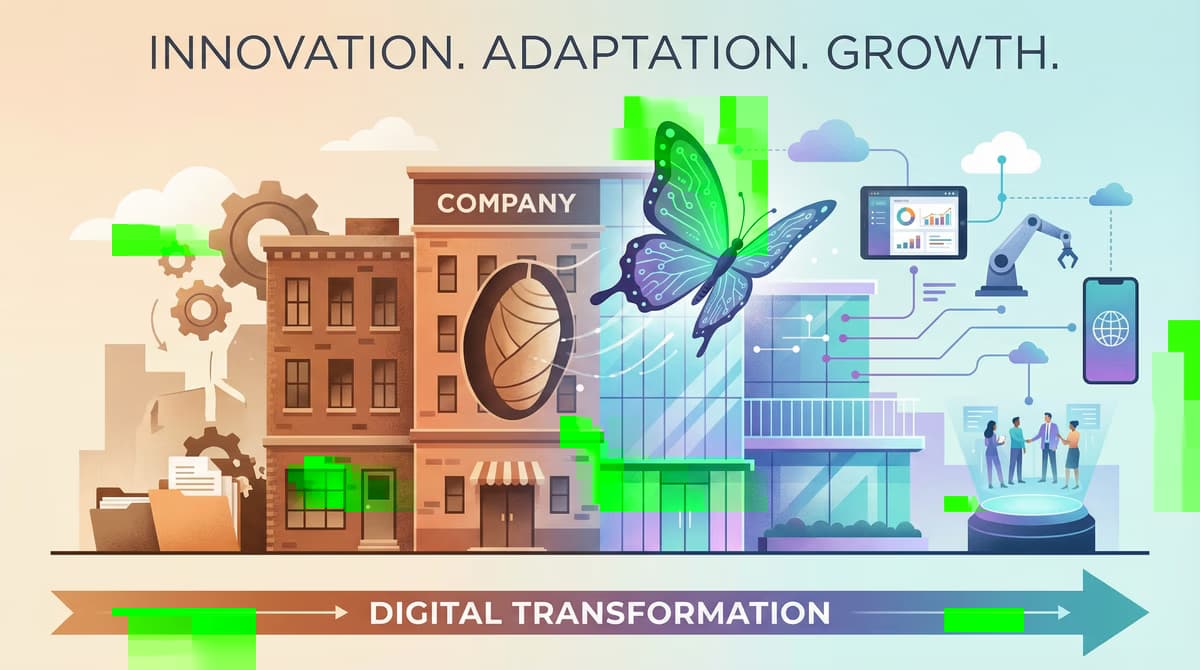
Digital transformation is no longer an option for small and medium-sized enterprises (SMEs), but a need to exist in today's competitive environment. But in implementation ...
Digital transformation is no longer an option for small and medium-sized enterprises (SMEs), but a need to exist in today's competitive environment.
But when implementing digital strategies, a decisive factor is often overlooked: customer centering.
In this article we will explain why customer orientation is the true motor for a successful digital transformation in SMEs and how to anchor this approach in your company.
What does digital transformation mean for SMEs?
Digital transformation means far more than just the introduction of new technologies.
It is a fundamental change in business processes, corporate culture and customer interactions.
Digitization offers enormous opportunities for SMEs: increasing efficiency, developing new markets and developing innovative products and services.
But change must be strategically and holistic to ensure sustainable success.
Why customer centering is the key to success
A successful digital transformation places the customer at the heart of all thoughts. Companies that understand and meet the needs and expectations of their customers create not only loyal customers, but also a decisive competitive advantage.
Creating improved customer experiences
Digital technologies enable SMEs to create personalized and seamless customer experiences across all channels. From initial contact to the purchasing process to after-sales service – a positive experience strengthens customer loyalty and promotes the recommendation.
Use data to better understand customers
Digital tools allow you to collect and analyze valuable data about the behavior and preferences of your customers. These findings are the basis for the development of tailor-made offers and a proactive customer approach. The digital transformation in SMEs becomes a data-based success.
How SMEs can implement customer-centred digital transformation
The implementation of a customer-centric digital strategy requires a systematic approach. The following steps can serve as a guide:
- ** Analyze customer needs:** Perform surveys, analyze customer feedback and use data to develop a deep understanding of your audience.
- Customer Journey image: Visualize all contact points of the customer with your company to identify weaknesses and optimization potentials.
- Include employees: School your employees and create a corporate culture where everyone understands and lives the importance of customer centering.
- ** Use technology specifically:** Select technologies that help you improve customer interaction, such as CRM systems,
About the author

Managing Director of Groenewold IT Solutions GmbH and Hyperspace GmbH
For over 15 years Björn Groenewold has been developing software solutions for the mid-market. He is Managing Director of Groenewold IT Solutions GmbH and Hyperspace GmbH. As founder of Groenewold IT Solutions he has successfully supported more than 250 projects – from legacy modernisation to AI integration.
Read more
Related articles
These posts might also interest you.
Nearshore Development: Benefits and Popular Locations for Your IT Project
In today's globalised and digitized business world, companies are constantly…
10 Advantages of agile software development for your company
Why do successful companies rely on agile software development? 10…
How long does software development take? Realistic time frame 2026
How long does the development of a software take? Realistic time frames for…
Free download
Checklist: 10 questions before software development
Key points before you start: budget, timeline, and requirements.
Get the checklist in a consultationRelevant next steps
Related services & solutions
Based on this article's topic, these pages are often the most useful next steps.
Related services
Related solutions
More on Software development and next steps
This article is in the Software development topic. In our blog overview you will find all articles; under category Software development more posts on this subject.
For topics like Software development we offer matching services – from app development and AI integration to legacy modernisation and maintenance. We describe typical use cases under solutions. Our cost calculators give initial estimates. Key terms are in the IT glossary, and in-depth content under topics.
If you have questions about this article or want a non-binding discussion about your project, you can book a consultation or reach us via contact. We usually respond within one working day.