
As of: 19 June 2026 · Reading time: 4 min
Key takeaways
- Gamification understandably explained
Gamification understandably explained
“Good software is not an accident—it comes from a structured development process with clear quality standards.”
– Björn Groenewold, Managing Director, Groenewold IT Solutions
Gamification uses game mechanics (points, badges, leaderboards, progress bars) in non-gaming contexts to boost motivation and engagement.
Typical use cases: employee training, customer loyalty programs, and onboarding processes.
Related articles
Short: Executive answer: Gamification understandably explained ---
Executive answer: Gamification understandably explained ---
When planning Gamification briefly explained from idea to delivery, AI & Machine Learning, Cost Calculator: AI Development sowie Discover solutions offer practical next steps on our site.
- [18 open source shop systems at a glance – strengths,...](/en/blog/software-development/18-open-source-shop-systems-at-a-glance-strengths%E2%80%91source%E2%80%91shop systems-in %C3%BCberview%E2%80%93-st%C3%A4rken%2C-speciality and recommended bet-f%C3%BCr-her-e%E2%80%91commerce)
- [What an app programmer needs](/en/blog/kategorie/app-development programer skills)
- Domain-driven Design
Avoiding common gamification mistakes
Short: Gamification often fails when points and badges add no real value or the mechanics don't fit the audience.
Gamification often fails when points and badges add no real value or the mechanics don't fit the audience. Too many or superficial elements quickly feel arbitrary.
The goal is to make real progress and competence visible, not just "game-like" decoration.
User surveys and A/B tests help you find the right balance and use gamification so that motivation and learning outcomes improve sustainably.
Designing mechanics that match the context
Short: Gamification works best when the mechanics fit the context.
Gamification works best when the mechanics fit the context.
In learning or training, progress bars and badges can reflect real skills or completed modules; in sales or support, they might reflect deals closed or tickets resolved.
Avoid adding points or levels that have no link to actual performance – they quickly feel meaningless.
Map game elements to real goals and make the connection visible so that users see their progress in terms that matter to them.
Sustaining motivation over time
Short: Initial novelty can drive short-term engagement, but long-term motivation needs more.
Initial novelty can drive short-term engagement, but long-term motivation needs more. Offer new challenges, levels or content that stay slightly ahead of the user's current level. Social elements – comparisons, teams or sharing – can help when they feel fair and relevant. Review analytics to see where drop-off happens and test changes to onboarding, difficulty or rewards. Gamification is not a one-time feature; it benefits from iteration based on how people actually use the system.
When to use gamification – and when not to
Short: Gamification suits contexts where clear actions and progress can be defined: training, fitness, productivity, support.
Gamification suits contexts where clear actions and progress can be defined: training, fitness, productivity, support. It is less appropriate where it would trivialise serious content or where competition could discourage collaboration.
Evaluate whether points and badges add genuine motivation or just noise.
Pilot with a subset of users and measure behaviour and satisfaction before rolling out widely.When implemented thoughtfully and measured over time, gamification can increase engagement and support learning or performance goals.
Start small, align mechanics with real outcomes and refine based on data.
Sources: Unless cited inline, market figures and percentages are for orientation; see public sources such as Bitkom (2025) and Destatis. Project budgets and examples: Groenewold IT Solutions, internal reporting 2026.
References and further reading
Short: The following independent references complement the topics in this article:
The following independent references complement the topics in this article:
- Bitkom – German digital industry association
- German Federal Office for Information Security (BSI)
- European Commission – Digital strategy
- MDN Web Docs (Mozilla)
- W3C – World Wide Web Consortium
Frequently Asked Questions (FAQ)
What is this article about: “Gamification briefly explained”?
This post explores Gamification briefly explained from the perspective of requirements, typical pitfalls, and sensible next steps.
In short: The core topic is Gamification briefly explained — with a focus on sound decisions and maintainable delivery.
Who benefits most from the content described here?
Useful for project leads and product owners in Software development who must choose between standard software, custom development, and integration.
How does this topic fit into an IT or digital strategy?
Technically and organizationally, alignment with experienced partners pays off — from requirements to operations; start with the [services overview](/en/services/software-development). For multi-system landscapes, [IT consulting and architecture](/en/services/it-consulting) helps align vendors and internal teams.
What are sensible next steps if we need support?
A practical next step: book a consultation and clarify which MVP or pilot fits your team and landscape.
About the author

Managing Director of Groenewold IT Solutions GmbH and Hyperspace GmbH
Since 2009 Björn Groenewold has been developing software solutions for the mid-market. He is Managing Director of Groenewold IT Solutions GmbH (founded 2012) and Hyperspace GmbH. As founder of Groenewold IT Solutions he has successfully supported more than 250 projects – from legacy modernisation to AI integration.
Blog recommendations
Related articles
These posts might also interest you.

Nearshore Trends 2026: New markets and developments in IT services
The global IT landscape is undergoing a steady change that forces companies to continuously adapt their business strategies to remain competitive. One of the central...
From Offshore to Nearshore: When a change makes sense
In today's globalised business world, outsourcing is a key factor for many companies to remain competitive. The outsourcing of software development projects can ...
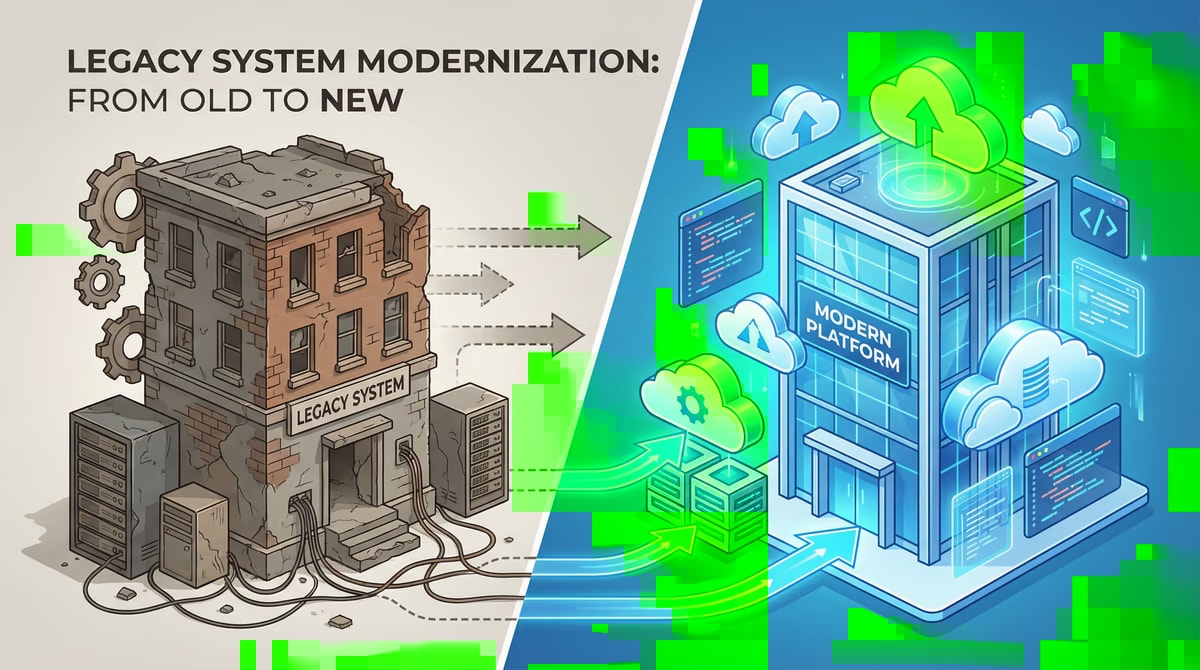
Software Migration: Planning, implementation and frequent errors
In today's fast-paced digital landscape, modernization of IT systems is essential for companies to remain competitive. A Software migration is often a...
Free download
Checklist: 10 questions before software development
Key points before you start: budget, timeline, and requirements.
Get the checklist in a consultationRelevant next steps
Related services & solutions
Based on this article's topic, these pages are often the most useful next steps.
Related services
Related solutions
Cost calculators
More on Software development and next steps
This article is in the Software development topic. In our blog overview you will find all articles; under category Software development more posts on this subject.
For topics like Software development we offer matching services – from app development and AI integration to legacy modernisation and maintenance. We describe typical use cases under solutions. Our cost calculators give initial estimates. Key terms are in the IT glossary. Books and long-form guides appear on the publications page; deeper articles live under topics.
If you have questions about this article or want a non-binding discussion about your project, you can book a consultation or reach us via contact. We usually respond within one working day.