As of: 19 June 2026 · Reading time: 4 min
Key takeaways
- Models as a means of handling complex facts are an important and established means in computer science.
- Models help to cope with the growing complexity of software.
Models as a means of handling complex facts are an important and established means in computer science. Models help to cope with the growing complexity of software.
“Good software is not an accident—it comes from a structured development process with clear quality standards.”
– Björn Groenewold, Managing Director, Groenewold IT Solutions
Model-Driven Software Development (MDSD) generates code from formal models (UML, DSL) and thus increases consistency and development speed.
The approach is especially suited for projects with recurring structures, standardized interfaces, and high quality requirements.
Model gearboxes Software development
Related articles
Short: Executive answer: Models as a means of handling complex facts are an important and established means in computer science.
Executive answer: Models as a means of handling complex facts are an important and established means in computer science.
For Model-driven software development, View services, Cost Calculator: Software Development sowie Our Development Process help you align implementation, scope and budget before you commit.
- [18 open source shop systems at a glance – strengths,...](/en/blog/software-development/18-open-source-shop-systems-at-a-glance-strengths%E2%80%91source%E2%80%91shop systems-in %C3%BCberview%E2%80%93-st%C3%A4rken%2C-speciality and recommended bet-f%C3%BCr-her-e%E2%80%91commerce)
- [What an app programmer needs](/en/blog/kategorie/app-development programer skills)
- Domain-driven Design
When model-driven development pays off
Short: MDSD is especially worthwhile with recurring structures, many similar modules or strict compliance needs.
MDSD is especially worthwhile with recurring structures, many similar modules or strict compliance needs. When requirements change often, updating the model can be faster and less error-prone than editing generated code.
The upfront investment in tools and training pays off once multiple applications or variants are derived from the same models. For one-off, highly heterogeneous projects, the overhead may not be justified.
Tools and skills for model-driven development
Short: Successful MDSD relies on appropriate tools: editors or IDEs that support the modelling language, generators that produce code or config, and version control for models and generated artefacts.
Successful MDSD relies on appropriate tools: editors or IDEs that support the modelling language, generators that produce code or config, and version control for models and generated artefacts.
Teams need to be trained on the notation and the workflow – when to change the model versus when to patch generated code.
Establishing conventions for naming, modularisation and when to use models versus hand-written code avoids chaos as the codebase grows.
Integrating MDSD with existing systems
Short: Introducing MDSD into an existing project is often incremental.
Introducing MDSD into an existing project is often incremental. Start with a new module or a well-defined subsystem, generate code from models, and integrate it with the rest of the system via clear interfaces. Over time, further areas can be moved under the model-driven approach. Avoid rewriting everything at once; the transition is more manageable when the team can compare generated and manual code and build confidence in the toolchain before expanding its scope.
Balancing models and flexibility
Short: Models excel at consistency and automation but can feel rigid when requirements are highly variable or exploratory.
Models excel at consistency and automation but can feel rigid when requirements are highly variable or exploratory. Some parts of a system may stay hand-coded while others are generated.
Define clear boundaries: which areas are stable enough to model and which need the flexibility of direct coding.
Revisit the balance as the product and team mature.Teams that invest in tools, training and clear boundaries between modelled and hand-coded parts can scale MDSD effectively.
Revisit the approach as the system and requirements evolve to keep the benefits without unnecessary rigidity.
Transparency: Where no primary source is named in the text, figures are illustrative; compare Bitkom and Destatis. Project-related statements: Groenewold IT, 2026.
References and further reading
Short: The following independent references complement the topics in this article:
The following independent references complement the topics in this article:
- Bitkom – German digital industry association
- German Federal Office for Information Security (BSI)
- European Commission – Digital strategy
- MDN Web Docs (Mozilla)
- W3C – World Wide Web Consortium
Frequently Asked Questions (FAQ)
What is this article about: “Model-driven software development”?
Here we cover Model-driven software development — focused on architecture, process, and business outcomes.
In short: Models as a means of handling complex facts are an important and established means in computer science. Models help to cope with the growing complexity of software.
Who benefits most from the content described here?
Typical readers are business and IT leaders in Software development who want to secure quality, security, and maintainability over the long term.
How does this topic fit into an IT or digital strategy?
In a digital strategy, prioritize stable core processes first, then extensions. See also professional software development and consulting. For multi-system landscapes, IT consulting and architecture helps align vendors and internal teams.
What are sensible next steps if we need support?
If you need support with design, delivery, or modernization: schedule an appointment or outline your project via contact.
About the author

Managing Director of Groenewold IT Solutions GmbH and Hyperspace GmbH
Since 2009 Björn Groenewold has been developing software solutions for the mid-market. He is Managing Director of Groenewold IT Solutions GmbH (founded 2012) and Hyperspace GmbH. As founder of Groenewold IT Solutions he has successfully supported more than 250 projects – from legacy modernisation to AI integration.
Blog recommendations
Related articles
These posts might also interest you.

Nearshore Trends 2026: New markets and developments in IT services
The global IT landscape is undergoing a steady change that forces companies to continuously adapt their business strategies to remain competitive. One of the central...
From Offshore to Nearshore: When a change makes sense
In today's globalised business world, outsourcing is a key factor for many companies to remain competitive. The outsourcing of software development projects can ...
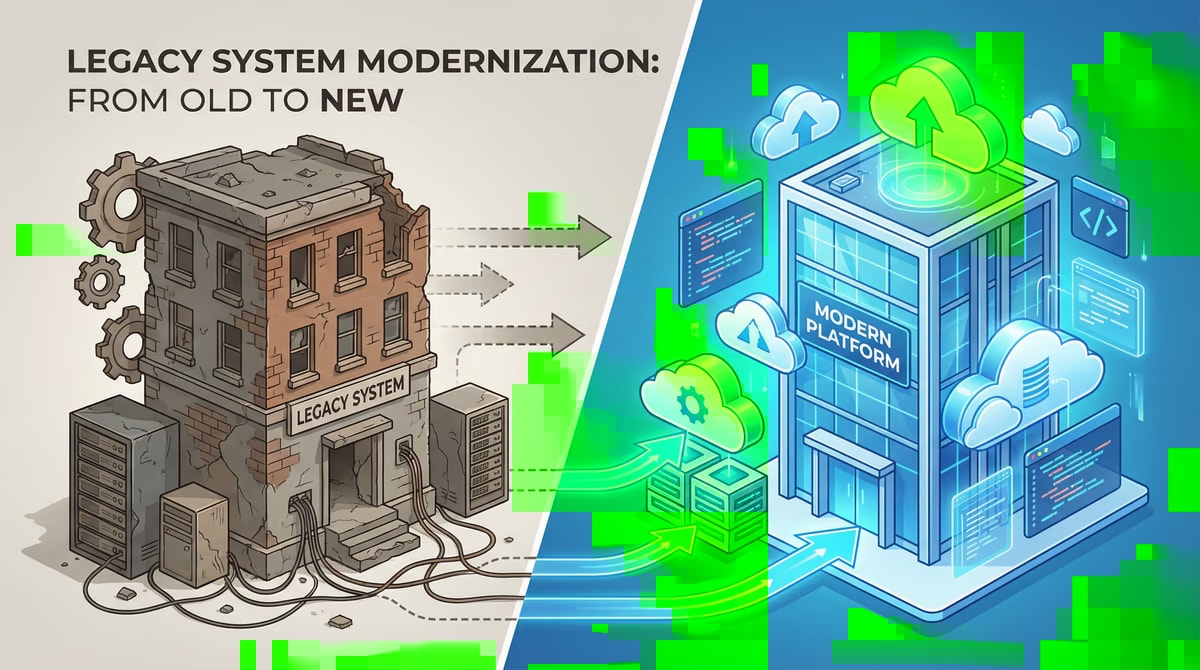
Software Migration: Planning, implementation and frequent errors
In today's fast-paced digital landscape, modernization of IT systems is essential for companies to remain competitive. A Software migration is often a...
Free download
Checklist: 10 questions before software development
Key points before you start: budget, timeline, and requirements.
Get the checklist in a consultationRelevant next steps
Related services & solutions
Based on this article's topic, these pages are often the most useful next steps.
Related services
Related solutions
Cost calculators
More on Software development and next steps
This article is in the Software development topic. In our blog overview you will find all articles; under category Software development more posts on this subject.
For topics like Software development we offer matching services – from app development and AI integration to legacy modernisation and maintenance. We describe typical use cases under solutions. Our cost calculators give initial estimates. Key terms are in the IT glossary. Books and long-form guides appear on the publications page; deeper articles live under topics.
If you have questions about this article or want a non-binding discussion about your project, you can book a consultation or reach us via contact. We usually respond within one working day.