
As of: 19 June 2026 · Reading time: 4 min
Key takeaways
- *# Individual software development: When is the investment worth?
- January 2026 In a world full of standard software and SaaS solutions (Software as a Service), companies often face the question: if we have a solution from the bar or we need a dimension
*# Individual software development: When is the investment worth? * **Date:** 21. January 2026 In a world full of standard software and SaaS solutions (Software as a Service), companies often face the question: if we have a solution from the bar or we need a dimension
“Good software is not an accident—it comes from a structured development process with clear quality standards.”
– Björn Groenewold, Managing Director, Groenewold IT Solutions
Custom software development solves exactly the problems for which no standard software exists.
The process starts with requirements analysis, followed by iterative development in close coordination with the client — with the goal of delivering a solution that precisely fits your own business processes.
*# Individual software development: When is the investment worth? *
In a world full of standard software and SaaS solutions (Software as a Service), companies often face the question: is there a solution from the bar or do we need a customized application?
The decision for or against individual software development is strategic and has far-reaching financial and operational consequences.
This article highlights the decisive advantages of a tailor-made solution, shows when it is really worthwhile and helps you make the right decision for your company.
This article is part of our complete guide: [The ultimate guide to software development 2026](link to capillary page).
What is the difference: Standard vs. Individual Software?
Standard Software (also COTS - Commercial Off-The-Shelf) is designed for a wide market with general requirements. Examples are Microsoft Office, SAP or Salesforce. It is quickly available and usually cheaper in purchase.
Individual software is specially developed for the unique processes, requirements and goals of a single company. It is an exclusive solution that there is no second time on the market.
The 5 key advantages of individual software
Short: Executive answer: # Individual software development: When is the investment worth?
Executive answer: # Individual software development: When is the investment worth?
For post 6 individual software development, View services, Cost Calculator: Software Development sowie Our Development Process help you align implementation, scope and budget before you commit.
Although the investment in a tailor-made solution is initially higher, it offers decisive strategic advantages that standard software cannot afford.
1. Perfect fit for your business processes
Short: The greatest advantage is the exact mapping of your unique workflows.
The greatest advantage is the exact mapping of your unique workflows. Instead of adapting your proven processes to a rigid software, the software adapts to your processes.
This leads to higher efficiency, less friction losses and better acceptance among employees.
2. competitive advantages through uniqueness
Short: While your competition works with the same standard software, you can secure decisive competitive advantages with an individual solution.
While your competition works with the same standard software, you can secure decisive competitive advantages with an individual solution.
You can implement innovative features that are precisely tailored to your customers or market, and so clearly differentiate from the competition.
3. Independence and Future Security
Short: With an individual software you are independent of the decisions of a software manufacturer.
With an individual software you are independent of the decisions of a software manufacturer.
You do not have to fear any unwanted updates that interfere with your workflows and are not affected by price policy or even by setting a service.
You have full control of the development and can adapt the software to new business requirements at any time.
4. seamless integration into your IT landscape
Short: Tailored software can be designed to communicate perfectly with your existing systems (e.
Tailored software can be designed to communicate perfectly with your existing systems (e.g. CRM, ERP, accounting). This avoids data silos, reduces manual transmission
References and further reading
Short: The following independent references complement the topics in this article:
The following independent references complement the topics in this article:
- Bitkom – German digital industry association
- German Federal Office for Information Security (BSI)
- European Commission – Digital strategy
- MDN Web Docs (Mozilla)
- W3C – World Wide Web Consortium
Frequently Asked Questions (FAQ)
What is this article about: “post 6 individual software development”?
Here we cover post 6 individual software development — focused on architecture, process, and business outcomes. In short: *# Individual software development: When is the investment worth? * Date: 21.
January 2026 In a world full of standard software and SaaS solutions (Software as a Service), companies often face the question: if we have a solution from the bar or we need a dimension
Who benefits most from the content described here?
Typical readers are business and IT leaders in Software development who want to secure quality, security, and maintainability over the long term.
How does this topic fit into an IT or digital strategy?
In a digital strategy, prioritize stable core processes first, then extensions. See also professional software development and consulting. For multi-system landscapes, IT consulting and architecture helps align vendors and internal teams.
What are sensible next steps if we need support?
If you need support with design, delivery, or modernization: schedule an appointment or outline your project via contact.
About the author

Managing Director of Groenewold IT Solutions GmbH and Hyperspace GmbH
Since 2009 Björn Groenewold has been developing software solutions for the mid-market. He is Managing Director of Groenewold IT Solutions GmbH (founded 2012) and Hyperspace GmbH. As founder of Groenewold IT Solutions he has successfully supported more than 250 projects – from legacy modernisation to AI integration.
Blog recommendations
Related articles
These posts might also interest you.
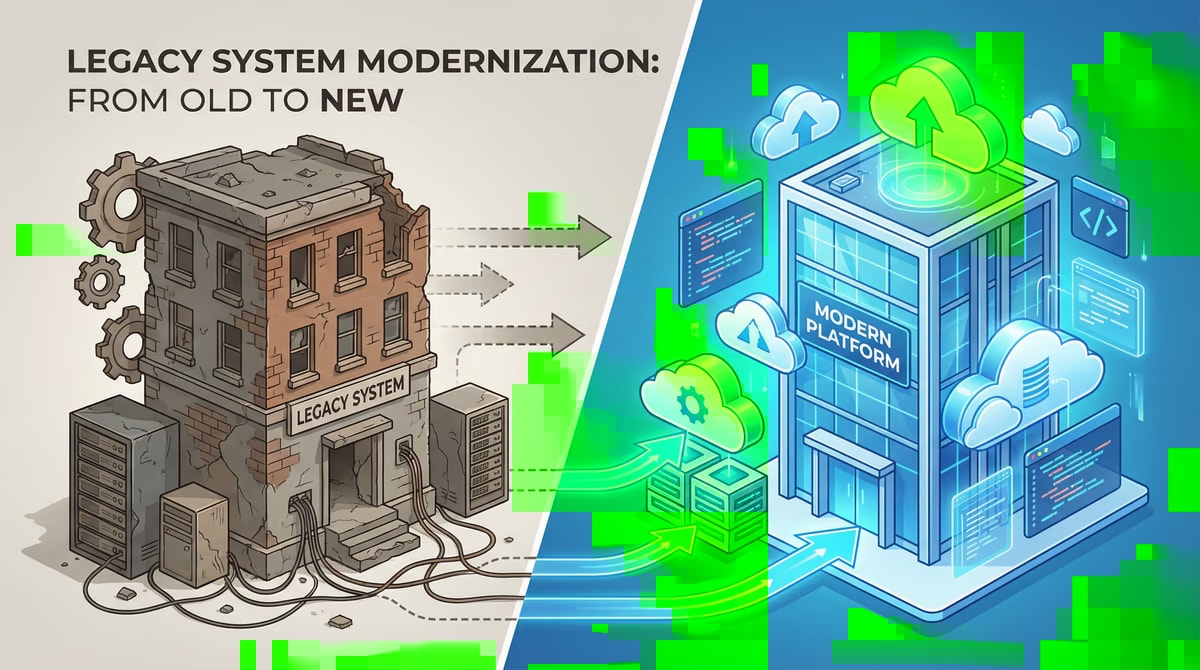
Altsystem migration: How to change without interruption of operation
In today's rapidly changing digital landscape, many companies face the challenge of modernizing outdated IT systems. A Altsystem migration is often unavoidable...
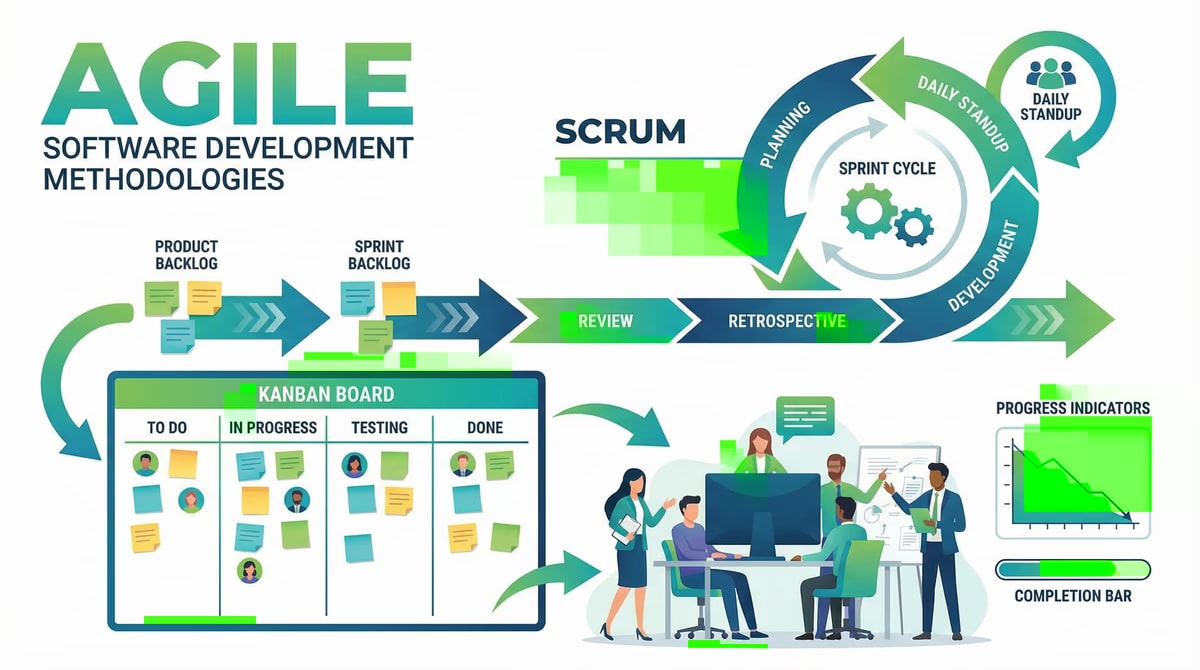
Onshore development: A profit for agile projects
In today's fast-paced digital world, companies increasingly rely on agile development methods to remain competitive. At the same time, the decision for the right sourcin...

Digitization in the middle class: The 8 most common mistakes and how to avoid them
Digitization is no longer a trend for the German middle class, but a need to remain competitive. But the way to the digital future is often paved with hurdles...
Free download
Checklist: 10 questions before software development
Key points before you start: budget, timeline, and requirements.
Get the checklist in a consultationRelevant next steps
Related services & solutions
Based on this article's topic, these pages are often the most useful next steps.
Related services
Related solutions
Cost calculators
More on Software development and next steps
This article is in the Software development topic. In our blog overview you will find all articles; under category Software development more posts on this subject.
For topics like Software development we offer matching services – from app development and AI integration to legacy modernisation and maintenance. We describe typical use cases under solutions. Our cost calculators give initial estimates. Key terms are in the IT glossary. Books and long-form guides appear on the publications page; deeper articles live under topics.
If you have questions about this article or want a non-binding discussion about your project, you can book a consultation or reach us via contact. We usually respond within one working day.