
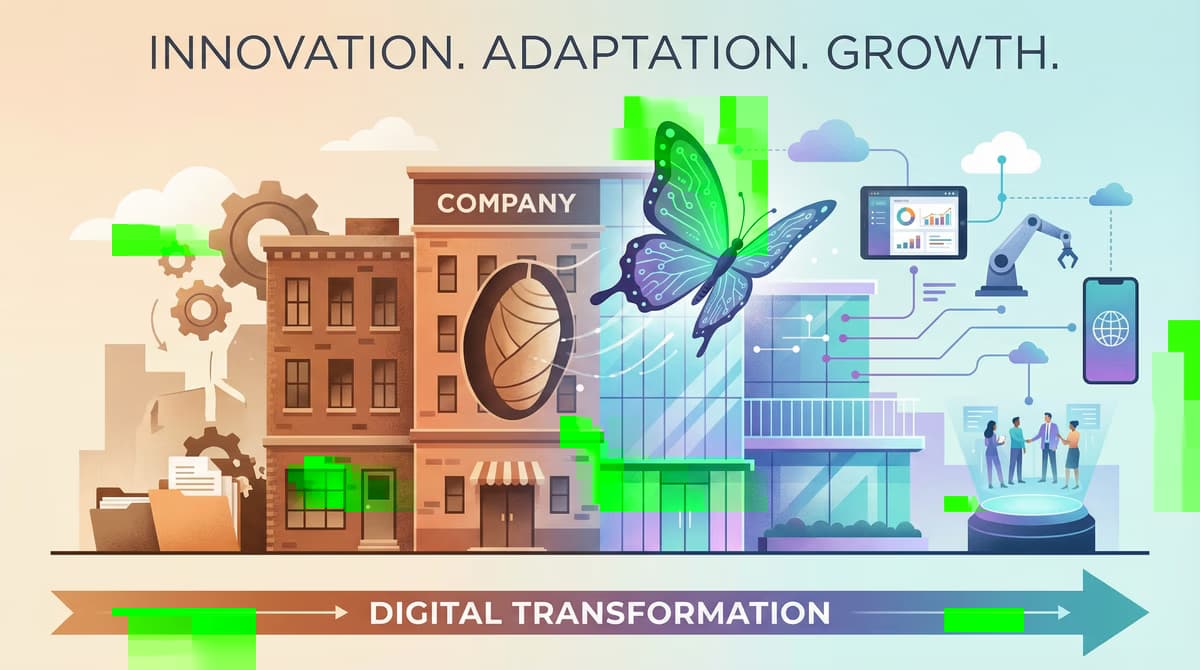
Digitization is no longer an option for the German middle class, but a need to remain competitive. But many small and medium-sized enterprises (SMEs) are...
Digitization is no longer an option for the German middle class, but a need to remain competitive.
But many small and medium-sized enterprises (SMEs) face the question: where should we start?
The abundance of possibilities and technologies can be overwhelming.
This article shows how the entry into digitalization in the middle class succeeds without losing itself in complex major projects.
Why start small is the right way
The idea of digitalization triggers the image of expensive, long and risky mammoth projects in many decision-makers.
The good news is, it doesn't have to be.
The key to success is to proceed pragmatically and gradually.
Instead of trying to digitize the entire company at once, it is more sensible to start with a concrete, manageable process.
This not only creates quick success experiences and motivates employees, but also minimizes the risk.
The advantages of a step-by-step approach:
- Slower investment: Instead of high pre-investment, costs can be distributed to several small projects.
- Fast results: First successes are quickly visible, which promotes acceptance in the company.
- Flexibility: The procedure can be adapted to new circumstances at any time.
- Learning effects: With every digitized process, know-how grows in the company.
The first steps: A roadmap for digitalization
A structured roadmap helps to keep track of and set the right priorities. The following five steps have proved successful in practice:
- Occupation: Where is your company up to date? What processes are already running digitally, where are there media breaks and where is completely manual work? An honest analysis of the actual situation is the basis for all further steps.
- ** Define targets:** What do you want to achieve with digitization? Are we about increasing efficiency, reducing costs, new business models or better customer retention? Clear objectives help to focus the measures.
- **What technologies and know-how are needed to achieve the goals? Do employees need to be trained or recruited? Also clarify the financial framework and possible funding.
- Setting priorities: Which processes have the greatest potential for fast and effective digitalization? Start with the "Quick Wins" to quickly achieve success.
- ** Planning the implementation of the first projects. Connect the affected employees from the start to ensure acceptance.
Concrete application cases for entry
Not every process is equally suitable for start-up. Particularly well suited
About the author

Managing Director of Groenewold IT Solutions GmbH and Hyperspace GmbH
For over 15 years Björn Groenewold has been developing software solutions for the mid-market. He is Managing Director of Groenewold IT Solutions GmbH and Hyperspace GmbH. As founder of Groenewold IT Solutions he has successfully supported more than 250 projects – from legacy modernisation to AI integration.
Read more
Related articles
These posts might also interest you.
Digital transformation: New thinking of business models
** Digitization changes our world at a rapid pace. For small and medium-sized…
Digital Transformation: Customer Focusing as Driver
Digital transformation is no longer an option for small and medium-sized…
Nearshore Development: Benefits and Popular Locations for Your IT Project
In today's globalised and digitized business world, companies are constantly…
Free download
Checklist: 10 questions before software development
Key points before you start: budget, timeline, and requirements.
Get the checklist in a consultationRelevant next steps
Related services & solutions
Based on this article's topic, these pages are often the most useful next steps.
Related services
Related solutions
More on Software development and next steps
This article is in the Software development topic. In our blog overview you will find all articles; under category Software development more posts on this subject.
For topics like Software development we offer matching services – from app development and AI integration to legacy modernisation and maintenance. We describe typical use cases under solutions. Our cost calculators give initial estimates. Key terms are in the IT glossary, and in-depth content under topics.
If you have questions about this article or want a non-binding discussion about your project, you can book a consultation or reach us via contact. We usually respond within one working day.