As of: 19 June 2026 · Reading time: 4 min
Key takeaways
- Speed is a decisive factor in agile software development.
- Teams are often under pressure to deliver new features quickly and to comply with tight deadlines.
Speed is a decisive factor in agile software development. Teams are often under pressure to deliver new features quickly and to comply with tight deadlines. In this tension...
“Good software is not an accident—it comes from a structured development process with clear quality standards.”
– Björn Groenewold, Managing Director, Groenewold IT Solutions
Technical debt in the backlog is prioritized by business risk: modules with high change frequency and many dependencies first.
Proven methods: calculate a technical debt score per module, reserve fixed capacity (e.g., 20% per sprint) for debt reduction, and make debt visible in the backlog.
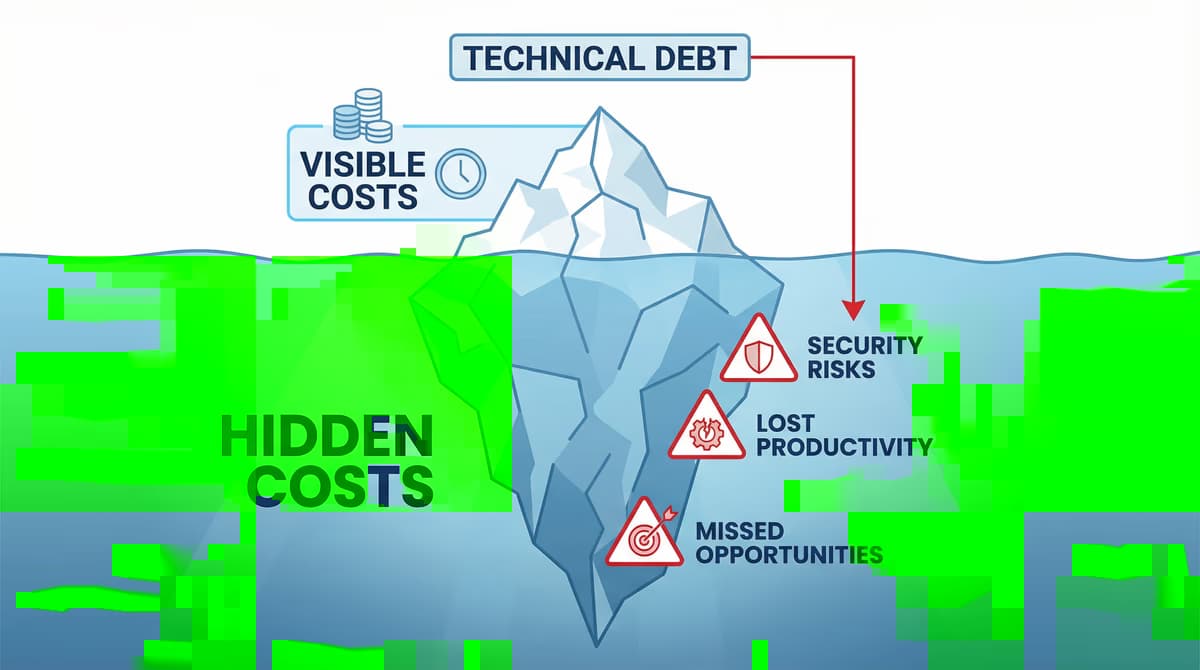
Speed is a decisive factor in agile software development. Teams are often under pressure to deliver new features quickly and to comply with tight deadlines. In this field of tension there is often a phenomenon called “technical debt”. But what exactly hides behind this concept and how can companies learn to manage these debt strategically instead of being overwhelmed by them? This article highlights how technical debts arise, how to prioritise them in the backlog and develop a plan for targeted degradation.
What are technical debts?
The term “technical debt” (English: technical debt) is a metaphor coined by Ward Cunningham. It describes the implicit costs arising from rework if you choose a fast but not best technical solution.
Instead of going the “clean” and sustainable way, you choose an abbreviation to achieve short-term goals.
These abbreviations can manifest themselves in the form of badly written code, missing documentation or inadequate tests.
In the long term, these “debts” lead to a slowdown in development, increased susceptibility to errors and increasing maintenance costs. It is therefore crucial to develop a strategy for Technical debt.
The causes of technical debt
Short: Executive answer: Speed is a decisive factor in agile software development.
Executive answer: Speed is a decisive factor in agile software development.
Decision-makers exploring Technical debt in the backlog: Priority and planning can use Legacy Modernisation, Solution: Legacy Reduction sowie Software Maintenance as structured entry points.
Technical debt can arise for different reasons. Often it is a conscious decision to bring a product to market faster.
In other cases, they are the result of ignorance or lack of experience in the development team. Among the most common causes are:
- **Current pressure:**Current deadlines and the desire to respond quickly to market requirements often force teams to compromise code quality.
- Short knowledge: If developers do not have the necessary knowledge or experience to implement a clean solution, technical debt can be unintentionally incurred.
- Felectional tests: Unreasonable or missing automated tests cause errors to be discovered late in the development process, making the fix more complicated.
- Old technology: The use of outdated technologies or frameworks can slow down the development and make maintenance more difficult.
- Fine communication: Lack of coordination in the team can lead to inconsistent code and architectural problems.
Types of technical debt
Short: Technical debt is not equal to technical debt.
Technical debt is not equal to technical debt.
Martin Fowler, a well-known software developer, has proposed a useful classification in four quadrants based on the distinction between conscious and unconscious as well as inconsiderate and prudent debt:
| Quad
Sources: Unless cited inline, market figures and percentages are for orientation; see public sources such as Bitkom (2025) and Destatis. Project budgets and examples: Groenewold IT Solutions, internal reporting 2026.
References and further reading
Short: The following independent references complement the topics in this article:
The following independent references complement the topics in this article:
- Bitkom – German digital industry association
- German Federal Office for Information Security (BSI)
- European Commission – Digital strategy
- MDN Web Docs (Mozilla)
- W3C – World Wide Web Consortium
Frequently Asked Questions (FAQ)
What is this article about: “Technical debt in the backlog: Priority and planning”?
This article summarizes practical aspects of Technical debt in the backlog: Priority and planning for decision-makers and delivery teams. In short: Speed is a decisive factor in agile software development.
Teams are often under pressure to deliver new features quickly and to comply with tight deadlines. In this tension...
Who benefits most from the content described here?
It is especially relevant for organizations in Software development that need reliable systems, clear interfaces, and predictable delivery — from mid-market teams to specialized departments.
How does this topic fit into an IT or digital strategy?
You can map the topic to service building blocks such as custom software and delivery support: architecture reviews and iterative rollout reduce risk and rework. For multi-system landscapes, IT consulting and architecture helps align vendors and internal teams.
What are sensible next steps if we need support?
For architecture, implementation, or a second expert opinion, book a free initial consultation — including timeline and interface alignment.
About the author

Managing Director of Groenewold IT Solutions GmbH and Hyperspace GmbH
Since 2009 Björn Groenewold has been developing software solutions for the mid-market. He is Managing Director of Groenewold IT Solutions GmbH (founded 2012) and Hyperspace GmbH. As founder of Groenewold IT Solutions he has successfully supported more than 250 projects – from legacy modernisation to AI integration.
Blog recommendations
Related articles
These posts might also interest you.

Nearshore Trends 2026: New markets and developments in IT services
The global IT landscape is undergoing a steady change that forces companies to continuously adapt their business strategies to remain competitive. One of the central...
From Offshore to Nearshore: When a change makes sense
In today's globalised business world, outsourcing is a key factor for many companies to remain competitive. The outsourcing of software development projects can ...
Software Migration: Planning, implementation and frequent errors
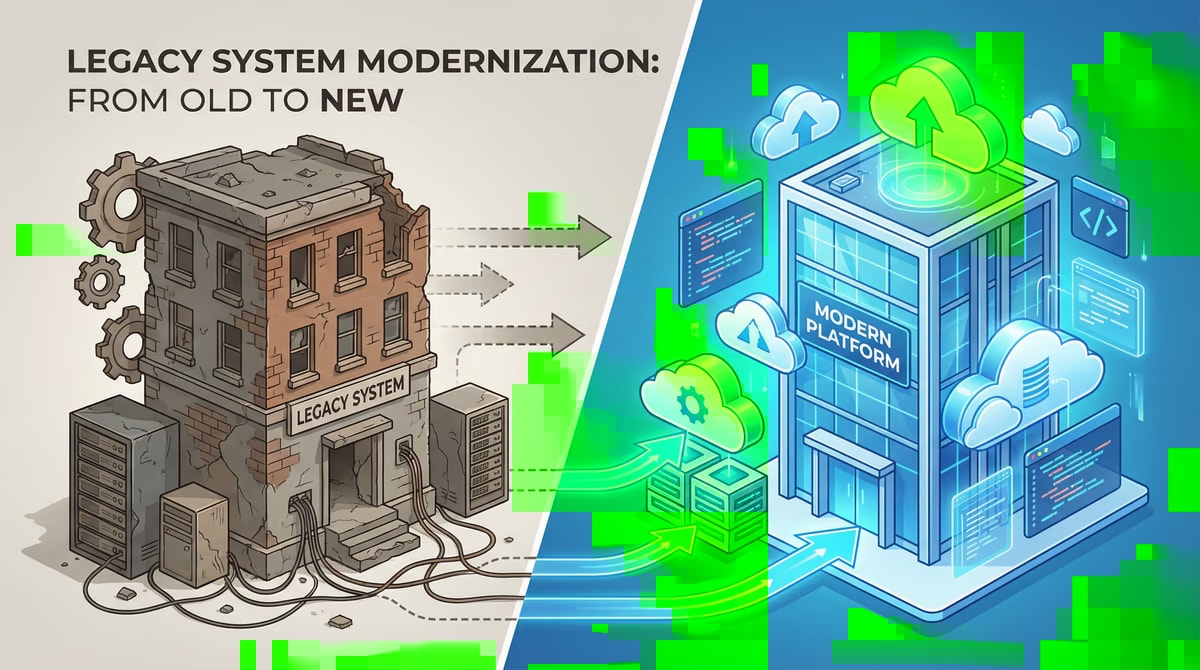
In today's fast-paced digital landscape, modernization of IT systems is essential for companies to remain competitive. A Software migration is often a...
Free download
Checklist: 10 questions before software development
Key points before you start: budget, timeline, and requirements.
Get the checklist in a consultationRelevant next steps
Related services & solutions
Based on this article's topic, these pages are often the most useful next steps.
Related services
Related solutions
More on Software development and next steps
This article is in the Software development topic. In our blog overview you will find all articles; under category Software development more posts on this subject.
For topics like Software development we offer matching services – from app development and AI integration to legacy modernisation and maintenance. We describe typical use cases under solutions. Our cost calculators give initial estimates. Key terms are in the IT glossary. Books and long-form guides appear on the publications page; deeper articles live under topics.
If you have questions about this article or want a non-binding discussion about your project, you can book a consultation or reach us via contact. We usually respond within one working day.