
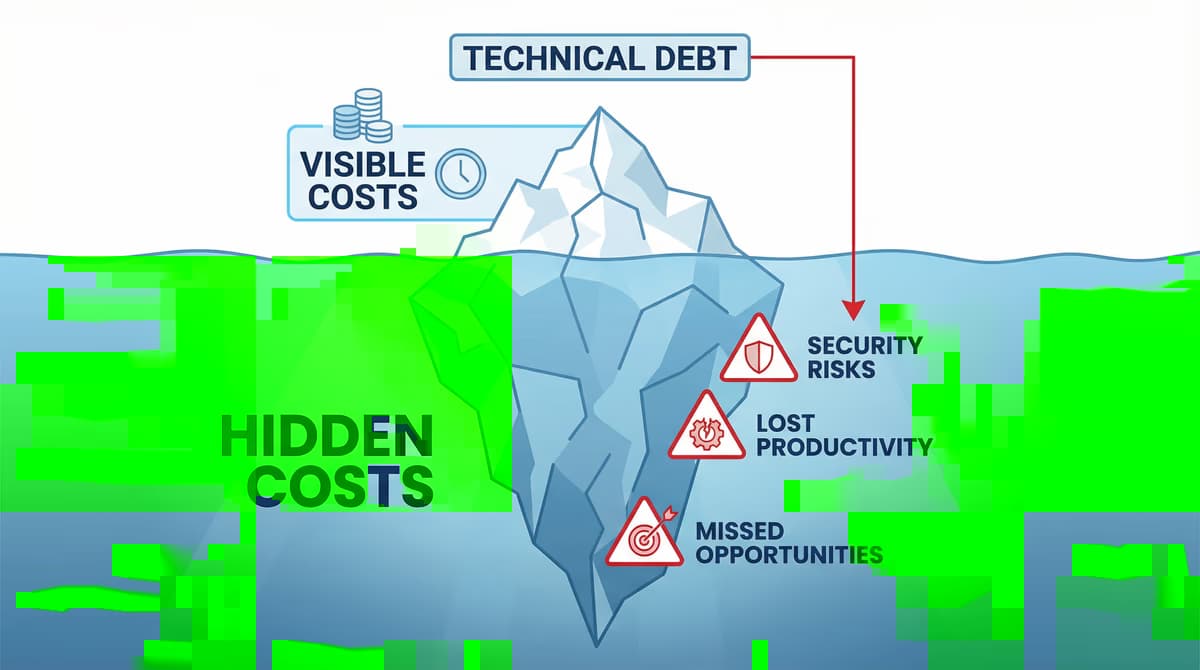
The term "technical debt" is ubiquitous in software development. Like financial debt, technical debt can also accumulate interest and paralyze a project in the long term. But wa...
> Key Takeaway: Refactoring reduces technical debt through targeted code improvements without changing functionality. Proven strategies: Extract Method for overly long functions, Dependency Injection for better testability, micro-refactorings in the ongoing development process, and dedicated refactoring sprints for larger architectural improvements.
The term "technical debt" is ubiquitous in [software development](/services/software development). Like financial debt, technical debt can also accumulate interest and paralyze a project in the long term. But what exactly hides behind it and how can companies reduce their technical debt to remain innovative and competitive? This article highlights practical refactoring strategies that systematically improve your code base and set the course for a future-oriented software.
What are technical debts and why are they a problem?
Technical debts arise when developers consciously or unconsciously compromise code quality to achieve short-term goals. This can be the quick implementation of a new feature for which there is no time for a clean architecture, or the use of outdated technologies whose modernization is postponed. At first sight this may seem harmless, but in the long term technical debt leads to a number of problems:
- Sustainable development: An unclean code base is difficult to understand and expand. New features require more time because developers only have to fight through spaghetti code. *** Increased error susceptibility:** Complex and poorly structured software is more susceptible to bugs. The troubleshooting and troubleshooting becomes a time-consuming and frustrating process.
- Demotivated developer teams: Nobody likes to work on a project that is plagued by technical debt. Continuous confrontation with old loads and laborious maintenance can significantly reduce motivation and productivity.
- Slower innovative power: If a large part of the resources need to be used for maintenance and troubleshooting, little space remains for innovation and the development of new value-creating functions.
Raw signs of technical debt
Technical debts are not always obvious, but there are some typical signs indicating a burdened code base:
- Active regressions: After implementing new functions unexpected errors occur elsewhere.
- Lange integration times: New team members need a lot of time above average to get involved in the project.
- "Code Smells": Experienced developers recognize problematic areas in the code that indicate structural deficiencies (e.g. duplicate code, too long methods).
- Distinct test cover: There are only a few or no automated tests, which makes changes to the code risky.
- Old dependencies: The project uses libraries and frameworks that are no longer up-to-date and may have vulnerabilities.
Strategies for reducing technical debt
The reduction of technical
About the author

Managing Director & Founder
For over 15 years Björn Groenewold has been developing software solutions for the mid-market. As founder of Groenewold IT Solutions he has successfully supported more than 250 projects – from legacy modernisation to AI integration.
Read more
Related articles
These posts might also interest you.
Onshore vs. Offshore: 3 reasons why local development provides better ROI
The hourly rate is only half the truth. We show why onshore development in…
Crowdfunding for software projects: A promising alternative?
In the dynamic world of software development, securing financing is often one…
Software migration: Why user training is the key to success
Introducing new software is a crucial step for companies. A software migration…
Free download
Checklist: 10 questions before software development
Key points before you start: budget, timeline, and requirements.
Get the checklist in a consultationRelevant next steps
Related services & solutions
Based on this article's topic, these pages are often the most useful next steps.