As of: 19 June 2026 · Reading time: 4 min
Key takeaways
- For start-ups and established companies that want to validate a new digital product idea, the minimum Viable Product (MVP) is a decisive first step.
- A MVP allows it to be...
For start-ups and established companies that want to validate a new digital product idea, the minimum Viable Product (MVP) is a decisive first step. A MVP allows it to be...
“Good software is not an accident—it comes from a structured development process with clear quality standards.”
– Björn Groenewold, Managing Director, Groenewold IT Solutions
For start-ups and established companies that want to validate a new digital product idea, the minimum Viable Product (MVP) is a decisive first step.
A MVP allows a first functional version of a product to be marketed with minimal effort to collect valuable user feedback and test the product market fit.
One of the first and most important questions that founders ask is: “What are the MVP development costs?” The answer to this is complex and depends on many different factors.
This guide helps you to realistically calculate your MVP budget and understand the crucial cost factors.
What is a MVP?
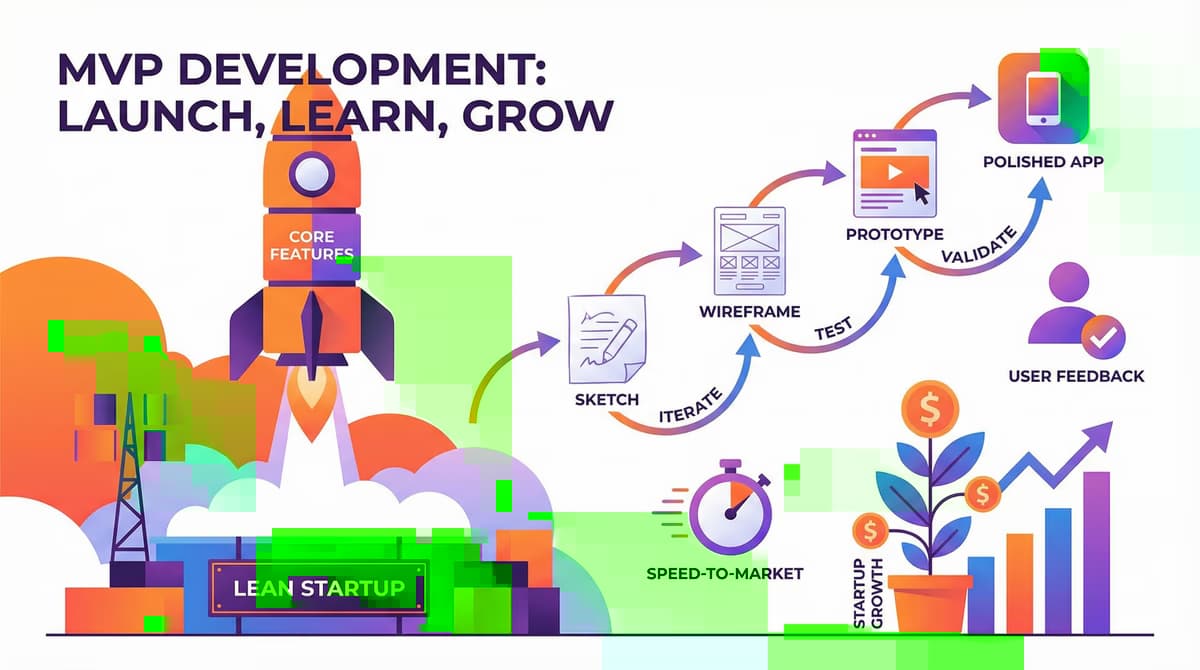
A minimum Viable Product is, as the name says, a “minimum surviving” version of a product.
It contains only the absolutely necessary core functions to solve the central problem of a defined target group.
The main purpose of a MVP is not to create a perfect and fully functional product, but to validate the basic business idea with real users.
This approach significantly reduces the risk of development and saves costs in the long term, as expensive misdevelopments are avoided.
Key factors affecting MVP development costs
Short: Executive answer: For start-ups and established companies that want to validate a new digital product idea, the minimum Viable Product (MVP) is a decisive first step.
Executive answer: For start-ups and established companies that want to validate a new digital product idea, the minimum Viable Product (MVP) is a decisive first step.
If MVP budget correctly calculate: A guide for founders is on your roadmap, Cost Calculator: Software Development und Discover solutions outline services and next steps.
The cost of developing a MVP may vary greatly. The following factors have the greatest impact on the budget:
Complexity of the product
Short: The complexity of the functions is the biggest cost driver.
The complexity of the functions is the biggest cost driver. The more and the more demanding features your MVP should have, the more time and resources are needed for development.
The functions that increase complexity and thus cost include:
- User authentication: logins, registrations and social media logins.
- ** Payment integrations:** Connection of payment providers such as Stripe or PayPal.
- Realtime functions: Chats, live notifications and data streaming.
- Admin dashboards: Surfaces for managing content and users.
- Integratations of third-party providers: Connection to external APIs and services.
The choice of platform
Short: The platform for which you develop your MVP also has a great influence on the costs.
The platform for which you develop your MVP also has a great influence on the costs. Web application is usually the most cost-effective option.
The development of native mobile apps for iOS or Android is more expensive as it requires platform-specific knowledge. If you want to use both platforms, the costs almost double.
A more cost-effective alternative for mobile apps can be cross-platform development with frameworks such as React Native or Flutter.
Design and User Experience (UX)
Short: A simple, functional design with standard UI components is cheaper than a completely individual and elaborate design.
A simple, functional design with standard UI components is cheaper than a completely individual and elaborate design. Unique designs, custom animations and a complex use
References and further reading
Short: The following independent references complement the topics in this article:
The following independent references complement the topics in this article:
- Bitkom – German digital industry association
- German Federal Office for Information Security (BSI)
- European Commission – Digital strategy
- MDN Web Docs (Mozilla)
- W3C – World Wide Web Consortium
"DevOps is less about tools and more about shared ownership of quality and release discipline."
— Björn Groenewold, Managing Director, Groenewold IT Solutions
Frequently Asked Questions (FAQ)
What is this article about: “MVP budget correctly calculate: A guide for founders”?
This article summarizes practical aspects of MVP budget correctly calculate: A guide for founders for decision-makers and delivery teams.
In short: For start-ups and established companies that want to validate a new digital product idea, the minimum Viable Product (MVP) is a decisive first step. A MVP allows it to be...
Who benefits most from the content described here?
It is especially relevant for organizations in Software development that need reliable systems, clear interfaces, and predictable delivery — from mid-market teams to specialized departments.
How does this topic fit into an IT or digital strategy?
You can map the topic to service building blocks such as custom software and delivery support: architecture reviews and iterative rollout reduce risk and rework. For multi-system landscapes, IT consulting and architecture helps align vendors and internal teams.
What are sensible next steps if we need support?
For architecture, implementation, or a second expert opinion, book a free initial consultation — including timeline and interface alignment.
About the author

Managing Director of Groenewold IT Solutions GmbH and Hyperspace GmbH
Since 2009 Björn Groenewold has been developing software solutions for the mid-market. He is Managing Director of Groenewold IT Solutions GmbH (founded 2012) and Hyperspace GmbH. As founder of Groenewold IT Solutions he has successfully supported more than 250 projects – from legacy modernisation to AI integration.
Blog recommendations
Related articles
These posts might also interest you.

Open Source ERP: The Right Partner for Introduction
In today's digitalized business world, a powerful enterprise resource planning (ERP) system is essential for many companies to remain competitive. It integrates...
ERP introduction: Go-Live and follow-up
The introduction of a new ERP system (Enterprise Resource Planning) is a marathon, not a sprint. Many companies focus intensively on the selection and implementation of the software, ...
ERP introduction: Success measurement and continuous improvement
The introduction of a new ERP system is a decisive step for medium-sized companies to digitize and increase efficiency. But with the Go-Live the project hasn't been...
Free download
Checklist: 10 questions before software development
Key points before you start: budget, timeline, and requirements.
Get the checklist in a consultationRelevant next steps
Related services & solutions
Based on this article's topic, these pages are often the most useful next steps.
Related services
Related solutions
Cost calculators
More on Software development and next steps
This article is in the Software development topic. In our blog overview you will find all articles; under category Software development more posts on this subject.
For topics like Software development we offer matching services – from app development and AI integration to legacy modernisation and maintenance. We describe typical use cases under solutions. Our cost calculators give initial estimates. Key terms are in the IT glossary. Books and long-form guides appear on the publications page; deeper articles live under topics.
If you have questions about this article or want a non-binding discussion about your project, you can book a consultation or reach us via contact. We usually respond within one working day.