
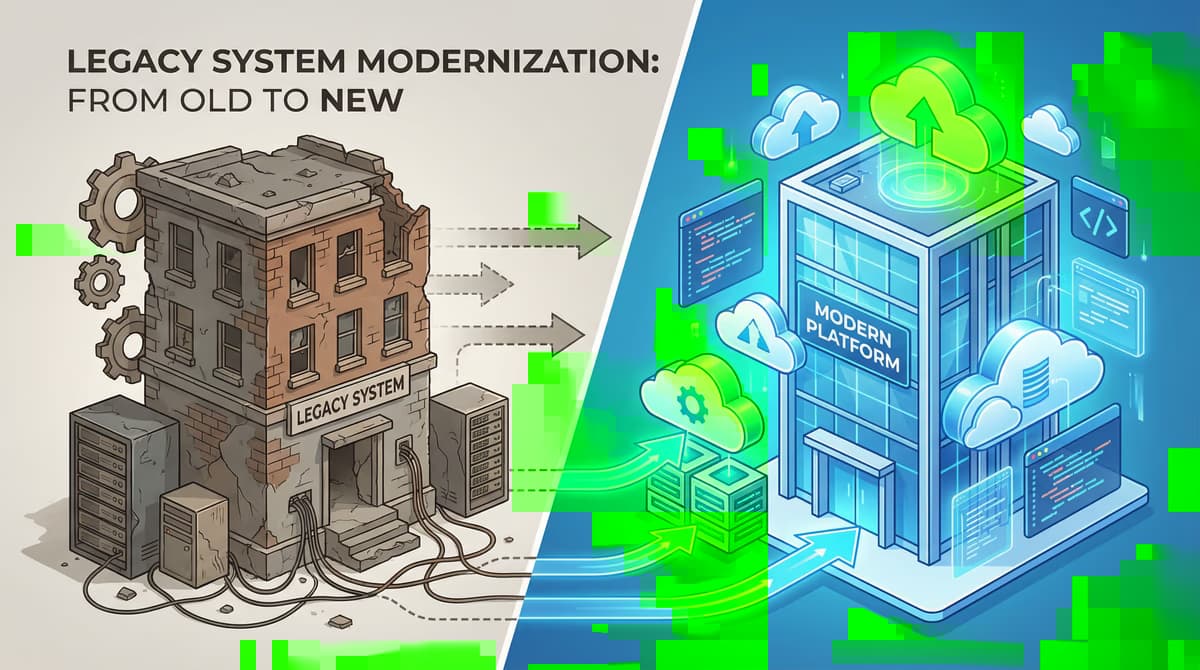
Introducing new software is a crucial step for companies. A software migration is much more than just a technical project – learn why user training is the key to success.
> Key Takeaway: The most common reason for failed software migrations is not the technology but insufficient end-user training. Three hurdles dominate: fear of change, productivity loss during the transition phase, and resistance to new workflows. Early, role-based training with hands-on exercises on the actual system is the key to acceptance.
The introduction of new software is a decisive step for companies to remain competitive and optimize processes. But a software migration is far more than just a technical project. The biggest challenge is often to take employees along this path and to inspire them for the new applications. This is where user training is crucial. It is the key to making a real success for the entire company from a technical changeover.
♪ The typical hurdles in a software migration
Any change entails uncertainties. In the case of a software migration, there are three obstacles to overcome:
Resistance to changes
People are habit animals. Years of recorded processes and familiar user interfaces provide security. A new software breaks through this routine and forces users to adjust their working methods. This resistance is a natural reaction that often results from the fear of the unknown and the feared loss of productivity.
Fear of Unknown and Productivity Loss
The concern not to cope with the new software is widespread. Employees fear that their tasks can no longer be done as efficiently as usual or even make mistakes. This fear can lead to a negative attitude and complicate the acceptance of the new solution from the outset.
Technical barriers and lack of intuitive usability
Not every new software is self-explanatory at first glance. Complex functions and an unclear surface can quickly lead to frustration. If users feel that the new software makes their work more complicated than simpler, the probability is high that they reject them.
Tailored training concepts as a solution
To effectively meet these obstacles, tailor-made training concepts are essential. A pouring can principle, in which all employees receive the same training, is not a target here. Instead, training should be tailored to the specific needs of different user groups.
Analysis of needs: Who needs what training?
The first step is an accurate analysis of the target groups. Which departments are affected by the Software migration? What different roles and knowledge are there? A power user from the IT department needs a different training than an occasional user from sales. The following table shows how such target group-specific training planning can look:
| Target group | Previous knowledge | Training needs | Training needs
About the author

Managing Director & Founder
For over 15 years Björn Groenewold has been developing software solutions for the mid-market. As founder of Groenewold IT Solutions he has successfully supported more than 250 projects – from legacy modernisation to AI integration.
Read more
Related articles
These posts might also interest you.
Onshore vs. Offshore: 3 reasons why local development provides better ROI
The hourly rate is only half the truth. We show why onshore development in…
Crowdfunding for software projects: A promising alternative?
In the dynamic world of software development, securing financing is often one…
Logistics software: The defining trends for 2026
The logistics industry is undergoing rapid change. What was still considered to…
Free download
Checklist: 10 questions before software development
Key points before you start: budget, timeline, and requirements.
Get the checklist in a consultationRelevant next steps
Related services & solutions
Based on this article's topic, these pages are often the most useful next steps.