As of: 23 September 2026 · Reading time: 5 min
Key takeaways
- Every app that uses millions of people started as a sketch on a whiteboard.
- We take you on the journey from the first idea to the launch day.
Every app that uses millions of people started as a sketch on a whiteboard. We take you on the journey from the first idea to the launch day.
“An app’s success is decided before the first line of code—in user research and product clarity.”
– Björn Groenewold, Managing Director, Groenewold IT Solutions
The journey from an app idea to a finished product comprises five phases.
Problem validation, conception with wireframes, stepwise development with user feedback, launch, and continuous improvement.
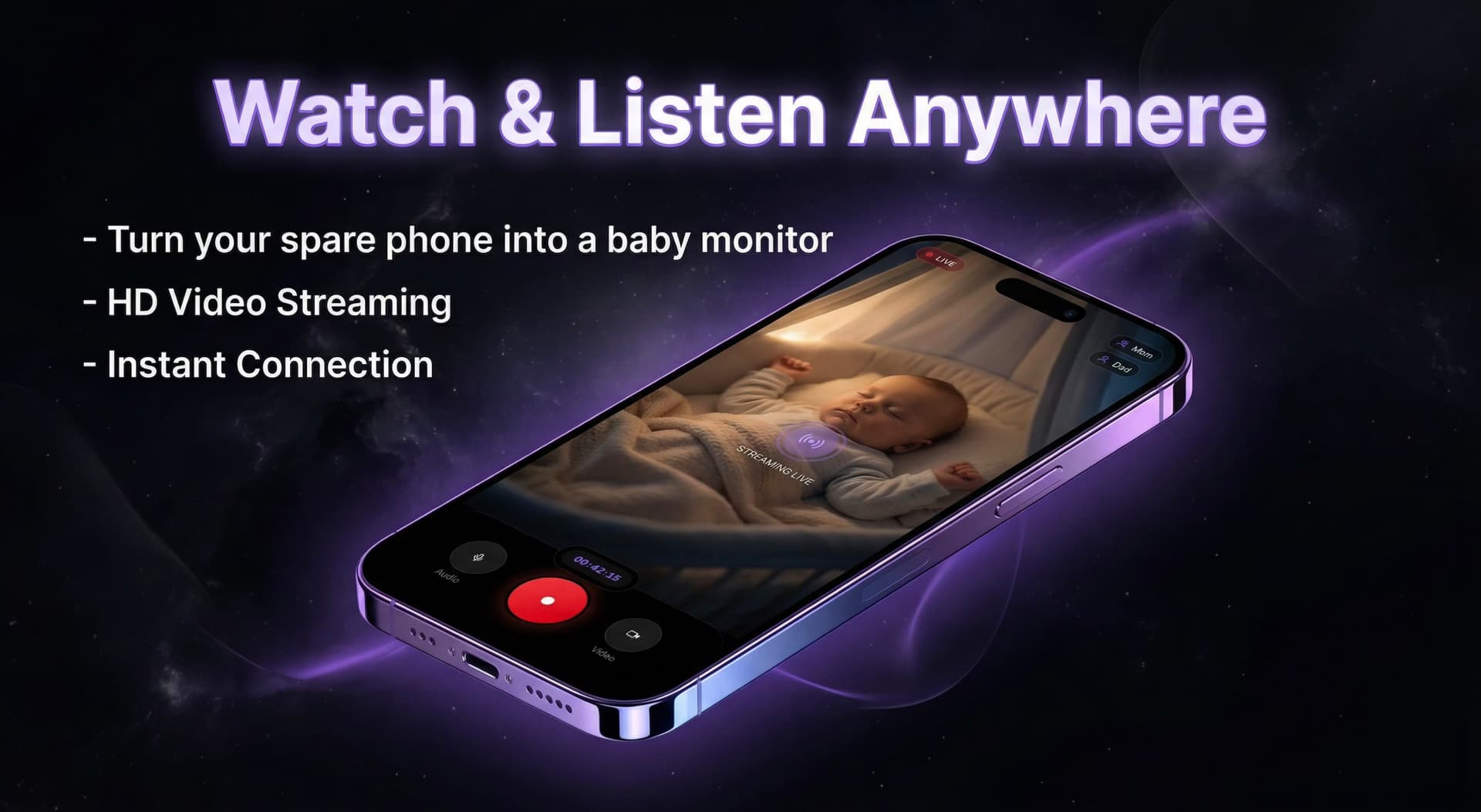
The Lullio Baby Monitor App shows how a personal pain point became an application with over 50,000 users.
Every app that today uses millions of people began as a vague idea. As a sketch on a whiteboard. As a nightly thought that didn't leave.
As frustration about a problem that nobody solved.
The story of the Lullio Babyphone app is such a story.
And it shows how a real need becomes an app that makes life easier for more than 50,000 parents.
The spark: How to get ideas from problems
Every app that uses millions of people started as a sketch on a whiteboard.
Leaders exploring From the idea to the app: A journey that thrills can use View services, Cost Calculator: App Development sowie Discover solutions as structured entry points.
It was 3 a.m. at night when our later customer was awakened for the third time this week by the beep of the baby monitor. Again false alarm.
The baby slept deep and firm.
However, the cheap device from the electric market responded to any noise – the wind, the gun of the house, the cat in the hallway.
"There must be a better solution," he thought. *"We have all smartphones in the bag that are smarter than any baby monitor on the market." *
So start the best ideas: Not with a technology that seeks a problem. But with a real problem that screams for a solution.
When he contacted us, he had no technical specifications. No business plan. Only these one realization: *"Smartphones can be more. Why don't we use it?" *
And that's how it should be.
The moment in which everything begins
Short: The first call lasted 45 minutes.
The first call lasted 45 minutes. We didn't talk about technology. We talked about parents. Over sleepless nights. About the fear of missing something.
About the desire for safety – without permanent false alarms.
At the end of the conversation we knew: this is not just a good idea. This is an idea that really helps people.
This is the first test of every app idea: Does it solve a real problem for real people? If so, it has a chance.
If not, it will be another icon that will be deleted after two weeks.
The first workshop: When visions become concrete
Two weeks later we sat together – with whiteboards, post-its and lots of coffee.
The Discovery workshop is the moment in which something can be grasped from a vague idea.
Ask the right questions
We did not start with "What features do you want?", but with:
"Who will use this app?" (Overtied parents, at 3 o'clock at night, closed with an eye half) "In which situation will they open them?" (Quick, by the way, often under stress) "What is the worst scenario?" (The app doesn't work when it is needed) "What would users delight?" (Not only reliable – but calming)
These questions sound easy. But they change everything. Because they force us not to think in features, but in experiences.
From post-its to prototypes
Short: After four hours, the whiteboard was full.
After four hours, the whiteboard was full. Dozens of ideas, sorted by priority. Some brilliant, some impracticable, some somewhere in between.
Then came the moment our customers love most: The first prototype.
With simple sketches and a click thumb showed
Method note: External statistics refer to published industry and official data (Bitkom, Destatis) where not otherwise attributed. Company-specific figures: Groenewold IT, 2026.
References and further reading
The following separate references complement the topics in this article:
- Bitkom – German digital industry association.
- German Federal Office for Information Security (BSI).
- European Commission – Digital strategy.
- MDN Web Docs (Mozilla)
- W3C – World Wide Web Consortium.
Frequently Asked Questions (FAQ)
What is this article about: “From the idea to the app: A journey that thrills”?
This post explores From the idea to the app. A journey that thrills from the perspective of needs, typical pitfalls, and sensible next steps.
In short: Every app that uses millions of people started as a sketch on a whiteboard.
We take you on the journey from the first idea to the launch day.
Who benefits most from the content described here?
Useful for project leads and product owners in App development who must choose between standard software, custom development, and integration.
How does this topic fit into an IT or digital strategy?
Technically and organizationally, alignment with experienced partners pays off — from requirements to operations; start with the [services overview](/en/services/app-development). For multi-system landscapes, [IT consulting and architecture](/en/services/it-consulting) helps align vendors and internal teams.
What are sensible next steps if we need support?
A practical next step: book a consultation and clarify which MVP or pilot fits your team and landscape.
About the author

Managing Director of Groenewold IT Solutions GmbH and Hyperspace GmbH
Since 2009 Björn Groenewold has been developing software solutions for the mid-market. He is Managing Director of Groenewold IT Solutions GmbH (founded 2010) and Hyperspace GmbH. As founder of Groenewold IT Solutions he has successfully supported more than 250 projects – from legacy modernisation to AI integration.
Blog recommendations
Related articles
These posts might also interest you.

Flutter widgets vs. React Native components: A comprehensive comparison
In the world of mobile app development, cross-platform development has established itself as an efficient alternative to native development for iOS and Android. Two of the leading framewor...
Cross-Platform vs. Native: When what approach is the right in app development
In today's mobile world, companies face the strategic decision on how to develop their applications for different platforms. The choice between native and cross-platform en...
Flutter vs. React Native: A closer look at community and support
In the world of cross-platform development for mobile apps, Flutter and React Native are two of the most prominent names. Both frameworks offer developers the opportunity to use a single codeb...
Free download
Checklist: 10 questions before software development
Key points before you start: budget, timeline, and requirements.
Get the checklist in a consultationRelevant next steps
Related services & solutions
Based on this article's topic, these pages are often the most useful next steps.
Related services
Related solutions
Cost calculators
Practical next steps after From the idea to the app: A journey that thrills
From the idea to the app: A journey that thrills addresses a practical choice for product and IT teams. Start with one clear goal: choose an app approach that stays secure, testable, and useful after launch.
Check the current process, the data involved, and the result users need. Then record the main risks and define a small first step. This keeps the decision easy to review and gives your team a shared basis.
For implementation support, our business app development connects the article's guidance with architecture, delivery, and stable operations. Engineering and project ownership stay with our team in Leer, Germany.
This post belongs to App development. Browse the related App development articles or use the English software blog for other topics.
When budget is the next question, the software cost calculators provide planning ranges. The IT glossary explains key terms, while in-depth technology guides cover wider decisions.
If the topic affects a live project, book a technical consultation or send the context through our project contact form. We usually reply within one working day.