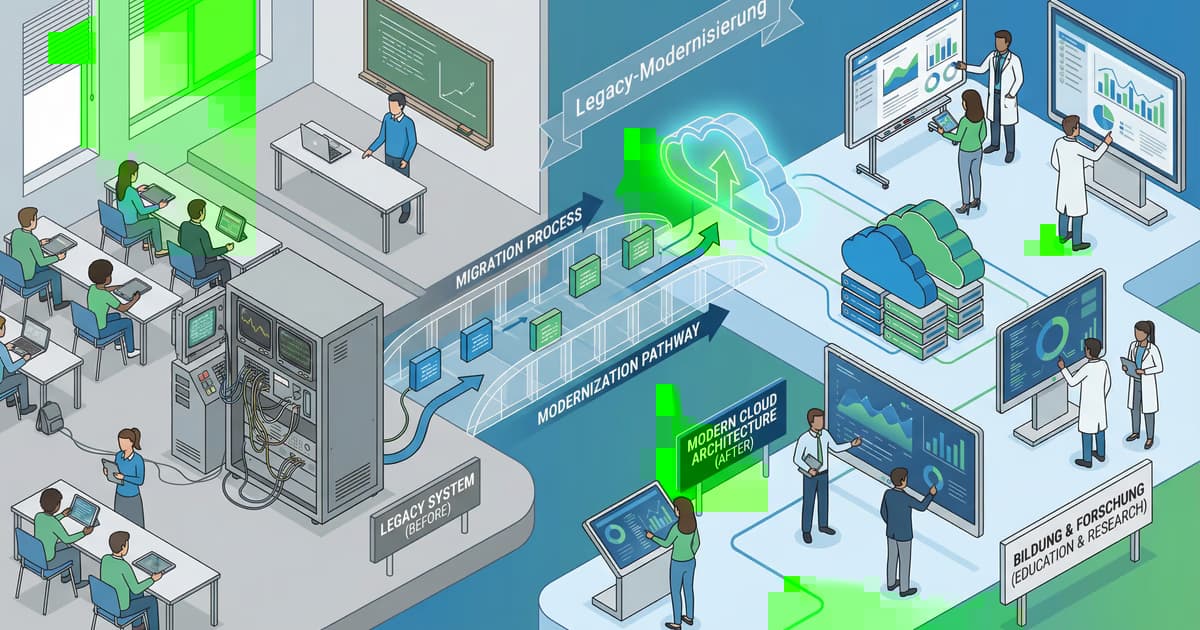
As of: 19 June 2026 · Reading time: 4 min
Key takeaways
- Legacy systems are often the backbone of a company – but also a growing risk.
- Outdated technologies, lack of documentation and dependency on special knowledge make maintenance expensive and further development difficult.
Legacy systems are often the backbone of a company – but also a growing risk. Outdated technologies, lack of documentation and dependency on special knowledge make maintenance expensive and further development difficult. This Gui...
“The real challenge in legacy modernization is not the code—it is keeping operations running without disruption.”
– Björn Groenewold, Managing Director, Groenewold IT Solutions
Legacy modernization does not necessarily mean rebuilding from scratch: rehosting (lift and shift), replatforming, refactoring, and the Strangler Pattern offer different levels of modernization depth.
The right strategy depends on system criticality, available budget, and desired modernization level.
Legacy systems are often the backbone of a company – but also a growing risk. Outdated technologies, lack of documentation and dependency on special knowledge make maintenance expensive and further development difficult.
This guide will show you the tested strategies for legacy moderation and will help you find the right approach for your business.
When is modernization necessary?
Short: Executive answer: Legacy systems are often the backbone of a company – but also a growing risk.
Executive answer: Legacy systems are often the backbone of a company – but also a growing risk.
Decision-makers exploring Legacy-Modernization: How to make old systems fit for the future can use Legacy Modernisation, Cost Calculator: Legacy Modernisation, Solution: Legacy Reduction sowie Monolith vs. Microservices as structured entry points.
Typical signs that there is a need for action:
- High maintenance costs: More budget for maintenance than for innovation
- Short integration: No connection to modern systems possible
- Safety risks: No updates available
- Knowledge loss: Only a few experts understand the system
- Performance problems: The system no longer scales
- Compliance requirements: Legal requirements not fulfilled
Modernization strategies compared
Short: The most important approaches to legacy moderation:
The most important approaches to legacy moderation:
Rehosting (Lift & Shift)
- Migration to the cloud without code changes
- Quickly implementable but limited advantages
**Refactoring * *
- Stepwise optimization of the existing code
- Lower risk, longer period
**Rearchitecting * *
- restructuring as microservices
- High flexibility but more complicated
**Rebuild * *
- Complete new development
- Maximum freedom, highest risk
*Replace *
- Replacement by standard software
- Quickly available, less individual
Best Practices for Successful Modernization
How to minimize risks:
- Green analysis: fully understand the old system
- Increment procedure: piece by piece instead of Big Bang
- Parallel operation: New system next to the old test
- Automatized tests: Regression tests for each change
- Document: Secure and transfer knowledge
- Stakeholder Management: Include all participants
Legacy Modernization by Industry
Short: Each industry has its own requirements.
Each industry has its own requirements. In our specialized articles you will learn how to use legacy modernization optimally for your area:
- Legacy-Modernization for Education & Research
- [Legacy-Modernization for Energy & Supply](/blog/legacy-modernization energy)
- Legacy-Modernisation for Financial Services
- Legacy-Modernization for Healthcare
- Legacy-Modernization for Trade & Retail
- Legacy-Modernization for Crafts & Services
- [Legacy Modernization for Real Estate & Building](/blog/legacy modernization properties)
- Legacy-Modernization for Logistics & Transport
- Legacy-Modernization for Production & Manufacturing
- [Legacy Modernization for Public Administration](/blog/legacy Modernization Administration)
References and further reading
Short: The following independent references complement the topics in this article:
The following independent references complement the topics in this article:
- Bitkom – German digital industry association
- German Federal Office for Information Security (BSI)
- European Commission – Digital strategy
- MDN Web Docs (Mozilla)
- W3C – World Wide Web Consortium
Frequently Asked Questions (FAQ)
What is this article about: “Legacy-Modernization: How to make old systems fit for the future”?
This article summarizes practical aspects of Legacy-Modernization: How to make old systems fit for the future for decision-makers and delivery teams.
In short: Legacy systems are often the backbone of a company – but also a growing risk.
Outdated technologies, lack of documentation and dependency on special knowledge make maintenance expensive and further development difficult. This Gui...
Who benefits most from the content described here?
It is especially relevant for organizations in Legacy-Modernisierung that need reliable systems, clear interfaces, and predictable delivery — from mid-market teams to specialized departments.
How does this topic fit into an IT or digital strategy?
You can map the topic to service building blocks such as custom software and delivery support: architecture reviews and iterative rollout reduce risk and rework. For multi-system landscapes, IT consulting and architecture helps align vendors and internal teams.
What are sensible next steps if we need support?
For architecture, implementation, or a second expert opinion, book a free initial consultation — including timeline and interface alignment.
About the author

Managing Director of Groenewold IT Solutions GmbH and Hyperspace GmbH
Since 2009 Björn Groenewold has been developing software solutions for the mid-market. He is Managing Director of Groenewold IT Solutions GmbH (founded 2012) and Hyperspace GmbH. As founder of Groenewold IT Solutions he has successfully supported more than 250 projects – from legacy modernisation to AI integration.
Blog recommendations
Related articles
These posts might also interest you.
Legacy-Modernization for Crafts & Services: Your way from the IT-Falle
In an increasingly digitized economy, craft businesses and service companies face the challenge of making their business processes efficient, safe and sustainable. While modern technologies such as…
Legacy Modernization for Financial Services & Banks: The Way to the Digital Future
The financial sector is facing a profound change. Driven by new digital competitors (FinTechs), changing customer expectations and a steadily more complex regulatory system, banks and financial…
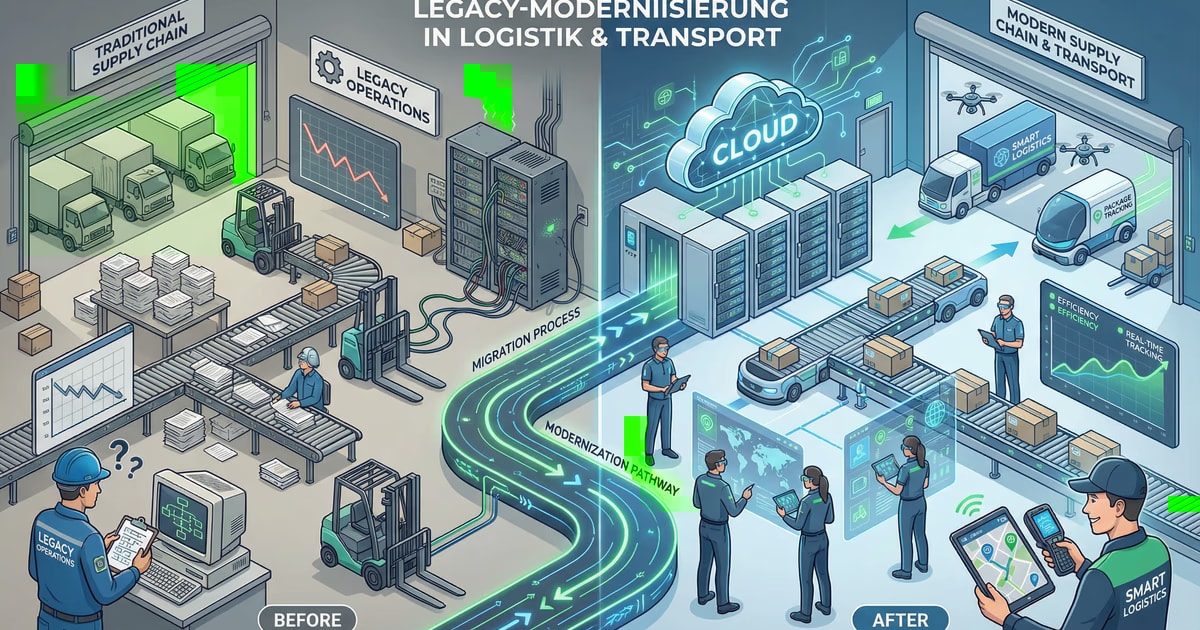
Legacy Modernization in Logistics & Transport: The Way to Digital Supply Chain
The logistics and transport industry is the backbone of the global economy. But while the demands on speed, transparency and sustainability are constantly rising, many companies are fighting with an…
Free download
Checklist: 10 questions before software development
Key points before you start: budget, timeline, and requirements.
Get the checklist in a consultationRelevant next steps
Related services & solutions
Based on this article's topic, these pages are often the most useful next steps.
Related services
Related solutions
Related comparison
Cost calculators
More on Legacy-Modernisierung and next steps
This article is in the Legacy-Modernisierung topic. In our blog overview you will find all articles; under category Legacy-Modernisierung more posts on this subject.
For topics like Legacy-Modernisierung we offer matching services – from app development and AI integration to legacy modernisation and maintenance. We describe typical use cases under solutions. Our cost calculators give initial estimates. Key terms are in the IT glossary. Books and long-form guides appear on the publications page; deeper articles live under topics.
If you have questions about this article or want a non-binding discussion about your project, you can book a consultation or reach us via contact. We usually respond within one working day.