As of: 19 June 2026 · Reading time: 4 min
Key takeaways
- The term "technical debt" is ubiquitous in software development.
- Like financial debt, technical debt can also accumulate interest and paralyze a project in the long term.
The term "technical debt" is ubiquitous in software development. Like financial debt, technical debt can also accumulate interest and paralyze a project in the long term. But wa...
“Good software is not an accident—it comes from a structured development process with clear quality standards.”
– Björn Groenewold, Managing Director, Groenewold IT Solutions
Refactoring reduces technical debt through targeted code improvements without changing functionality.
Proven strategies: Extract Method for overly long functions, Dependency Injection for better testability, micro-refactorings in the ongoing development process, and dedicated refactoring sprints for larger architectural improvements.
The term "technical debt" is ubiquitous in software development. Like financial debt, technical debt can also accumulate interest and paralyze a project in the long term. But what exactly hides behind it and how can companies reduce their technical debt to remain innovative and competitive? This article highlights practical refactoring strategies that systematically improve your code base and set the course for a future-oriented software.
What are technical debts and why are they a problem?
Short: Executive answer: The term "technical debt" is ubiquitous in software development.
Executive answer: The term "technical debt" is ubiquitous in software development.
When planning Refactoring strategies: systematically reduce technical debt from idea to delivery, Legacy Modernisation, Cost Calculator: Legacy Modernisation, Solution: Legacy Reduction sowie Monolith vs. Microservices offer practical next steps on our site.
Technical debts arise when developers consciously or unconsciously compromise code quality to achieve short-term goals.
This can be the quick implementation of a new feature for which there is no time for a clean architecture, or the use of outdated technologies whose modernization is postponed.
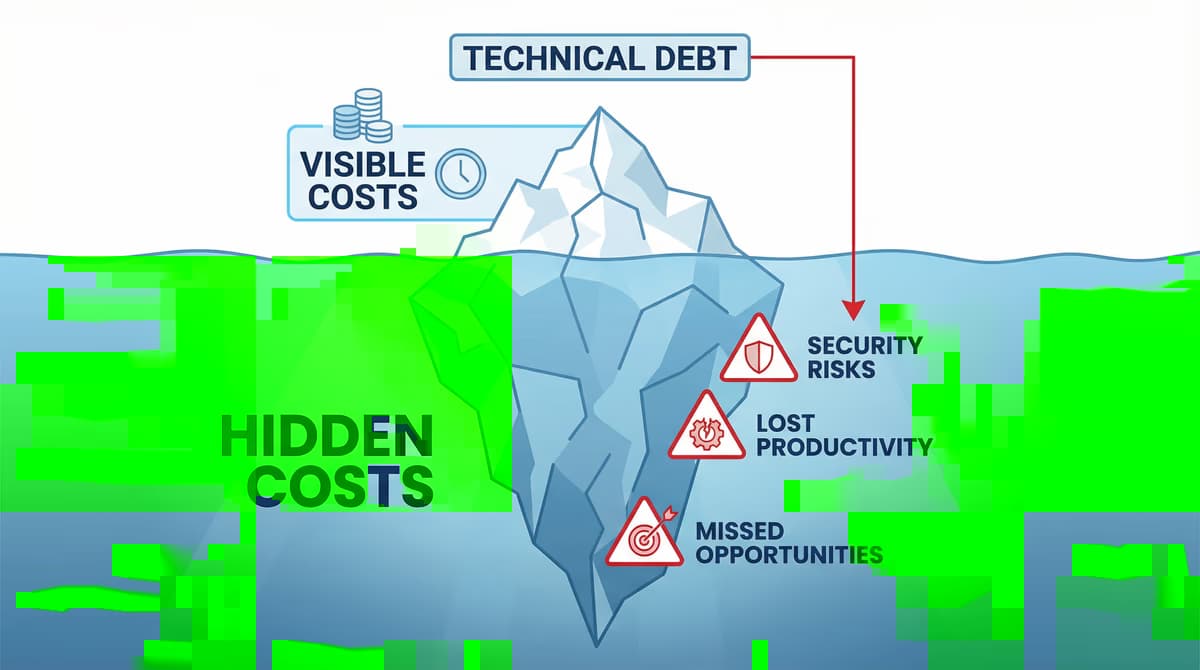
At first sight this may seem harmless, but in the long term technical debt leads to a number of problems:
- Sustainable development: An unclean code base is difficult to understand and expand. New features require more time because developers only have to fight through spaghetti code. *** Increased error susceptibility:** Complex and poorly structured software is more susceptible to bugs. The troubleshooting and troubleshooting becomes a time-consuming and frustrating process.
- Demotivated developer teams: Nobody likes to work on a project that is plagued by technical debt. Continuous confrontation with old loads and laborious maintenance can significantly reduce motivation and productivity.
- Slower innovative power: If a large part of the resources need to be used for maintenance and troubleshooting, little space remains for innovation and the development of new value-creating functions.
Raw signs of technical debt
Technical debts are not always obvious, but there are some typical signs indicating a burdened code base:
- Active regressions: After implementing new functions unexpected errors occur elsewhere.
- Lange integration times: New team members need a lot of time above average to get involved in the project.
- "Code Smells": Experienced developers recognize problematic areas in the code that indicate structural deficiencies (e.g. duplicate code, too long methods).
- Distinct test cover: There are only a few or no automated tests, which makes changes to the code risky.
- Old dependencies: The project uses libraries and frameworks that are no longer up-to-date and may have vulnerabilities.
Strategies for reducing technical debt
The reduction of technical
References and further reading
Short: The following independent references complement the topics in this article:
The following independent references complement the topics in this article:
- Bitkom – German digital industry association
- German Federal Office for Information Security (BSI)
- European Commission – Digital strategy
- MDN Web Docs (Mozilla)
- W3C – World Wide Web Consortium
Frequently Asked Questions (FAQ)
What is this article about: “Refactoring strategies: systematically reduce technical debt”?
Here we cover Refactoring strategies: systematically reduce technical debt — focused on architecture, process, and business outcomes. In short: The term "technical debt" is ubiquitous in software development.
Like financial debt, technical debt can also accumulate interest and paralyze a project in the long term. But wa...
Who benefits most from the content described here?
Typical readers are business and IT leaders in Software development who want to secure quality, security, and maintainability over the long term.
How does this topic fit into an IT or digital strategy?
In a digital strategy, prioritize stable core processes first, then extensions. See also professional software development and consulting. For multi-system landscapes, IT consulting and architecture helps align vendors and internal teams.
What are sensible next steps if we need support?
If you need support with design, delivery, or modernization: schedule an appointment or outline your project via contact.
About the author

Managing Director of Groenewold IT Solutions GmbH and Hyperspace GmbH
Since 2009 Björn Groenewold has been developing software solutions for the mid-market. He is Managing Director of Groenewold IT Solutions GmbH (founded 2012) and Hyperspace GmbH. As founder of Groenewold IT Solutions he has successfully supported more than 250 projects – from legacy modernisation to AI integration.
Blog recommendations
Related articles
These posts might also interest you.

ERP introduction: Success measurement and continuous improvement
The introduction of a new ERP system is a decisive step for medium-sized companies to digitize and increase efficiency. But with the Go-Live the project hasn't been...

GDPR updates 2026: What has changed?
The year 2026 marks a turning point in European digital law. A number of new regulations enter into force or achieve decisive implementation phases. For companies, this means...

GDPR-compliant software: certifications and proofs
In today's digitalized business world, software is the backbone of countless processes. From customer management to marketing to accounting – personal data are becoming...
Free download
Checklist: 10 questions before software development
Key points before you start: budget, timeline, and requirements.
Get the checklist in a consultationRelevant next steps
Related services & solutions
Based on this article's topic, these pages are often the most useful next steps.
Related solutions
Related comparison
Cost calculators
More on Software development and next steps
This article is in the Software development topic. In our blog overview you will find all articles; under category Software development more posts on this subject.
For topics like Software development we offer matching services – from app development and AI integration to legacy modernisation and maintenance. We describe typical use cases under solutions. Our cost calculators give initial estimates. Key terms are in the IT glossary. Books and long-form guides appear on the publications page; deeper articles live under topics.
If you have questions about this article or want a non-binding discussion about your project, you can book a consultation or reach us via contact. We usually respond within one working day.