
In today's digital landscape, companies face the challenge of developing mobile applications that offer excellent user experience on both iOS and Android. ...
“Digitalization is not an IT project—it is a business strategy.”
– Björn Groenewold, Managing Director, Groenewold IT Solutions
In today's digital landscape, companies face the challenge of developing mobile applications that offer excellent user experience on both iOS and Android. Cross-platform development has established itself as an efficient solution to reduce development time and costs.
At the front of this movement are frameworks such as React Native and Flutter.
During the competition Flutter vs React Native is often discussed, this article focuses on the specific advantages and disadvantages of React Native for use in corporate applications.
What is React Native?
React Native is an open source framework developed by Facebook that allows developers to create mobile apps for iOS and Android with a single code base.
It is based on the popular JavaScript library React and translates the components of the application into native UI elements.
This leads to a user experience that hardly differs from a purely natively developed app, while at the same time the benefits of web technologies are used.
The advantages of React Native for enterprise applications
Short: For companies, the use of React Native offers a number of strategic advantages that go beyond the pure [app development](/services/mobileundweb development).
For companies, the use of React Native offers a number of strategic advantages that go beyond the pure [app development](/services/mobileundweb development).
Faster development and cost efficiency
The most obvious advantage is the considerable reduction in development time and costs. Instead of entertaining separate teams for iOS and Android, a single team of JavaScript developers can create an app for both platforms.
This not only accelerates market entry, but also reduces personnel costs and maintenance costs. According to estimates, development costs can be reduced by 30-50%.
Reusability of code
Most of the code – often over 90% – can be shared between the iOS and Android versions. This means that business logic, data processing and user interface components must be implemented only once.
The result is more consistent applications and easier troubleshooting and further development.
Great community and ecosystem
React Native benefits from the huge and active community of React and JavaScript. There is a wealth of libraries, tools and tutorials available to developers.
Large companies such as Microsoft, Shopify and Discord actively contribute to the ecosystem and ensure that the framework remains robust, safe and up-to-date.
Native performance and user experience
Unlike previous hybrid frameworks based on WebViews, React Native renders real native UI components. This allows a liquid performance and a user interface that corresponds to the design conventions of the respective platform. For the sea
Transparency: Where no primary source is named in the text, figures are illustrative; compare Bitkom and Destatis. Project-related statements: Groenewold IT, 2026.
References and further reading
Short: The following independent references complement the topics in this article:
The following independent references complement the topics in this article:
- Bitkom – German digital industry association
- German Federal Office for Information Security (BSI)
- European Commission – Digital strategy
- MDN Web Docs (Mozilla)
- W3C – World Wide Web Consortium
> "Privacy by design is an architecture issue—especially when master data is personal." > > — Björn Groenewold, Managing Director, Groenewold IT Solutions
<!-- v87-geo-append -->
About the author

Managing Director of Groenewold IT Solutions GmbH and Hyperspace GmbH
For over 15 years Björn Groenewold has been developing software solutions for the mid-market. He is Managing Director of Groenewold IT Solutions GmbH and Hyperspace GmbH. As founder of Groenewold IT Solutions he has successfully supported more than 250 projects – from legacy modernisation to AI integration.
Blog recommendations
Related articles
These posts might also interest you.

Flutter architecture: Best practices for scalable apps
In today's fast-paced world of mobile application development, it is crucial not only to develop quickly but also sustainably. Flutter, Google's UI Toolkit, has become...
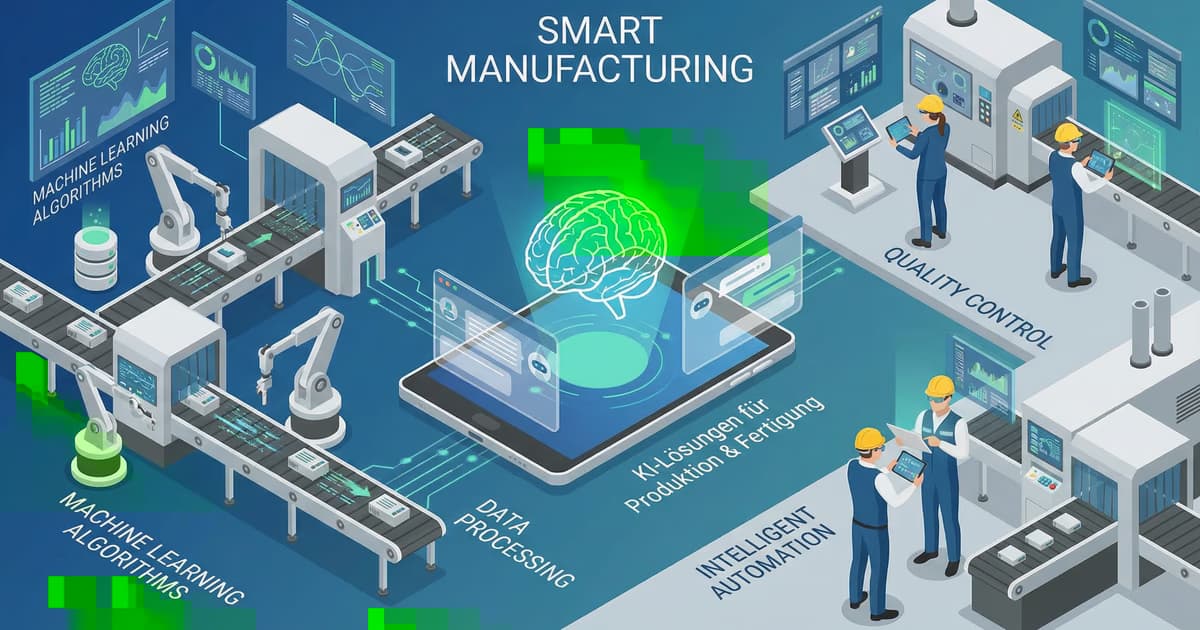
App development for production & production: The key to Industry 4.0 and efficient processes
The fourth industrial revolution, known as Industry 4.0, has fundamentally changed the way companies produce and manufacture. At the heart of this transformation is the Digitalization of processes…

From the idea to the app: A journey that thrills
Every app that uses millions of people started as a sketch on a whiteboard. We take you on the journey from the first idea to the launch day.
Free download
Checklist: 10 questions before software development
Key points before you start: budget, timeline, and requirements.
Get the checklist in a consultationRelevant next steps
Related services & solutions
Based on this article's topic, these pages are often the most useful next steps.
Related services
Related solutions
Related comparison
Cost calculators
More on App development and next steps
This article is in the App development topic. In our blog overview you will find all articles; under category App development more posts on this subject.
For topics like App development we offer matching services – from app development and AI integration to legacy modernisation and maintenance. We describe typical use cases under solutions. Our cost calculators give initial estimates. Key terms are in the IT glossary, and in-depth content under topics.
If you have questions about this article or want a non-binding discussion about your project, you can book a consultation or reach us via contact. We usually respond within one working day.