
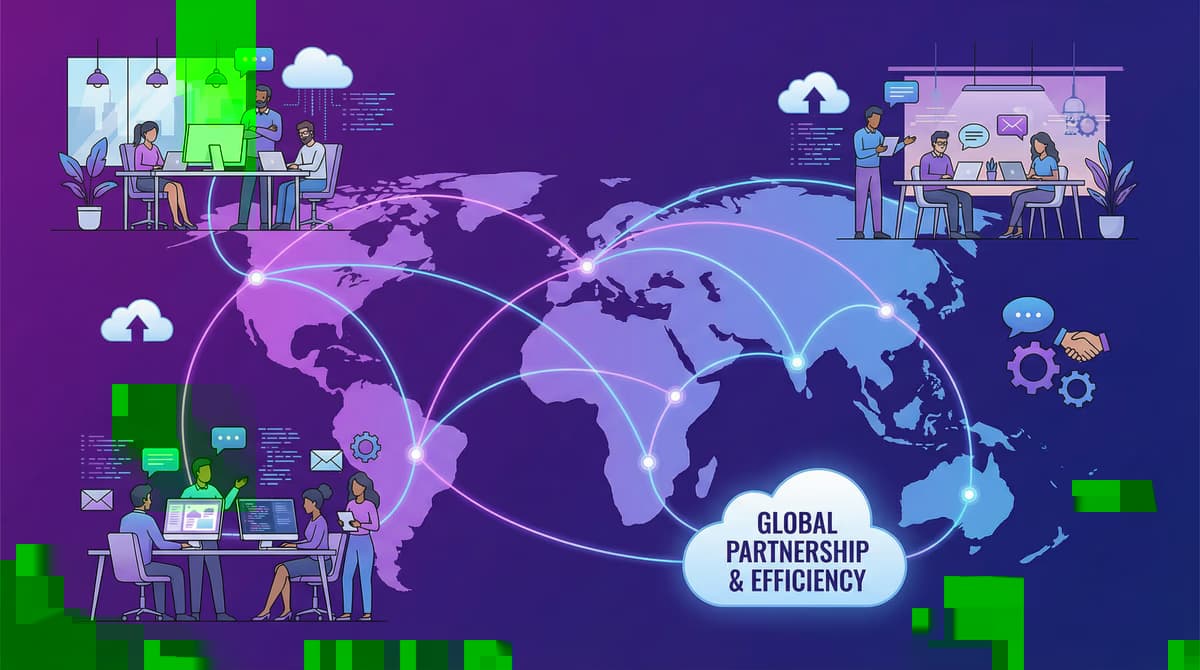
The decision to develop a new software is a strategic milestone for each company. At least as important is the question *who* should implement this development: e...
“Digitalization is not an IT project—it is a business strategy.”
– Björn Groenewold, Managing Director, Groenewold IT Solutions
> Key Takeaway: Outsourcing is particularly worthwhile for clearly scoped sub-projects, specialized expertise needs (e.g., AI, mobile, legacy), and temporary capacity bottlenecks.
Risks like quality loss and communication problems can be minimized through clear scope definitions, regular code reviews, and a dedicated point of contact on both sides.
♪ The right balance: When outsourcing in [software development](/services/software development) makes sense
The decision to develop a new [software](/services/software development) is a strategic milestone for each company. At least as important is the question that who should implement this development: an internal team or an external partner?
This decision, known as Inhouse vs Outsourcing Software Development, has far-reaching consequences for cost, quality and strategic orientation of the company. Especially for small and medium-sized enterprises (SMEs), this is a central point. In this article, we highlight the advantages and disadvantages of both models and give you a decision-making aid.
What does in-house development and outsourcing mean?
Short: To make the right choice, it is important to understand precisely the two approaches.
To make the right choice, it is important to understand precisely the two approaches. Both have their authorization and specific applications in which they play out their strengths.
In-house development: The own team on board
During in-house development, a permanent team of software developers is set up and employed in their own company. These employees are fully integrated into the company structure, know the internal processes and work exclusively on the company's projects.
Advantages:
- Maximum control: You have full control over the development process and priorities.
- Direct communication: Short communication channels facilitate coordination and promote agile cooperation.
- Start corporate culture: The team strongly identifies with the company and products, which can lead to a high level of commitment.
- ** Long-term knowledge building:** The technical know-how remains within the company and can be further developed in the long term.
Additions:
- High costs: Recruitment, salaries, social benefits and provision of infrastructure are cost-intensive.
- Swiss personnel search: The lack of skilled personnel in IT makes it difficult and time-consuming to find qualified developers.
- ** Limited scalability:** The team cannot easily be enlarged or reduced to respond to new requirements.
Outsourcing: Use external experts
In outsourcing, development tasks are assigned to an external service provider. This partner can be established in the same country (nearshoring) or in another part of the world (offshoring). The outsourced team works on a project basis or as part of a long-term contract for your company.
Advantages:
- ** Cost savings:** Often the costs for external developers, especially abroad, are significantly lower than for permanent employees.
- Access to specialists: You will receive immediate access to a global pool of talents and experts for specific
References and further reading
Short: The following independent references complement the topics in this article:
The following independent references complement the topics in this article:
- Bitkom – German digital industry association
- German Federal Office for Information Security (BSI)
- European Commission – Digital strategy
- MDN Web Docs (Mozilla)
- W3C – World Wide Web Consortium
<!-- v87-geo-append -->
About the author

Managing Director of Groenewold IT Solutions GmbH and Hyperspace GmbH
For over 15 years Björn Groenewold has been developing software solutions for the mid-market. He is Managing Director of Groenewold IT Solutions GmbH and Hyperspace GmbH. As founder of Groenewold IT Solutions he has successfully supported more than 250 projects – from legacy modernisation to AI integration.
Blog recommendations
Related articles
These posts might also interest you.
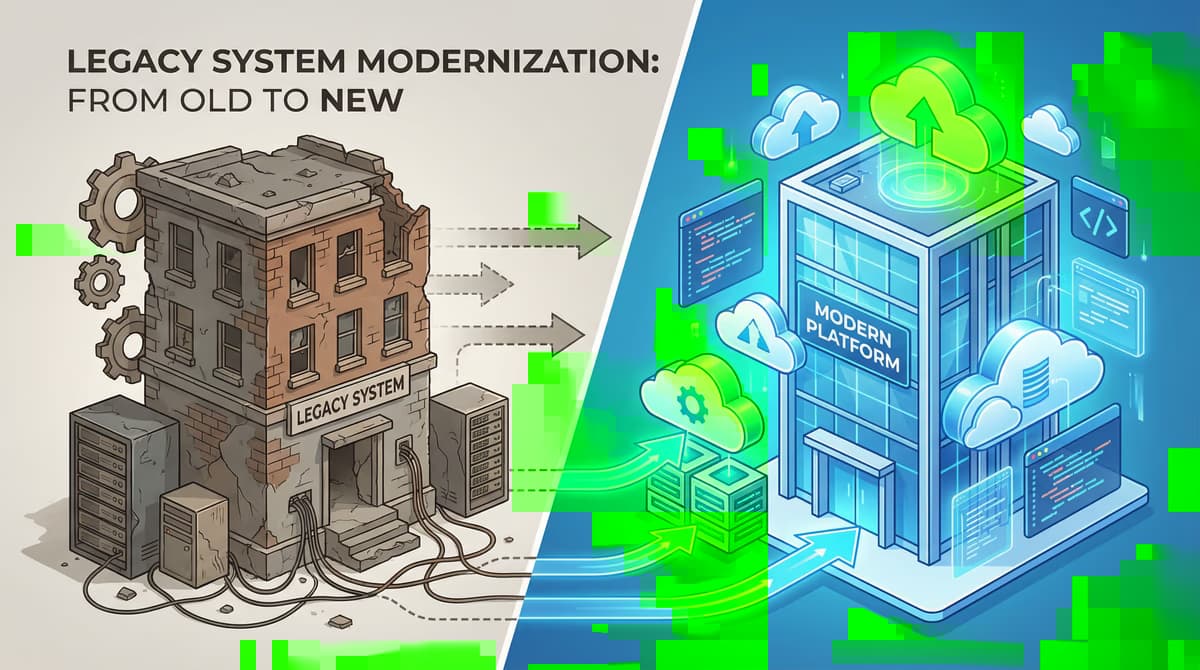
Altsystem migration: risk management and fallback strategies for a smooth transition
The Altsystem migration is a necessary step for many companies to remain competitive and not lose the connection technologically. Outdated systems are often expensive in...
Stepwise migration: The Strangler-FIG-Pattern for the modernization of old systems
In today's fast-paced digital landscape, many companies face the challenge of modernizing outdated IT systems. These so-called old systems are often the backbone of the...
Software migration: Ensure data integrity
The migration of software and related data is a critical process that is essential for modernising IT systems. Whether it's about replacing outdated applications...
Free download
Checklist: 10 questions before software development
Key points before you start: budget, timeline, and requirements.
Get the checklist in a consultationRelevant next steps
Related services & solutions
Based on this article's topic, these pages are often the most useful next steps.
Related services
Related solutions
Cost calculators
More on Software development and next steps
This article is in the Software development topic. In our blog overview you will find all articles; under category Software development more posts on this subject.
For topics like Software development we offer matching services – from app development and AI integration to legacy modernisation and maintenance. We describe typical use cases under solutions. Our cost calculators give initial estimates. Key terms are in the IT glossary, and in-depth content under topics.
If you have questions about this article or want a non-binding discussion about your project, you can book a consultation or reach us via contact. We usually respond within one working day.