

Digitization has changed almost every aspect of our lives, and the public sector is no exception here. Citizens today expect the same digital...
“Digitalization is not an IT project—it is a business strategy.”
– Björn Groenewold, Managing Director, Groenewold IT Solutions
> Key Takeaway: The digitalization of public administration is driven by the Online Access Act (OZG). Modern administrative software must digitally map citizen services, integrate existing specialist procedures, and meet the highest data protection and accessibility standards.
Digitization of administration: Current developments and how the right software drives change
Short: Digitization has changed almost every aspect of our lives, and the public sector is no exception here.
Digitization has changed almost every aspect of our lives, and the public sector is no exception here. Today, citizens expect the same digital comfort they are used by online shops or banks. The Digitalization of administration is therefore no longer a guarantee, but a duty.
But what is currently the digital transformation in Germany's offices? What developments shape the picture and what central role does modern **public sector software play in this change? This article highlights current trends, challenges and solutions and shows how a future-oriented software for the public sector can make the decisive difference.
The need for digitalization in public administration
Short: Long waiting times, complicated applications and paper-based processes still shape the image of public administration.
Long waiting times, complicated applications and paper-based processes still shape the image of public administration. But the pressure for modernization is growing. A sophisticated digitalization strategy offers enormous potential: it can not only increase the efficiency of administrative processes, but also increase the satisfaction of employees and citizens alike.
Faster and more transparent services strengthen confidence in state institutions and make Germany more attractive. In addition, the administration is perceived as a modern employer, which is a decisive advantage in the competition for skilled workers in demand.
A digital working environment with flexible working models and modern tools significantly enhances the attractiveness of the public service and helps to attract talented young people and bind them in the long term.
Current developments and trends
Short: The digital transformation of the administration is driven by several exciting developments.
The digital transformation of the administration is driven by several exciting developments. Technologies such as Artificial Intelligence (AI) are moving in to automatically check applications or answer recurring requests via chatbot. Cloud solutions enable a more flexible and scalable IT infrastructure, while citizen-centred platforms and portals significantly simplify access to administrative services.
The goal is seamless, media-break-free communication between citizens, businesses and authorities – from application to notification. Another important trend is the increased use of data. Through the intelligent analysis of administrative data, processes can be optimized, needs better predicted and political decisions can be made on a more solid basis.
Open data initiatives also promote transparency and enable the development of new data-driven services by third parties.
Challenges on the way to digital administration
Despite positive developments
References and further reading
Short: The following independent references complement the topics in this article:
The following independent references complement the topics in this article:
- Bitkom – German digital industry association
- German Federal Office for Information Security (BSI)
- European Commission – Digital strategy
- MDN Web Docs (Mozilla)
- W3C – World Wide Web Consortium
<!-- v87-geo-append -->
About the author

Managing Director of Groenewold IT Solutions GmbH and Hyperspace GmbH
For over 15 years Björn Groenewold has been developing software solutions for the mid-market. He is Managing Director of Groenewold IT Solutions GmbH and Hyperspace GmbH. As founder of Groenewold IT Solutions he has successfully supported more than 250 projects – from legacy modernisation to AI integration.
Blog recommendations
Related articles
These posts might also interest you.
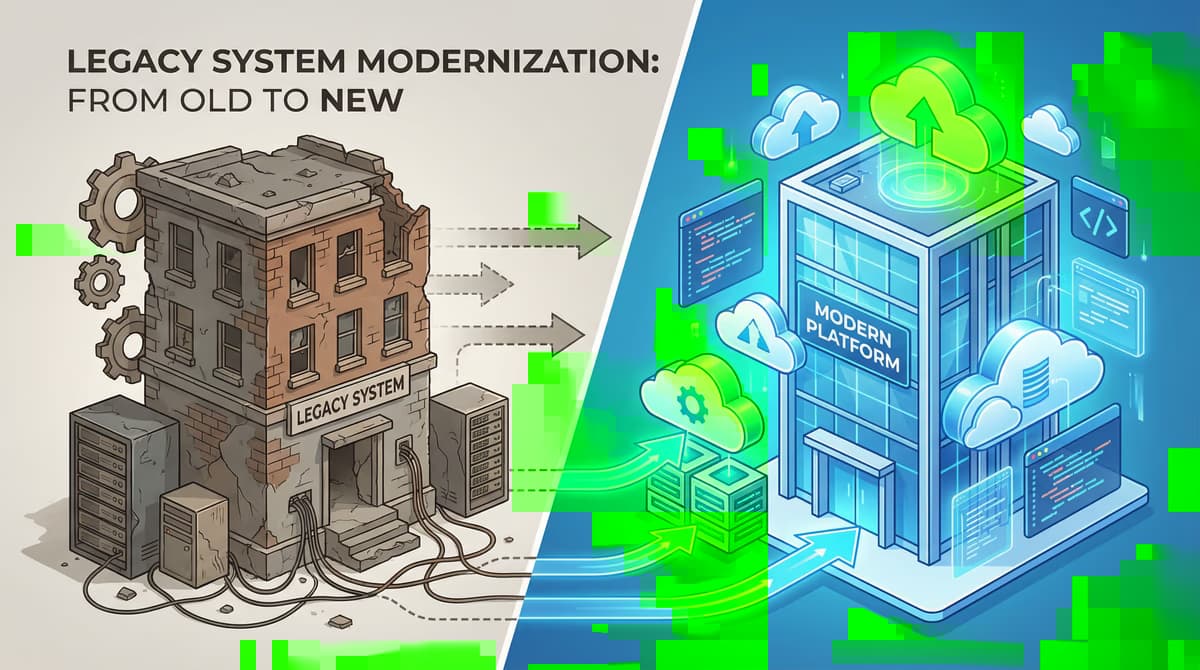
Altsystem migration: risk management and fallback strategies for a smooth transition
The Altsystem migration is a necessary step for many companies to remain competitive and not lose the connection technologically. Outdated systems are often expensive in...
Stepwise migration: The Strangler-FIG-Pattern for the modernization of old systems
In today's fast-paced digital landscape, many companies face the challenge of modernizing outdated IT systems. These so-called old systems are often the backbone of the...
Software migration: Ensure data integrity
The migration of software and related data is a critical process that is essential for modernising IT systems. Whether it's about replacing outdated applications...
Free download
Checklist: 10 questions before software development
Key points before you start: budget, timeline, and requirements.
Get the checklist in a consultationRelevant next steps
Related services & solutions
Based on this article's topic, these pages are often the most useful next steps.
Related services
Related solutions
More on Software development and next steps
This article is in the Software development topic. In our blog overview you will find all articles; under category Software development more posts on this subject.
For topics like Software development we offer matching services – from app development and AI integration to legacy modernisation and maintenance. We describe typical use cases under solutions. Our cost calculators give initial estimates. Key terms are in the IT glossary, and in-depth content under topics.
If you have questions about this article or want a non-binding discussion about your project, you can book a consultation or reach us via contact. We usually respond within one working day.