

In a globalised world where supply chains are becoming increasingly complex, efficient logistics is crucial to the success of every company. Digitalization plays a...
“Digitalization is not an IT project—it is a business strategy.”
– Björn Groenewold, Managing Director, Groenewold IT Solutions
> Key Takeaway: The success of a logistics software implementation depends less on the software itself than on the implementation.
Key factors are a thorough as-is analysis of existing processes, a phased rollout with a pilot phase, and consistent involvement of operational staff from the beginning.
In a globalised world where supply chains are becoming increasingly complex, efficient logistics is crucial to the success of every company. Digitization plays a key role here and the use of modern software for logistics is no longer an optional extra, but a strategic necessity.
But the mere acquisition of a software does not guarantee success. Only a well-thought and professionally accompanied implementation creates the full potential and leads to sustainable competitive advantages.
Why is the right logistics software crucial to corporate success?
Short: Logistics is the backbone of trade and production.
Logistics is the backbone of trade and production. Any delay, error and inefficiency in the supply chain can have far-reaching consequences – from unsatisfied customers to higher costs to a damaged corporate image. A powerful logistics software uses precisely here and offers a variety of advantages:
- ** Increase in efficiency:** Automated processes, from warehouse management to commissioning to tour planning, reduce manual activities, minimize sources of errors and speed up the entire processes.
- Transparency: A central platform allows continuous tracking of goods and information in real time. So you know at any time where a shipment is located and can react proactively to unforeseen events.
- Cost reduction: Optimized routes, improved utilization of transport equipment and efficient storage significantly reduce operating costs. In addition, the data analysis helps to identify potential savings.
- Improved customer satisfaction: Faster delivery times, higher delivery reliability and transparent communication increase customer satisfaction and strengthen customer loyalty.
Key Factors for Successful Implementation
Short: The introduction of a new logistics software is a complex project that requires careful planning and control.
The introduction of a new logistics software is a complex project that requires careful planning and control. The following factors are crucial for a successful implementation:
1. Detailed planning and request analysis
At the beginning of each successful project is a thorough analysis of the existing processes and the clear definition of the objectives. What specific challenges should be solved with the new software? What indicators (KPIs) are to be improved?
In this phase, it is essential to include all relevant departments – from warehouses to purchasing and distribution – in the process to create a holistic requirement profile.
Choosing the Right Software Solution
The market for logistics software is diverse. Choosing the right solution depends on your company's individual requirements. Important criteria are:
- *Cl
References and further reading
Short: The following independent references complement the topics in this article:
The following independent references complement the topics in this article:
- Bitkom – German digital industry association
- German Federal Office for Information Security (BSI)
- European Commission – Digital strategy
- MDN Web Docs (Mozilla)
- W3C – World Wide Web Consortium
<!-- v87-geo-append -->
About the author

Managing Director of Groenewold IT Solutions GmbH and Hyperspace GmbH
For over 15 years Björn Groenewold has been developing software solutions for the mid-market. He is Managing Director of Groenewold IT Solutions GmbH and Hyperspace GmbH. As founder of Groenewold IT Solutions he has successfully supported more than 250 projects – from legacy modernisation to AI integration.
Blog recommendations
Related articles
These posts might also interest you.
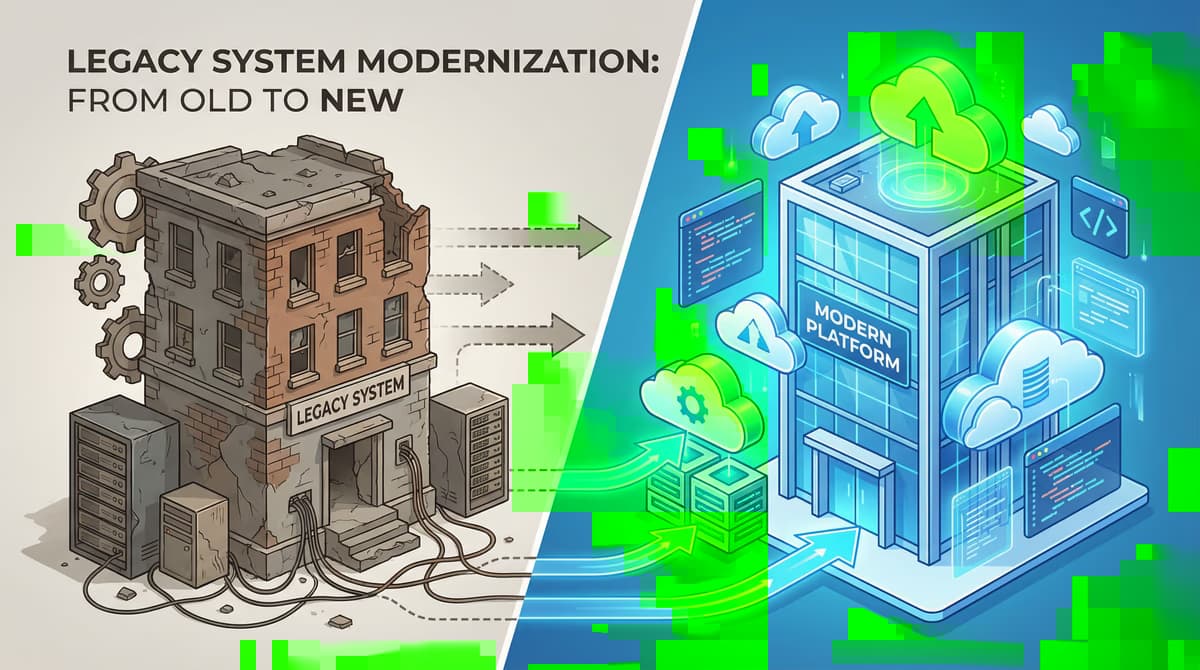
Altsystem migration: risk management and fallback strategies for a smooth transition
The Altsystem migration is a necessary step for many companies to remain competitive and not lose the connection technologically. Outdated systems are often expensive in...
Stepwise migration: The Strangler-FIG-Pattern for the modernization of old systems
In today's fast-paced digital landscape, many companies face the challenge of modernizing outdated IT systems. These so-called old systems are often the backbone of the...
Software migration: Ensure data integrity
The migration of software and related data is a critical process that is essential for modernising IT systems. Whether it's about replacing outdated applications...
Free download
Checklist: 10 questions before software development
Key points before you start: budget, timeline, and requirements.
Get the checklist in a consultationRelevant next steps
Related services & solutions
Based on this article's topic, these pages are often the most useful next steps.
Related services
Related solutions
More on Software development and next steps
This article is in the Software development topic. In our blog overview you will find all articles; under category Software development more posts on this subject.
For topics like Software development we offer matching services – from app development and AI integration to legacy modernisation and maintenance. We describe typical use cases under solutions. Our cost calculators give initial estimates. Key terms are in the IT glossary, and in-depth content under topics.
If you have questions about this article or want a non-binding discussion about your project, you can book a consultation or reach us via contact. We usually respond within one working day.