
Automation offers SMEs great opportunities. The article shows benefits, typical errors and the right entry.
“Digitalization is not an IT project—it is a business strategy.”
– Björn Groenewold, Managing Director, Groenewold IT Solutions
Digitization progresses in large steps – and while corporations have been investing in automation for years, small and medium-sized enterprises (SMEs) are currently rapidly picking up. But what does automation really do? And when is it worth it?
This article gives an overview, shows typical stumbling traps and explains how SMEs start optimally.
What does automation actually mean for SMEs?
Short: Automation means the use of software, AI and digital tools to replace recurring manual tasks.
Automation means the use of software, AI and digital tools to replace recurring manual tasks. These include, for example,:
- Offer and invoice delivery
- appointment management
- Product management and ordering processes
- Internal release and approval structures
- simple customer requests
- Data transmissions between systems
Many SMEs already use digital tools, but do not exploit their potential. Processes often run half digitally, half manually – a risk for time, quality and scalability.
Why automation is just relevant for SMEs in 2026
Short: SMEs often struggle with limited resources.
SMEs often struggle with limited resources. Automation creates significant added value here:
1. Daytime gain
Staff often spend several hours a week with copying work, Excel lists or manual archiving. Automated workflows create free spaces for value-generating activities.
2. Less errors – more standardization
The more manual effort, the higher the error rate. Automation ensures repeatable and comprehensible processes.
3. Faster growth
Anyone who digitizes processes can scale significantly easier – without having to set additional employees immediately.
4. competitiveness
Customers expect fast response times today. Automated systems significantly accelerate communication, offers, support and logistics.
Typical start problems — and how to avoid them
Short: Many companies start wrong: too complex, too expensive, without structure.
Many companies start wrong: too complex, too expensive, without structure. These errors should be avoided:
"We automate everything at once"
→ better start small, measure, scale
missing process knowledge
→ perform pre-process analysis
false tools
→ not every software fits the SME
no employee involvement
→ Automation is also a change project
A good starting point: Select processes that often occur, contain few variants and cost a lot of time.
How SMEs find the right entry
- Making processes visible Two. Identify Pain Points
- Check feasibility
- Implementation of prototype
- Testing, iterating, improving
Fazite
Short: Process automation is worth more than ever for SMEs.
Process automation is worth more than ever for SMEs. It increases speed, quality and competitiveness – and is no longer a luxury in 2026, but a necessary success factor. It is crucial to start structured and realistic: small steps, fast results, sustainable optimism
References and further reading
Short: The following independent references complement the topics in this article:
The following independent references complement the topics in this article:
- Bitkom – German digital industry association
- German Federal Office for Information Security (BSI)
- European Commission – Digital strategy
- MDN Web Docs (Mozilla)
- W3C – World Wide Web Consortium
> "Mobile apps need clear offline and security models alongside UX—trust collapses without both." > > — Björn Groenewold, Managing Director, Groenewold IT Solutions
<!-- v87-geo-append -->
About the author

Managing Director of Groenewold IT Solutions GmbH and Hyperspace GmbH
For over 15 years Björn Groenewold has been developing software solutions for the mid-market. He is Managing Director of Groenewold IT Solutions GmbH and Hyperspace GmbH. As founder of Groenewold IT Solutions he has successfully supported more than 250 projects – from legacy modernisation to AI integration.
Blog recommendations
Related articles
These posts might also interest you.
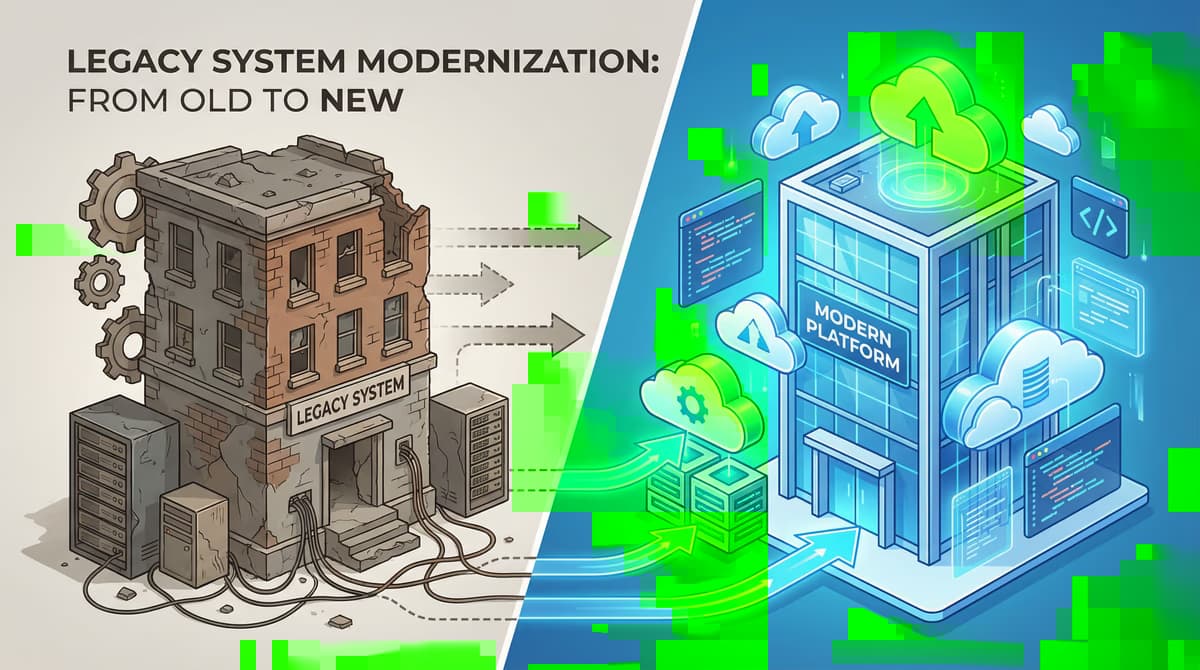
Altsystem migration: risk management and fallback strategies for a smooth transition
The Altsystem migration is a necessary step for many companies to remain competitive and not lose the connection technologically. Outdated systems are often expensive in...
Stepwise migration: The Strangler-FIG-Pattern for the modernization of old systems
In today's fast-paced digital landscape, many companies face the challenge of modernizing outdated IT systems. These so-called old systems are often the backbone of the...
Software migration: Ensure data integrity
The migration of software and related data is a critical process that is essential for modernising IT systems. Whether it's about replacing outdated applications...
Free download
Checklist: 10 questions before software development
Key points before you start: budget, timeline, and requirements.
Get the checklist in a consultationRelevant next steps
Related services & solutions
Based on this article's topic, these pages are often the most useful next steps.
Related services
Related solutions
Cost calculators
More on Software development and next steps
This article is in the Software development topic. In our blog overview you will find all articles; under category Software development more posts on this subject.
For topics like Software development we offer matching services – from app development and AI integration to legacy modernisation and maintenance. We describe typical use cases under solutions. Our cost calculators give initial estimates. Key terms are in the IT glossary, and in-depth content under topics.
If you have questions about this article or want a non-binding discussion about your project, you can book a consultation or reach us via contact. We usually respond within one working day.