
As of: 12 April 2026 · Reading time: 3 min
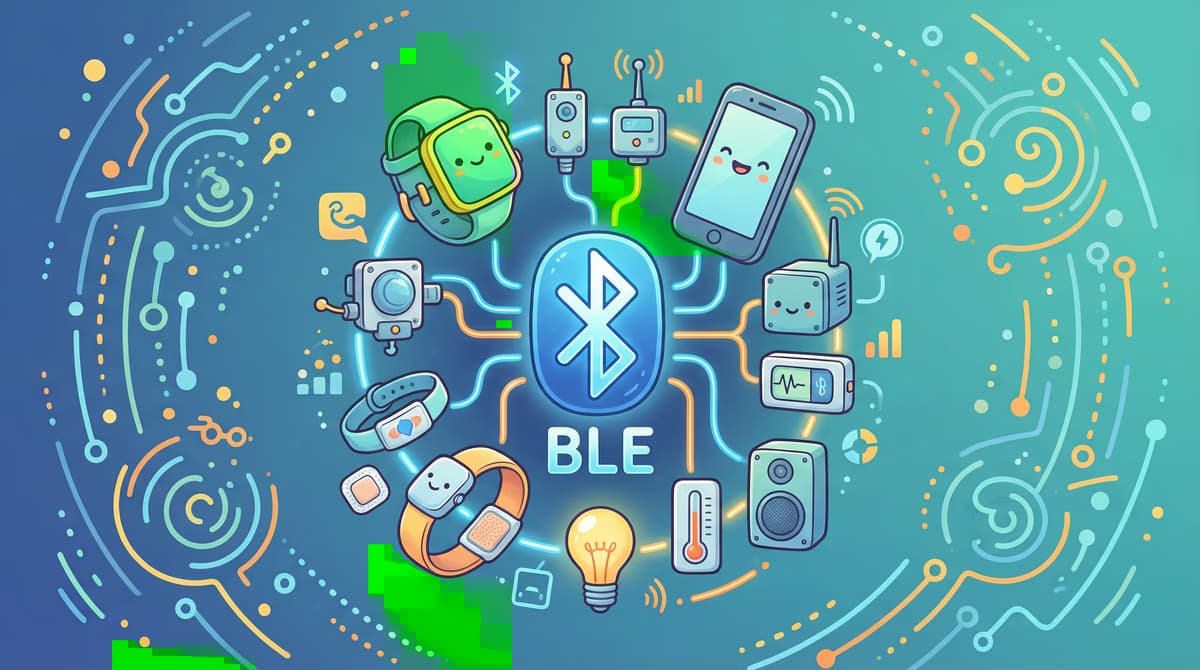
A step-by-step guide to the development process of a BLE application, from idea to prototype to mass production and certification.
“Digitalization is not an IT project—it is a business strategy.”
– Björn Groenewold, Managing Director, Groenewold IT Solutions
This article is part of our series about [Bluetooth](/leistungen/systemintegration integration) Low Energy. You can find the comprehensive guide here: The ultimate guide to [BLE](/services/system integration) App Development in Germany (2026)
From prototype to series: the development process of a BLE application
Short: The development of a market-ready product with Bluetooth Low Energy (BLE) is a journey with many stages.
The development of a market-ready product with Bluetooth Low Energy (BLE) is a journey with many stages. It is a complex interaction of hardware, firmware and software that requires careful planning and execution.
Many companies underestimate the complexity that goes beyond the pure app development.
In this article we will guide you through the typical phases of a BLE project – from the first idea to the functional prototype to the certification and start of series production.
The development process in 6 steps
Short: **Phase 1: Requirements Analysis and Concept * * Everything starts with an idea.
**Phase 1: Requirements Analysis and Concept * * Everything starts with an idea. In this first crucial phase, the basic questions are resolved: what problem should the product solve? Who is the target group?
What functions does it have to have? Here the requirements for the entire system – hardware, firmware and app – are defined and stored in a load booklet.
It is also the time to conduct a first market analysis and to evaluate the cost-effectiveness of the project.
Phase 2: Hardware prototyping (Proof of Concept) In this phase, the idea becomes tangible. The goal is to quickly create a first functional prototype, a so-called "Proof of Concept" (PoC). Standard development boards (e.g.
Nordic Semiconductor or Espressif) are often used to test the basic functionality without having to develop an expensive, individual hardware immediately. You test the sensors, the BLE connection and the basic interaction with a simple test app.
**Phase 3: Firmware Development and GATT Design * * Parallel to hardware development, programming of firmware begins. A central point is the design of the GATT profile (Generic Attribute Profiles).
GATT defines the structure of how data are exchanged via BLE – in the form of "services" and "characteristics".
A clean and well thought-out GATT profile is the basis for stable and efficient communication between the device and the mobile app.
Phase 4: App Development (UI/UX and Logic) Now the mobile app comes into play. Based on the concept created in phase 1, the user interface (UI) and the user experience (UX) are designed.
The developers implement the BLE communication logic to connect to the device, read the GATT profile and visualize the data appealingly. At this stage, work is done in agile sprints to regularly get feedback and gradually improve the app.
**Phase 5: Integr
References and further reading
Short: The following independent references complement the topics in this article:
The following independent references complement the topics in this article:
- Bitkom – German digital industry association
- German Federal Office for Information Security (BSI)
- European Commission – Digital strategy
- MDN Web Docs (Mozilla)
- W3C – World Wide Web Consortium
> "APIs are the backbone of modern systems; stabilise contracts early or pay twice in integration work later." > > — Björn Groenewold, Managing Director, Groenewold IT Solutions
About the author

Managing Director of Groenewold IT Solutions GmbH and Hyperspace GmbH
For over 15 years Björn Groenewold has been developing software solutions for the mid-market. He is Managing Director of Groenewold IT Solutions GmbH and Hyperspace GmbH. As founder of Groenewold IT Solutions he has successfully supported more than 250 projects – from legacy modernisation to AI integration.
Blog recommendations
Related articles
These posts might also interest you.
The way to success: How to find the right BLE App...
A checklist with the most important criteria for selecting the right BLE app developer or a specialized app agency for your IoT project.
BLE in Smart Home: Trends and Potentials for the
Discover the role of Bluetooth Low Energy (BLE) in Smart Home, the latest trends, applications and the importance of standards such as Matter.
BLE vs. Classic Bluetooth: The right choice for your...
A detailed comparison between Bluetooth Low Energy (BLE) and Classic Bluetooth. Learn what technology is right for your IoT project.
Free download
Checklist: 10 questions before software development
Key points before you start: budget, timeline, and requirements.
Get the checklist in a consultationRelevant next steps
Related services & solutions
Based on this article's topic, these pages are often the most useful next steps.
Related services
Related solutions
Cost calculators
More on BLE development and next steps
This article is in the BLE development topic. In our blog overview you will find all articles; under category BLE development more posts on this subject.
For topics like BLE development we offer matching services – from app development and AI integration to legacy modernisation and maintenance. We describe typical use cases under solutions. Our cost calculators give initial estimates. Key terms are in the IT glossary, and in-depth content under topics.
If you have questions about this article or want a non-binding discussion about your project, you can book a consultation or reach us via contact. We usually respond within one working day.