
In today's fast-paced digital landscape, many companies face the challenge of modernizing outdated IT systems. These so-called old systems are often the backbone of the...
“Digitalization is not an IT project—it is a business strategy.”
– Björn Groenewold, Managing Director, Groenewold IT Solutions
Step by step Migration: The Strangler-Fig-Pattern to Modernize Old Systems
Short: In today's fast-paced digital landscape, many companies face the challenge of modernizing outdated IT systems.
In today's fast-paced digital landscape, many companies face the challenge of modernizing outdated IT systems. These so-called old systems are often the backbone of the company, but their rigid architectures and outdated technologies hinder innovation and growth. A complete new development is often associated with high costs, risks and long development times.
Here, the Altsystem Migration with the Strangler-Fig-Pattern offers an elegant and low-risk alternative.
What is the Strangler-FIG-Pattern?
Short: The Strangler-Fig-Pattern, in German “Würgefeigen-Muster”, is an architectural pattern made popular by Martin Fowler.
The Strangler-Fig-Pattern, in German “Würgefeigen-Muster”, is an architectural pattern made popular by Martin Fowler. The name derives from the wortfeige, a plant that grows on another tree, slowly wraps it around and finally completely replaces it.
Transfer to [software development](/services/software development) this means replacing an old system step by step with a new system by gradually implementing the functionality of the old system in new services and slowly “worn” access to the old system.
Instead of a risky “Big Bang” migration, in which the entire system is replaced at once, the Strangler-Fig-Pattern allows incremental modernization. A new system is developed parallel to the old one and individual functionalities are gradually migrated from the old system into the new system.
A façade, often in the form of a proxy or api-gateway" class="glossary-link" title="Definition in the IT glossary">API gateway, passes the queries either to the new system or to the old system. Over time, the new system takes over more and more tasks until the old system can be completely replaced and shut down.
The advantages of gradual migration
Short: The use of the Strangler-FIG-Pattern in the Altsystem Migration offers a number of decisive advantages:
The use of the Strangler-FIG-Pattern in the Altsystem Migration offers a number of decisive advantages:
- Risk minimisation: As migration takes place in small, manageable steps, the risks are drastically reduced compared to a complete new development. Errors and problems can be detected and resolved at an early stage without endangering the entire system.
- Continuous value added: New functionalities and improvements can be quickly switched on, which means that the company continuously benefits from modernization and does not have to wait years for the result. *Slower downtime: Migration can be carried out during operation without long downtime. This is crucial especially for business-critical applications.
- Flexibility: The development team can use modern technologies and architectures for the new system without being bound to the limitations of the old system. This allows the introduction of microservices, cloud-native technologies and agile development
References and further reading
Short: The following independent references complement the topics in this article:
The following independent references complement the topics in this article:
- Bitkom – German digital industry association
- German Federal Office for Information Security (BSI)
- European Commission – Digital strategy
- MDN Web Docs (Mozilla)
- W3C – World Wide Web Consortium
> "DevOps is less about tools and more about shared ownership of quality and release discipline." > > — Björn Groenewold, Managing Director, Groenewold IT Solutions
<!-- v87-geo-append -->
About the author
Managing Director of Groenewold IT Solutions GmbH and Hyperspace GmbH
For over 15 years Björn Groenewold has been developing software solutions for the mid-market. He is Managing Director of Groenewold IT Solutions GmbH and Hyperspace GmbH. As founder of Groenewold IT Solutions he has successfully supported more than 250 projects – from legacy modernisation to AI integration.
Blog recommendations
Related articles
These posts might also interest you.
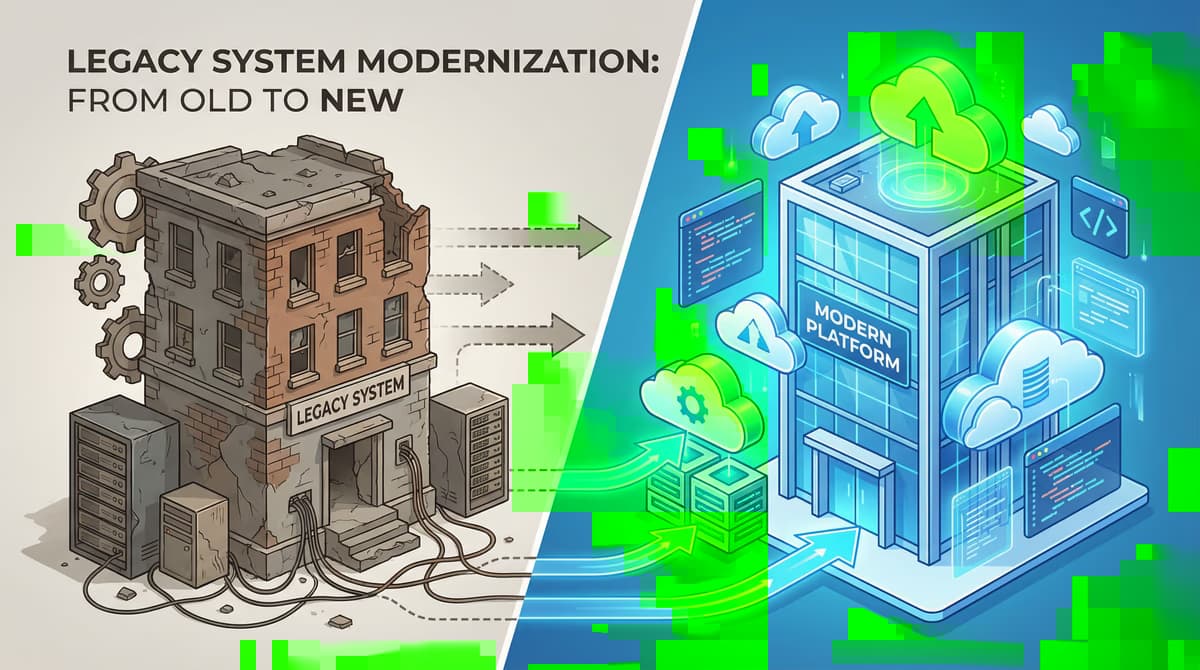
Software migration: Ensure data integrity
The migration of software and related data is a critical process that is essential for modernising IT systems. Whether it's about replacing outdated applications...
ChatGPT and Data Protection: This enables GDPR-compliant use in the company
Artificial intelligence, especially in the form of advanced language models such as ChatGPT, revolutionizes the way companies work. From the automation of customer service ...
Flutter widgets: The main building blocks at a glance
In the world of mobile application development, Flutter has established itself as one of the leading technologies. The UI Toolkit developed by Google allows you to store from a single code base...
Free download
Checklist: 10 questions before software development
Key points before you start: budget, timeline, and requirements.
Get the checklist in a consultationRelevant next steps
Related services & solutions
Based on this article's topic, these pages are often the most useful next steps.
Related services
Related solutions
Related comparison
Cost calculators
More on Software development and next steps
This article is in the Software development topic. In our blog overview you will find all articles; under category Software development more posts on this subject.
For topics like Software development we offer matching services – from app development and AI integration to legacy modernisation and maintenance. We describe typical use cases under solutions. Our cost calculators give initial estimates. Key terms are in the IT glossary, and in-depth content under topics.
If you have questions about this article or want a non-binding discussion about your project, you can book a consultation or reach us via contact. We usually respond within one working day.